Can EU-wide Corporate Consolidation Be Revived?

By: Diane Ring

On Tuesday, Shuyi  mentioned the EU’s Common Consolidated Corporate Tax Base proposal (CCCTB) in her post, noting some interesting parallels between maritime/bankruptcy coordination and international tax efforts at coordination. This motivated me to take a look at the recent developments that have happened around the CCCTB proposal. The CCCTB would provide a single set of rules for calculating the income of businesses operating in the EU – and would allow for such businesses to file a single consolidated return for their EU activities. The group’s income would then be allocated across the member states. Under this scheme, individual EU member states would still be able to tax their portion of the group’s income at their own country-specific tax rate. But I was curious–the CCCTB proposal is not new; it has been around for more than a decade. What has been happening on this stalled cooperation front? And, more importantly, will the EU’s announced re-launch of the proposal have a greater chance of success than previous attempts? Continue reading “Can EU-wide Corporate Consolidation Be Revived?”

A Hot News Week for Krispy Kreme

By: Diane Ring

The big news this week about Krispy Kreme is that they are going to be acquired for $1.35 billion. As reported in the WSJ last night, JAB Holding Co. (a European investment fund, which the WSJ noted holds an interesting mix of assets including Caribou Coffee, Jimmy Choo shoes, and  Durex condoms) is about to add glazed donuts to its asset pool. But this was not the Krispy Kreme news of the week that caught my eye. I was fascinated instead to read that this week the Missouri Supreme Court ruled on Krispy Kreme’s request for a refund of sales tax it had remitted on sales of donuts and other related items from 2003 through 2005.

Krispy Kreme had collected sales tax at the 4% rate applicable to food sold that would be immediately consumed. In contrast, food sold at grocery stores generally bore only a 1% state sales tax. Essentially, as the media described it, Krispy Kreme argued that its donuts were like grocery store food, and thus should bear only the sales tax rate applicable to such food. I may not follow the healthiest of diets but even I do not think that donuts are the equivalent of broccoli from the produce aisle. What were they thinking? But then my tax brain kicked in. I immediately understood. . .

Continue reading “A Hot News Week for Krispy Kreme”

Tax Policy and Puerto Rico’s Fiscal Crisis: An Insolvency Primer and Some Tax Things to Read

By: Shu-Yi Oei

I’ve been following the story of Puerto Rico’s default on its public corporation debt repayment obligations, which has been unfolding over the last several months. The latest happened on Monday, May 2 (well, technically Sunday), when Puerto Rico missed a major debt payment that was due to the bondholders of its Government Development Bank (GDB).

The topic has been well covered from the sovereign debt/insolvency angle over on Credit Slips, so I won’t go into that in detail here. As I understand it, the main points are these:

(1) Puerto Rico owes around $70 billion total outstanding debt to its creditors, of which a significant chunk is public corporation debt. Public corporations are corporations owned by the government of Puerto Rico. For example, the GDB is a public corporation.

(2) Unlike U.S. municipalities such as Detroit, Puerto Rico entities aren’t considered debtors for purposes of Chapter 9 of the U.S. Bankruptcy Code. They therefore don’t have access to the Chapter 9 municipal bankruptcy process. See 11 U.S.C. § 101(52). This is a bit of a head scratcher.

(3) In 2014, Puerto Rico’s legislature passed a law, the Puerto Rico Public Corporation Debt Enforcement and Recovery Act, which created a mechanism analogous to Chapter 9 bankruptcy by which Puerto Rico public corporations can restructure their debt. See Puerto Rico Passes New Municipal Reorganization Act: Puerto Rico Public Corporation Debt Enforcement and Recovery Act, 2014 P.R. Laws Act. No. 71, 128 Harv. L. Rev. 1320 (2015).

(4) Some bondholders filed a lawsuit, contending that Chapter 9 of the U.S. Bankruptcy Code preempts the Recovery Act. The First Circuit ruled that the Recovery Act is preempted. Franklin California Tax-Free Trust v. Puerto Rico, 805 F.3d 322 (1st Cir. 2015). The Supreme Court granted cert and heard oral arguments on March 22, 2016. No decision yet. For one scholar’s take on the issue, see Stephen J. Lubben, Puerto Rico and the Bankruptcy Clause, 88 Am. Bankr. L.J. 553 (2014).

(5) In light of all this, some have called for U.S. Congressional action, and there’s been legislation drafted to address Puerto Rico’s fiscal crisis that will allow for both restructuring and reform going forward. The House Committee on Natural Resources put forth a draft bill, the Puerto Rico Oversight, Management & Economic Stability Act (“PROMESA”). See also here for a helpful executive summary that accompanied an earlier draft. So far, that legislation has stalled, but they’re still trying.

There are many important issues in play, about which various stakeholders and commentators disagree. Some big ones are: (a) whether the draft PROMESA legislation raises retroactivity issues that make it unfair to bondholders (including mutual funds and their investors) who may be subject to restructuring ex post without having had notice of that possibility ex ante; (b) relatedly, whether creating a bankruptcy-like restructuring process for Puerto Rico is bad for bondholders because it prevents holdout creditors from holding up restructuring negotiations, (c) how much oversight and sovereignty Puerto Rico should cede (for example, different stakeholders feel differently about the installation of an oversight board); (d) the extent to which austerity measures are feasible and should be imposed [fn1], and (d) and what substantive reforms should be put enacted going forward.

So where does tax come in?

Continue reading “Tax Policy and Puerto Rico’s Fiscal Crisis: An Insolvency Primer and Some Tax Things to Read”

More on Income Share Agreements: Will Proposed Legislation Fix their Marketability Problem?

By: Diane Ring

Last week I blogged about the apparent resurgence of income share agreements (ISAs), noting for example, Purdue University’s planned offering to juniors and seniors this fall, and the $30 million capital infusion received by ISA provider Cumulus Funding. I discussed how regulatory uncertainty is one likely barrier to more widespread market interest in these instruments. This week I thought I would take a look at the current round of ISA-related legislation in the House and the Senate, which is aimed at addressing some of this uncertainty.

The current legislation is actually the second go round at legislating the consequences of some ISAs. In 2014, Senator Rubio and Representative Petri introduced the Investing in Student Success Act of 2014. That legislation went nowhere. In 2015, Senator Rubio introduced a revised version of his bill, following the introduction of a similar bill in the House by Representatives Todd Young and Jared Polis. Both 2015 bills have much in common, although the Rubio bill tracks the structure of his earlier version. The point of each bill is to clarify the legal and regulatory treatment for those ISAs that fall within the bill’s definition by providing affirmative legal treatment for covered ISAs. ISAs that don’t fall within the bill’s parameters aren’t necessarily barred—they just aren’t covered by the legislation and presumably are left in the same legal limbo in which all ISAs currently operate.

As my co-author Shu-Yi Oei and I have discussed elsewhere, trying to craft one set of rules to cover many types of ISAs is problematic, and as a result, the 2014 bill was both under- and over-inclusive. For example, although it might make sense to regulate ISAs used for education in a manner similar to student loans – such student loan treatment might be inappropriate for ISA funding used to start a business rather than for education. Also, we expressed concern about the possibility of long-term ISAs in which an individual effectively assigns away a significant percentage of future income for what might be virtually all of his or her working life (e.g., a 30 year ISA). The 2014 bill did not limit such agreements.

So, do the 2015 bills do any better?

Continue reading “More on Income Share Agreements: Will Proposed Legislation Fix their Marketability Problem?”

Dark Days: Blindfolding Nonprofit Regulators

By: Philip Hackney.

The Ways and Means Committee voted Thursday in favor of a bill, H.R. 5053, that would seriously hamper the ability of the IRS to enforce charitable tax law and nonprofit tax law generally. It is a bad-no-good-bill, that comes from folks who champion protection from the IRS, but whose real motive is to make it possible for wealthy individuals to act without hindrance in influencing political campaigns and politics generally. It emanates not from a place of conservatism, but a place of reactionarism and plutarchism (neither of which are words, but both of which probably should be :)). The Koch brothers support this bad bill for a reason.

The Bill will harm IRS regulation and make our already relatively secret-and-subject-to-corruption political contribution system more secret and more subject to corruption (the issue that democrats and interest groups focused upon in attacking the bill). The harm though can be expected to extend to the ability of the federal government and states to regulate individuals using nonprofits to accomplish their ends. Sometimes people running nonprofits do bad things. It will increase the dark in which our regulators try to police the nonprofit sector. Unfortunately, the IRS leant a hand to those trying to give donors greater secrecy as high level officials discussed eliminating schedule B back in December 2015. It is still not clear to me what they were thinking, but I genuinely hope we do not make such a foolish choice. As explained below, we have long recognized a regulatory need for this particular information.

What does this dastardly, seemingly well-intentioned, bill do? Continue reading “Dark Days: Blindfolding Nonprofit Regulators”

SRLY, SRSLY: A Tale of Loss and Longing to Belong

By: Shu-Yi Oei

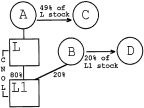
Over the past few days, we here at Surly Subgroup have received several requests for a post explaining our blog name. So, here’s a Very General primer for non-tax readers, and for our tax readers who maybe don’t spend all of their waking hours staring at the consolidated return rules.

Old lawyerly disclaimer habits die hard, so I’ll just say that the following discussion is Very General and mostly for fun. Others have written about this far more exhaustively. See, e.g., Martin J. McMahon, Jr., Understanding Consolidated Returns, 12 Fla. Tax Rev. 125 (2012) and four whole BNA Tax Management Portfolios.

Here are the key points:

Everybody Wants to Belong…

The general idea behind the consolidated return is that where there’s an affiliated group of corporations, a rule that requires each corporation in the group to file its own separate tax return may create frictions and transaction costs and may give rise to weird incentives and disincentives in the case of transactions between corporations in the group.

Enter the consolidated income tax return.

Continue reading “SRLY, SRSLY: A Tale of Loss and Longing to Belong”

A New Republican Idea: Raising Taxes on the Rich

What a crazy day for Republican Presidential candidates as related to their tax positions!! Donald Trump wants to raise taxes on the wealthy and Kasich (the supposed mainstream candidate) still thinks that you can grow the economy through spending cuts!

For now, I will just discuss Donald Trump truly anti-establishment position. He appeared in a town hall meeting on the Today show this morning. During the segment Savannah Guthrie asked Mr. Trump if he believes that taxes should be raised on the wealthy (see about 16:52 of the clip). He said he does, including on himself. That must have been a shock to the Republican base!

Mr. Trump’s bombshell is a window into the main idea I discussed in my introductory post. There is a “huuuuge” difference between the absolute rates and effective rates. This problem is very evident in the corporate tax world.  However, Mr. Trump’s statement shows it is just as prevalent with individual taxes.

Almost everyone (other than tax professors), especially the candidates (including Trump here), discuss taxes as related to absolute rates and not effective rates. For example, we can make the stated tax rate 75% or 90%. This stated rate means very little because that rate is applied to an adjusted gross income number. What really matters is how adjusted gross income is determined.  Rates do matter, but only if gross income and adjusted gross income are fairly similar (I’m look at you middle America).

To explain this let’s use an example.  Assume Mr. Trump’s gross income is $100, we do not take a rate (let’s use 40%) and multiply that by the $100 for $40 in tax due. We first allow a series of above-the-line (non-phased out) deductions to that gross income. In Mr. Trump’s case, this allows him to reduce his income to zero. Richard Rubin of the Wall Street Journal has done a great job writing about how Mr. Trump has reduced his taxes (to what number we don’t know since he will not release his returns).  From Rubin’s research, Mr. Trump uses from the usual, depreciation deductions, to the unusual, goat herds.  Even if Mr. Trump wanted to raising his stated rate to 100%, it would not matter; his effective tax rate might still be zero.  100% of zero is zero (for those math geeks, the formula is: 100% * 0 =0)

Continue reading “A New Republican Idea: Raising Taxes on the Rich”