
Examination of Allegations Against Clinton Foundation Part II

By: Philip Hackney

elections-1527438_1280

A week ago I considered one of three allegations Rep. Marsha Blackburn made against the Bill, Hillary & Chelsea Clinton Foundation in a letter Blackburn sent to the IRS, FBI, and FTC. I found the first allegation stated nothing of significance to the IRS. I now look at the other two and find them significantly wanting as well. Recently, IRS Commissioner Koskinen sent a letter indicating the IRS would investigate these complaints. I conclude they fail to state any complaint actionable by the IRS.

The second and third Blackburn allegations seem to come from a book by Peter Schweizer called Clinton Cash. Both allegations suggest that Sec. Clinton provided large governmental benefits in exchange for donations to the Clinton Foundation and payments to Bill Clinton. Both of the claims, already made by Presidential candidate Donald Trump, regarding Laureate University and Uranium One have been rated False and Mostly False by Politifact. Thus, it is difficult to take these allegations seriously.

Nevertheless, there are two things I do in this post. First. I discuss the factual conclusions of others regarding whether there was a quid pro quo arrangement associated with the second and third allegations. Then, I look at how the tax law might treat such arrangements were they true. Continue reading “Examination of Allegations Against Clinton Foundation Part II”

What’d I Miss?

I’ve been traveling for the last month or so, a significant portion of that time without any internet access.

Whatd I MissThat doesn’t mean, of course, that I’ve been totally starved of news. With a 10-, 7-, and 4-year-old, I couldn’t miss the existence of Pokémon Go, and I’ve caught up (at least slightly) on the big, general news of the day. But by and large, I haven’t opened my Lexis Daily Federal Tax Tracker in a month. I’ll naturally read what my co-bloggers have written here, but I’m curious if there’s any other important tax happenings that I might not have seen.
So tell me: What’d I miss?

It’s Complicated.

By: Shu-Yi Oei

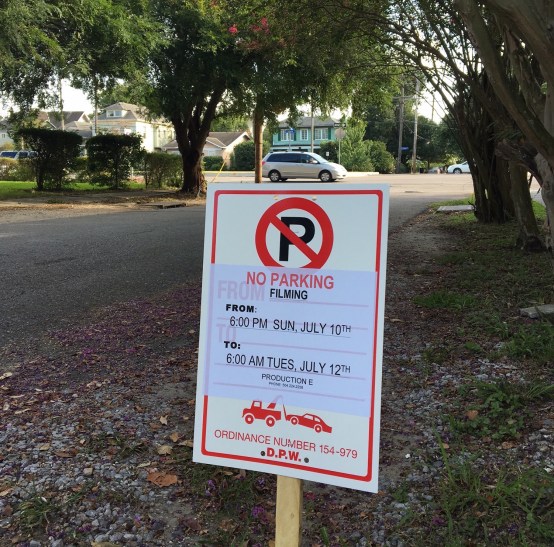
I’ve been thinking a lot about movies lately, partly because this pesky sign appeared outside my house a couple of days ago, and partly because of the Louisiana film tax credit, which has been all over the local news.

film sign 2

A couple of days ago, an Associated Press article reported that Louisiana’s motion picture industry was down by 90% this year as filmmakers moved production to states with more generous tax incentives. (I guess that puts the filming outside my house in the 10%?). It was also reported that Governor John Bel Edwards and the Louisiana Economic Development agency are going to commence an examination of the film tax credit and its economic impact in Louisiana. As the news reports indicate, the decline in movie production activity is undoubtedly due to the fact that, facing a state budget deficit, legislators placed caps and limitations on the credit in legislation passed last year. The most material change was an aggregate $180 million cap on the credit for tax years 2015-18, which will then sunset. RS: 47:6007(C)(1)(d)(ii). As a result, movie production has reportedly moved to states with more generous film tax incentives.

The Louisiana film tax credit is a complex beast, and I can’t cover all its intricacies here. But some broad policy points are worth mentioning. Continue reading “It’s Complicated.”

State Tax Reform Amidst Cajun Sausage Making

Steven Sheffrin
Professor of Economics & Director of the Murphy Institute, Tulane University

It was not quite Cajun boudin being prepared in Baton Rouge this winter and spring, but the sausage being concocted in the Louisiana Legislature was equally spicy. With low oil prices and years of “creative” budgets under Governor Bobby Jindal, the new Governor, John Bel Edwards, and the Legislature faced an initial budget shortfall of roughly 16 percent of the state general fund for the next fiscal year. Three separate legislative sessions later, they did reach a balanced budget, although with less revenue than the Governor had wanted. The revenue raisers included a dizzying array of sales tax changes that only temporarily limited exemptions, temporary limits on the refundability of business credits, and various other “haircuts” for business. Not exactly the purest of tax reforms.

But buried in this avalanche of legislation were some serious reforms of the Louisiana corporate tax along the lines that my colleagues and I had recommended to the Legislature last year.

Continue reading “State Tax Reform Amidst Cajun Sausage Making”

Law School Loans, REPAYE, and Taxes [Updated]

Student loansBy: Sam Brunson

Friday, the New York Times‘s DealBook section had an article about law school debt. (H/t Paul Caron.) It focused on John Acosta, a recent Valparaiso graduate who is starting a defense and family law practice.

Although he’s done well for himself so far—top third of his class, passed the Bar Exam on his first attempt, and successfully convinced a former prosecutor to join him—he has a significant problem: debt. From the article:

Yet in financial terms, there is almost no way for Mr. Acosta to climb out of the crater he dug for himself in law school, when he borrowed over $200,000. The government will eventually forgive the loan — in 25 years — if he’s unable to repay it, as is likely on his small-town lawyer’s salary. But the Internal Revenue Service will treat the forgiven amount as income, leaving him what could easily be a $70,000 tax bill on the eve of retirement, and possibly much higher. [Emphasis added]

Up to $70,000 in taxes, or maybe more? Could that be right? And, if so, what’s up with that? Continue reading “Law School Loans, REPAYE, and Taxes [Updated]”

IRS Scrutinized Mostly Conservative Nonprofits: Evidence of Targeting?

By: Philip Hackney

owl-1019062_1280

Documents recently released in a court case demonstrate that 282 of 426 organizations caught in the IRS political advocacy, “Tea Party,” nonprofit organization net that caused such a hullabaloo three years ago, were in fact conservative. This comes three years after Lois Lerner apologized to Tea Party groups on behalf of the the IRS because, she said, it “inappropriate(ly)” selected these conservative groups’ applications for tax exemption for scrutiny based on name alone rather than legal cause.

An NPR report by Peter Overby concludes about the new information: “Whatever the IRS meant to do, this hodgepodge of a list illustrates how the agency bollixed the nonprofit application process.” In this post, I examine this seemingly “common-sense” claim and find it wanting. Additionally, because I have written publicly about this matter both at the time and more recently. I re-examine my conclusions in those writings in light of this new information.

Early on, I assumed that only about 1/3rd of the organizations caught in the IRS net were conservative. I made this assumption based on the TIGTA report because it noted that 96 of 298 applications, or 1/3rd of the organizations, were Tea Party, Patriot or 9/11 groups. I left wiggle room in my writing, but in the back of my mind, this was my assumption. I assumed TIGTA would have reported every conservative group that was in the lot. But, it turns out that about 2/3rds of the organizations  were conservative. Thus, my assumption was wrong. The vast majority of the organizations caught in the net were conservative. Nevertheless, I don’t think this new information demonstrates some additional level of bungling by the IRS that was hitherto unknown. And, frankly, a list like this with little context does nothing to tell us about whether the IRS was fair or not.¹ Continue reading “IRS Scrutinized Mostly Conservative Nonprofits: Evidence of Targeting?”

Minnesota Dogs Breathe (Woof) a Sigh of Relief: Pet Trusts Now Legal

By Diane Ring

IMG_6307Perhaps you heard a chorus of joyous barking across the state of Minnesota recently — now you know why. Until just over two weeks ago, every state in the U.S., plus Washington, D.C., recognized statutory pet trusts, except Minnesota. But on May 22, 2016, the Minnesota Governor signed legislation approving pet trusts. The legislation, which had been sponsored in the House by Rep. Dennis Smith and in the Senate by Sen. Scott Dibble, allows the creation of a legally enforceable trust that provides for the care of an animal that was alive during the grantor’s lifetime. The terms of the trust can be enforced by a person appointed in the trust, or if no one is appointed, the court may appoint someone. Moreover, anyone having an “interest in the welfare of the animal” may petition the court to appoint someone to enforce the trust or remove the person so designated in the trust document. The trust would terminate on the death of the last surviving animal (or 90 years if shorter). Any remaining proceeds would be distributed pursuant to the trust’s terms, or if the trust fails to specify, then to the “grantor’s heirs-at-law determined as if the grantor died intestate domiciled in [Minnesota] at the time of distribution.”

This all seems pretty straightforward, so why was Minnesota the last state? Continue reading “Minnesota Dogs Breathe (Woof) a Sigh of Relief: Pet Trusts Now Legal”

Teaching Tax – At Home and Abroad

by Jennifer Bird-Pollan

I’ve just finished my sixth year of teaching tax at the University of Kentucky, which is longer than I’ve done any other professional task, but I still feel like I’m a beginner.  I have started to develop strong classroom preferences (students may not use computers in my classes, I prefer lots of participation, and I prefer textbooks that elucidate concepts, rather than trying to hide the ball).  But at the same time I have many more questions about the best way to do this work (what should I cover and leave out, given the time constraints?  how can I encourage students to prepare seriously ahead of time, while still giving robust answers to student questions in class?).  I am eager to hear from others, both my co-bloggers and visitors, what they think about these issues, and I plan to devote future blog posts to some of my thoughts about these questions.  However, having just finished teaching “International Aspects of U.S. Tax Law” at the Vienna University of Economics and Business for the second time, I thought I’d focus here on some of the differences I have observed teaching U.S. income tax law abroad.   Continue reading “Teaching Tax – At Home and Abroad”

Should the IRS Penalize Trump Foundation Political Contribution?

By: Philip Hackney

trump-towers-1357833_1280


The news yesterday was focused in part on the fact that in 2013 the Florida AG Pam Bondi personally solicited a political contribution from Donald Trump. And, shortly thereafter the Donald J. Trump Foundation (“Foundation”) made a $25,000 contribution to a political organization called And Justice for All that supported the reelection effort of Pam Bondi for AG of Florida. Bondi’s office ultimately dropped any investigation into Trump University. Bondi denies the allegation that she ended an investigation in exchange for a political contribution. She says her office was never investigating Trump U in the first place. She does acknowledge, however, that her political organization should not have accepted the donation from a charitable foundation. She claims she tried to refund the contribution in March.

The claims against the AG are obviously a serious issue and should be looked at, but I of course see things through a bit of blinders. I see a nonprofit behaving badly. The level of negligence here and misuse of a private foundation frankly drives me crazy. As discussed below, the Foundation’s excuse is that it made a mistake and did not know what it had done. In this post I examine all of the tax code violations involved, and I look at the Foundation’s excuse and try to assess whether it is believable and whether it matters. Continue reading “Should the IRS Penalize Trump Foundation Political Contribution?”

Uncle Sam as Danish Tax Collector

By: Diane Ring

Who says that real global tax cooperation is dead? During a very interesting conference on international tax held in Boston a couple of weeks ago, a recent U.S. tax case was discussed and caught my attention: Torben Dileng v. Commissioner (D.Ct. N. Ga., Jan. 15, 2016). In that case, a U.S. District Court ruled that the IRS could collect $2.5M of Danish taxes owed by a Danish citizen who was resident in the U.S.

IRS as Danish tax collector– what was this all about? Continue reading “Uncle Sam as Danish Tax Collector”

Oklahoma Decreases Working Poor Family Benefits

By Francine J. Lipman
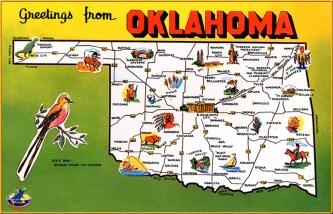
OklahomaLRGThis Sunday New York Times editorial caught my eye (and heart) this morning, because I have been researching and writing about state EITCs and lobbying legislators to consider enacting or increasing this demonstrably effective work incentive and antipoverty tool. When I first looked into the issue I was pleasantly surprised to discover that twenty-six states and the District of Columbia have EITCs that build on the antipoverty success of the federal EITC. Continue reading “Oklahoma Decreases Working Poor Family Benefits”

Presidential Tax Transparency Act

By: David J. Herzig

I was given a heads up yesterday about new legislation requiring disclosure of a presidential candidate’s tax returns (thanks Janet Novack). In the wake of our coverage of the tax issues related to the presidential race, it is worth mentioning the legislation proposed by Senate Finance Committee Ranking Member Ron Wyden, D-Ore.

According to the press release: “‘Since the days of Watergate, the American people have had an expectation that nominees to be the leader of the free world not hide their finances and personal tax returns,’ said Wyden.

“The Presidential Tax Transparency Act says that within 15 days of becoming the nominee at the party convention, the candidate must release their most recent 3 years of tax returns to the Federal Election Commission (FEC). Should the candidate refuse to comply, the Treasury Secretary will provide the tax returns directly to the FEC for public release.”

A summary of the bill is here and the full text is here.

As an initial matter, I am in favor of codifying a rule requiring the disclosure of tax returns if you a candidate for president on any State’s ballot. As I read the legislation, there seem to be major problems with the language of the statute.  This makes me think that the legislation is more of a publicity stunt then a force for meaningful change.

Here are some of the problems I see with the legislation: Continue reading “Presidential Tax Transparency Act”

Will New Data on the Volume of Sharing Economy Workers Prompt Tax Reform?

By: Diane Ring

Sharing economy and other platform workers are frequently classified as independent contractors and bear many of their own costs. Thus, these workers whom we don’t think of as “small businesses”—and don’t really think of themselves as small businesses—are thrust into the exciting world of quarterly reporting and calculation of proper deductions. Exciting if you are a tax lawyer, but less so if you are making limited income and are facing daunting tax compliance requirements. Despite these compliance challenges, there has not been much movement in responding to the tax challenges faced by sharing economy workers. These observations about the sharing economy sector have been around for a while; they were the focus of two forthcoming articles by my co-author, Shu-Yi Oei, and me (Can Sharing Be Taxed? and The Tax Lives of Uber Drivers: Evidence from Internet Discussion Forums).

Yesterday, a new report coming out of American University echoed our observations and findings. Caroline Bruckner of the Kogod Tax Policy Center presented testimony (and a supporting report) to Congress regarding the size and scope of worker participation in the sharing economy. Her goal was not to provide a definitive calculation nationwide of sharing and platform workers, but to offer a solid sense of the scale of participation in the sector (more than 2.5 million individuals) and note important growth trends. Based on the percentage of the American workforce active in the sharing/platform sector, she urged more government attention to reform that would address the tax compliance and administration challenges in this sector.

Will Congress and Treasury/IRS respond? Continue reading “Will New Data on the Volume of Sharing Economy Workers Prompt Tax Reform?”

Trump Tax (Non) Disclosure

By David J. Herzig

Today, Paul Caron in his TaxProf Blog, highlighted an article by John McGinnis (a Constitutional Law Scholar at Northwestern).   In the article, McGinnis states that Trump should not have to disclose his income tax returns.  His premise is that the norm of tax return disclosure is “bad.”  He believes that privacy norms should trump any right of the electorate to see a candidates taxes.  I vehemently disagree with this normative position. I hesitate to write a “hot take” or half-baked reaction to the article.  But there is dangerous precedent failing to highlight the error(s) in McGinnis’ position. (I am under the assumption that McGinnis had limited space to write his opinion and nuance he would normally make is lost to space constraints).

I, as well as others such as, Joe Thorndike, have previously made the point that tax return disclosure is very important.  In my Forbes article, I made the point of a variety of reason tax return disclosure is very important.  I said, “First, tax returns can be a window to understanding how someone truly thinks and behaves; what you do when you think the public isn’t looking, shows the more authentic self.  (Hillary Clinton’s tax return is arguably less revealing, since she has long known her returns would be made public.)  Trump’s tax filings might provide some additional insight into how he would run the country.  Does he follow rules? Stake out very aggressive positions?  Take unnecessary risks?”  I think how people act in private is the best proxy for understanding what they think.  With a candidate like Trump, this may be the only window into how a Trump presidency would look like.

McGinnis starts his discussion by making the first point in support of his thesis that Continue reading “Trump Tax (Non) Disclosure”

Can EU-wide Corporate Consolidation Be Revived?

By: Diane Ring

On Tuesday, Shuyi  mentioned the EU’s Common Consolidated Corporate Tax Base proposal (CCCTB) in her post, noting some interesting parallels between maritime/bankruptcy coordination and international tax efforts at coordination. This motivated me to take a look at the recent developments that have happened around the CCCTB proposal. The CCCTB would provide a single set of rules for calculating the income of businesses operating in the EU – and would allow for such businesses to file a single consolidated return for their EU activities. The group’s income would then be allocated across the member states. Under this scheme, individual EU member states would still be able to tax their portion of the group’s income at their own country-specific tax rate. But I was curious–the CCCTB proposal is not new; it has been around for more than a decade. What has been happening on this stalled cooperation front? And, more importantly, will the EU’s announced re-launch of the proposal have a greater chance of success than previous attempts? Continue reading “Can EU-wide Corporate Consolidation Be Revived?”