Follow-up Friday: Messi and McDonald’s

By David J. Herzig

In what I’m dubbing follow-up Friday, I wanted to give a quick update to two stories I am following regarding tax avoidance structuring.  One on the corporate side: the French Tax Authority Raids on Multinationals; and, one on the individual side: the Messi Tax Fraud Trial. Both stories are heating up.

French Tax Raids

imgres

It was reported overnight that McDonald’s French headquarters was raided by French taxing authorities.  Unlike the Google raid that was reported in real time, this raid appeared to take place on May 18.

Much like the Google raid this investigation is centered on tax avoidance.  McDonald’s problems seem to have started in December when a lawsuit was brought against the company for understating earnings.  Apparently, in France, workers are entitled to a share of profits. A February 2015 report stated that McDonald’s avoided almost 1 billion euros of taxes using its Luxembourg subsidiary.

I guess Diane Ring was correct in her comment that all multinationals should be preparing for tax raids in France.  If you don’t have a plan in place, you should be working on one now.  Finally, Professor Byrnes at Texas A&M wrote an interesting story on his blog about routes for the United States to increase its involvement.

Messi Tax Fraud Trial

The most trustworthy news outlet, World Soccer Talk, is reporting that Lionel Messi will testify on June 2 for in his tax fraud trial.  As I previously reported, the trial is due to start on May 31.

A fascinating wrinkle that the article points out is that although there is potential jail time (22 months) if Messi is convicted of tax fraud, often that sentence is suspended.  “However, any such sentence would likely be suspended as is common in Spain for first offences carrying a sentence of less than two years.”

As I keep looking into sports figures tax avoidance planning, more and more amazing items come to light.  In January, Kelly Phillips Erb, reported in Forbes about another FC Barcelona player, Javier Mascherano, pled guilty to not paying tax for 2011 and 2012.  How fun would it be if two players of the NY Yankees were convicted of tax fraud.

These stories are why I love Europe!
Presidential Tax Transparency Act

By: David J. Herzig

I was given a heads up yesterday about new legislation requiring disclosure of a presidential candidate’s tax returns (thanks Janet Novack). In the wake of our coverage of the tax issues related to the presidential race, it is worth mentioning the legislation proposed by Senate Finance Committee Ranking Member Ron Wyden, D-Ore.

According to the press release: “‘Since the days of Watergate, the American people have had an expectation that nominees to be the leader of the free world not hide their finances and personal tax returns,’ said Wyden.

“The Presidential Tax Transparency Act says that within 15 days of becoming the nominee at the party convention, the candidate must release their most recent 3 years of tax returns to the Federal Election Commission (FEC). Should the candidate refuse to comply, the Treasury Secretary will provide the tax returns directly to the FEC for public release.”

A summary of the bill is here and the full text is here.

As an initial matter, I am in favor of codifying a rule requiring the disclosure of tax returns if you a candidate for president on any State’s ballot. As I read the legislation, there seem to be major problems with the language of the statute.  This makes me think that the legislation is more of a publicity stunt then a force for meaningful change.

Here are some of the problems I see with the legislation: Continue reading “Presidential Tax Transparency Act”

French Tax Authorities Raid Google

By: David J. Herzig

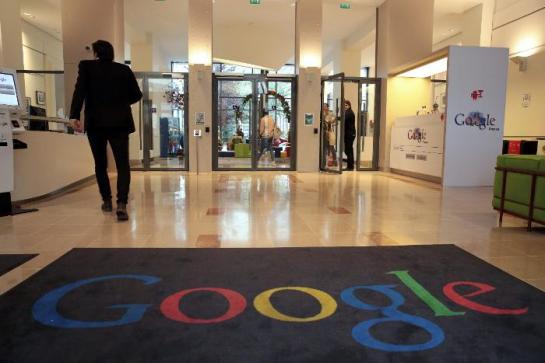
Don’t ever say that The Surly Subgroup is not on some breaking news.  It is being reported starting at 5 am French time some 100 French authorities conducted a “ultra secrète” raid on Google’s Paris headquarters.  This past February, Google was assessed a deficiency of some 1.6 Billion euros in back taxes.

5825007_google-paris_545x460_autocrop


Une perquisition a lieu ce mardi au siège de Google à Paris.  LP/F. DUGIT

There is nothing really new about the Google tax story.  Members of the European Union are in constant complaint about the use of tax strategies used by multinationals.  With awesome names such as the Double Irish with a Dutch Sandwich, multinationals that have portable revenue generation items, e.g., algorithms, can house those assets in low tax EU jurisdictions such as Ireland.  By then using EU laws to their advantage, e.g., EU tax law protects companies from paying tax in a non-permanent establishment country, they can avoid or mitigate tax.

In January this year, Google settled similar claims with the United Kingdom.   Continue reading “French Tax Authorities Raid Google”

Trump Tax (Non) Disclosure

By David J. Herzig

Today, Paul Caron in his TaxProf Blog, highlighted an article by John McGinnis (a Constitutional Law Scholar at Northwestern).   In the article, McGinnis states that Trump should not have to disclose his income tax returns.  His premise is that the norm of tax return disclosure is “bad.”  He believes that privacy norms should trump any right of the electorate to see a candidates taxes.  I vehemently disagree with this normative position. I hesitate to write a “hot take” or half-baked reaction to the article.  But there is dangerous precedent failing to highlight the error(s) in McGinnis’ position. (I am under the assumption that McGinnis had limited space to write his opinion and nuance he would normally make is lost to space constraints).

I, as well as others such as, Joe Thorndike, have previously made the point that tax return disclosure is very important.  In my Forbes article, I made the point of a variety of reason tax return disclosure is very important.  I said, “First, tax returns can be a window to understanding how someone truly thinks and behaves; what you do when you think the public isn’t looking, shows the more authentic self.  (Hillary Clinton’s tax return is arguably less revealing, since she has long known her returns would be made public.)  Trump’s tax filings might provide some additional insight into how he would run the country.  Does he follow rules? Stake out very aggressive positions?  Take unnecessary risks?”  I think how people act in private is the best proxy for understanding what they think.  With a candidate like Trump, this may be the only window into how a Trump presidency would look like.

McGinnis starts his discussion by making the first point in support of his thesis that Continue reading “Trump Tax (Non) Disclosure”

Trump Claims $557 Million in Income in 2015

By:  David J. Herzig

Yesterday, Donald Trump filed his personal financial disclosure with the Federal Election Commission.  This updated his initial financial disclosures.  On his web site he claimed the disclosures  were “the largest in the history of the FEC.”  Unfortunately, he did not file his disclosures on-line like Hillary Clinton.  Alas, we will have to wait a little bit to get to the details.

Nonetheless, according to Mr. Trump’s website he made $557 million in income in 2015. That number does not include “dividends, interest, capital gains, rents and royalties.”  So, his real income should be substantially higher.

I have been writing about why a disclosure of Mr. Trump’s tax returns are necessary (at Forbes and the Wall Street Journal).  Once I have a copy of the disclosures, I will give some updates (hopefully shortly) about various items that raise some red flags. From what I gather in innuendo and rumor about his disclosure, the calls for full disclosure of his tax returns to sort out facts from fiction will continue to gain steam.

The key reason the tax returns are needed is to permit a thoughtful discussion (hopefully more global tax policy discussions) between the relationship between his over $557 million in gross income and his taxable income.

[QUICK UPDATE: I was amazed how ABC, NBC, FOX, CBS, The Wall Street Journal and the New York Times all seemed to know what was in the not yet public disclosure.  The rule according to the FEC is that the return is not public until they have approved it.  However, despite the non-public disclosure, the FEC has apparently sent the disclosure out to certain news sources.  It is amazing how a governmental agency can partake in such mishegoss!]

[UPDATE 7:45 pm] The Wall Street Journal put up Trump’s FEC disclosure.  Available at: http://www.wsj.com/public/resources/documents/TrumpdisclosureMay2016.pdf?mod=e2twp

Tax Professors on @Twitter

A little over a week ago, I came across an article titled Top 50 Law Professors on Twitter. I did not even want to link to the article (although I did) because there was not one tax professor on the list. So on this #followfriday, if that is still a thing, I thought I would created a list of tax professors on @twitter. If I missed you, I am sorry; just send me your twitter handle or follow me and I will add it to the list!

Starting with the SurlySubgroup (@surlysubgroup)

Jennifer Bird-Pollan (@jbirdpollan)

Sam Brunson (@smbrnsn)

Phil Hackney (@EOTaxProf)

David Herzig (@professortax)

Leandra Lederman (@leandra2848)

Ben Leff (@benmosesleff)

Francine Lipman (@Narfnampil)

Diane Ring (@ringdi_dr)

Shu-Yi Oei (@shuyioei)

Stephanie Hoffer (@Profhoffer)

Other United States/Canadian Tax Professor (in no particular order):

Continue reading “Tax Professors on @Twitter”

Lionel Messi, Tax Fraud and the Panama Papers

I have been fascinated by the accusations of tax fraud levied against soccer superstar Lionel Messi and his father by the Spanish tax authorities.  Right when I thought the story could not get more interesting of course Messi is tied to the Panama Papers.  As much as I like Hermione (h/t Shu-Yi), I love Messi!

As a quick background for non-sports and football (I mean soccer) fans, Messi is the greatest soccer player in the world and maybe the greatest soccer player of all time.  As a point of reference, he would be the equivalent of Michael Jordan, Joe Montana, Babe Ruth rolled into one player.  Imagine what would happen if LeBron James were accused right now of tax fraud by the IRS?  This would dominate ESPN and probably network television.  Well, this is what is happening in the rest of the world with Messi.

Last year, a bombshell was dropped when the Spanish taxing authorities accused Messi of defrauding Spain of more than $5 million. Continue reading “Lionel Messi, Tax Fraud and the Panama Papers”

John Kasich’s Tax Plan: 2008 Was Great!

Last week I wrote about Donald Trump’s dumbfounding decision, as the Republican frontrunner, to advocate for increasing taxes on the wealthy.  I left for today commentary on the amazing interview Ohio Governor John Kasich did with the Washington Post Editorial Board.  Essentially Gov. Kasich believes that we can obtain economic growth through spending cuts.  (Just to be clear why this is on a tax blog: spending and taxes go together like peanut butter and jelly).

It seems most pundits are speculating that there will be a contested Republic convention in Cleveland.  It has also been speculated that in that environment, a wildcard like, Gov. Kasich or Rep. Ryan, might end up the nomination.  Both Gov. Kasich and Rep. Ryan appear to hold the same position that spending cuts are good.  They believe that spending cuts plus tax cuts (I will address the tax cuts issue in a later post) will actually increase overall tax revenues through overall economic growth. It is not surprising that the two Republican establishment figures would hold such a belief.  This principle is alignment with popular thinking: polls show many Americans think spending cuts will have an economic benefit by a 55 to 18 percent margin.

I think, therefore, it is worth exploring why spending cuts as related to growth (economic and job) is not at all mainstream economic thinking.  But like all issues, here we have a complicated discussion.  It may be true that spending cuts help balance the budget which may grow the economy in other dimensions.  But spending in a recession, as most economic data seems to show, is the main way forward for job growth and to exit the recession.  Most mainstream economists believe: (1) that spending increases job growth on a temporary basis; (2) a reduction in spending will unwind the growth back to the baseline without spending; and (3) job growth will grow the economy.  However, in no way is there permanency attached to spending as related to job growth.  (This is the reason that Bernie Sander’s forecasts are of job growth in his plan are incorrect.  See this study.)

Continue reading “John Kasich’s Tax Plan: 2008 Was Great!”

Prince and the Estate Tax

As radio stations play Prince songs all day long and Purple Rain makes a return to the theatre, I was struck by the vast amount of content Prince not only produced but owned. Sadly, immediately, I thought of the potential estate tax value of Prince’s estate.  This unique situation is playing out right now with the Michael Jackson estate but here Prince owned more of his own work.

Currently, conservative estimates have his estate at $300 million.  But these estimates may be way off as Prince actually owned his recording and publishing copyrights. According to the LA Times, music industry insiders say they “can’t imagine a catalog that would have a higher value.”

There is much speculation on who will receive his estate.  Because, probate has not been opened, we do not know if Prince had a will yet or not. There has been speculation that he had no will since he was unmarried and had no children.  But this seems rather silly (and kind of offensive) to me given his concern for protecting the value of his catalog during life. I would expect to see a pour-over will to a trust.

What will be interesting is what type of estate planning he engaged in during life.  Normally, estate tax returns are private and only the estate, the beneficiaries and the IRS know what is on them. However, in the case with a hard to value asset (e.g., a massive music library), there is often a difference of opinion between the estate and the IRS as to the value of the asset.  Since the resolution of the difference is in court, we will get a glimpse into the planning done by Prince.  One point to make here is that if the beneficiary of the estate is Jehovah’s Witnesses as has been reported (speculated), then this might not end up in court because there would be no tax due because of the estate charitable deduction.

Continue reading “Prince and the Estate Tax”

A New Republican Idea: Raising Taxes on the Rich

What a crazy day for Republican Presidential candidates as related to their tax positions!! Donald Trump wants to raise taxes on the wealthy and Kasich (the supposed mainstream candidate) still thinks that you can grow the economy through spending cuts!

For now, I will just discuss Donald Trump truly anti-establishment position. He appeared in a town hall meeting on the Today show this morning. During the segment Savannah Guthrie asked Mr. Trump if he believes that taxes should be raised on the wealthy (see about 16:52 of the clip). He said he does, including on himself. That must have been a shock to the Republican base!

Mr. Trump’s bombshell is a window into the main idea I discussed in my introductory post. There is a “huuuuge” difference between the absolute rates and effective rates. This problem is very evident in the corporate tax world.  However, Mr. Trump’s statement shows it is just as prevalent with individual taxes.

Almost everyone (other than tax professors), especially the candidates (including Trump here), discuss taxes as related to absolute rates and not effective rates. For example, we can make the stated tax rate 75% or 90%. This stated rate means very little because that rate is applied to an adjusted gross income number. What really matters is how adjusted gross income is determined.  Rates do matter, but only if gross income and adjusted gross income are fairly similar (I’m look at you middle America).

To explain this let’s use an example.  Assume Mr. Trump’s gross income is $100, we do not take a rate (let’s use 40%) and multiply that by the $100 for $40 in tax due. We first allow a series of above-the-line (non-phased out) deductions to that gross income. In Mr. Trump’s case, this allows him to reduce his income to zero. Richard Rubin of the Wall Street Journal has done a great job writing about how Mr. Trump has reduced his taxes (to what number we don’t know since he will not release his returns).  From Rubin’s research, Mr. Trump uses from the usual, depreciation deductions, to the unusual, goat herds.  Even if Mr. Trump wanted to raising his stated rate to 100%, it would not matter; his effective tax rate might still be zero.  100% of zero is zero (for those math geeks, the formula is: 100% * 0 =0)

Continue reading “A New Republican Idea: Raising Taxes on the Rich”

Hello from David

First, I am very excited to be part of this ambitious tax blog platform.  Thanks Sam and Shu-Yi for organizing this!

Since we do not know each other, I will put up my blog version of a tinder profile. Hopefully, according to tinder protocol, I  get some “right-swipes.”

As a way of introduction, I am a tenured law professor at Valparaiso School of Law with a visiting position for the next two summers a Loyola Law School in Los Angeles.  You can find my opinions in 120 characters on twitter @professortax.

I am an employed as a full time law professor. Therefore, it goes without saying that I write law review scholarship. But, based on citations, I assume only 5 or 6 of you read it. Rather than talk to this select few, last year, I made a conscious decision to be more involved with the public.  I hoped to impart to the general public better understanding of taxes and how taxes relate to one’s everyday life.  I accomplished this through writing articles and serving as background for reporters (with an occasional quote).

Continue reading “Hello from David”