Regressivity and Cook County Property Taxes

I was listening to “The Morning Shift” on WBEZ this morning, and they started talking about property tax. Now, property tax isn’t really my thing, but the story caught my ear for a couple reasons.

First, of course, I’m a homeowner in Chicago, so the recent property tax hike is salient enough that it’s worth some of my time. Second, as my wife pointed out to me, the assessment of property values has an aspect that seems tremendously regressive and, therefore, problematic. Continue reading “Regressivity and Cook County Property Taxes”

What’d I Miss?

I’ve been traveling for the last month or so, a significant portion of that time without any internet access.

Whatd I MissThat doesn’t mean, of course, that I’ve been totally starved of news. With a 10-, 7-, and 4-year-old, I couldn’t miss the existence of Pokémon Go, and I’ve caught up (at least slightly) on the big, general news of the day. But by and large, I haven’t opened my Lexis Daily Federal Tax Tracker in a month. I’ll naturally read what my co-bloggers have written here, but I’m curious if there’s any other important tax happenings that I might not have seen.
So tell me: What’d I miss?

Alcatraz!

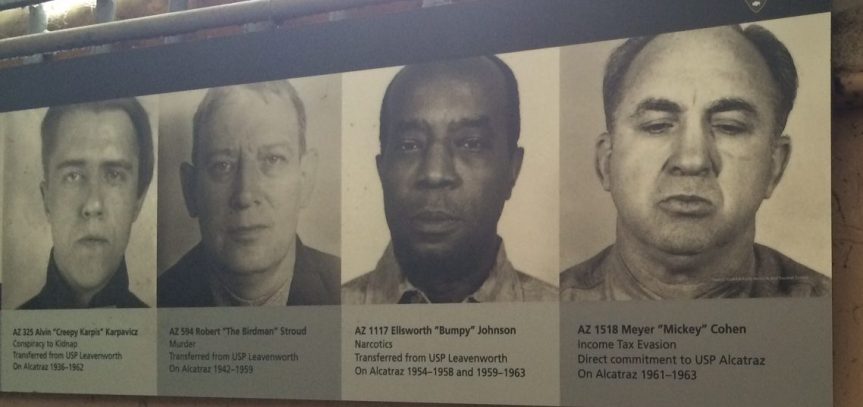
Early in the Alcatraz Cellhouse Audio Tour, my wife pointed out one of the pictures in D-Block: right next to people imprisoned for narcotics offenses, conspiracy to kidnap, and murder was Mickey Cohen, in Alcatraz for tax evasion. IMG_4029

Tax evasion! Alcatraz was a pretty harsh punishment for not paying your taxes. Unless, of course, you weren’t really sent to Alcatraz for not paying taxes, Which, of course, Cohen wasn’t. Neither was the inmate at the other side of the picture: Al Capone.   Continue reading “Alcatraz!”

Law School Loans, REPAYE, and Taxes [Updated]

Student loansBy: Sam Brunson

Friday, the New York Times‘s DealBook section had an article about law school debt. (H/t Paul Caron.) It focused on John Acosta, a recent Valparaiso graduate who is starting a defense and family law practice.

Although he’s done well for himself so far—top third of his class, passed the Bar Exam on his first attempt, and successfully convinced a former prosecutor to join him—he has a significant problem: debt. From the article:

Yet in financial terms, there is almost no way for Mr. Acosta to climb out of the crater he dug for himself in law school, when he borrowed over $200,000. The government will eventually forgive the loan — in 25 years — if he’s unable to repay it, as is likely on his small-town lawyer’s salary. But the Internal Revenue Service will treat the forgiven amount as income, leaving him what could easily be a $70,000 tax bill on the eve of retirement, and possibly much higher. [Emphasis added]

Up to $70,000 in taxes, or maybe more? Could that be right? And, if so, what’s up with that? Continue reading “Law School Loans, REPAYE, and Taxes [Updated]”

Tying the IRS’s Hands. Even Tighter

By Sam Brunson

Yesterday, the House Committee on Appropriations reported H.R. 2995 to the House of Representatives. H.R. 2995, the Financial Services and General Government Oversight Appropriations Bill  for FY 2017, if passed, would continue the trend of reducing the IRS’s budget, this time by $236 million.

It is undoubtedly worth looking at what exactly the bill does, but I’m interested in an amendment added yesterday by Rep. John Culberson (R-TX). Section 135 of the bill would make it even harder than it already is for the IRS to audit churches.  Continue reading “Tying the IRS’s Hands. Even Tighter”

Teaching Tax: On Clickers and Laptops

By Sam Brunson

I’ve used clickers in class ever since I started teaching. In fact, thanks to Paul Caron’s tireless advocacy, I’ve known I was going to use clickers since before I entered academia.

And, like Paul, both I and my students[fn1] have found clickers tremendously helpful in the classroom. In my experience, they do three main things:

  • They force all students to actively engage with the class. It’s easy enough to sit back in class and passively absorb (or not) the content. Sure, whomever I call on has to actively engage, but I can only call on a small portion of my class on any given day. But clicker questions allow students to not only listen, but actually answer, at least a handful of questions.
  • They tell me how well the students grasp what I’m teaching. If most of the students get the right answer, I know my explanation and the discussion were helpful. If a significant portion get it wrong, I know that I need to go back and address it again (and, depending on the answers they choose, I may be able to figure out where I or they went wrong).
  • They tell my students how well they grasp what I’m teaching. If most of the students get the problem right, a student who gets it wrong knows that she may need to go back and review the topic. Or ask a question. Or do something else.

But I have a problem: Continue reading “Teaching Tax: On Clickers and Laptops”

The #PanamaPapers Come to the U.S.!

Today’s New York Times has a story about U.S. citizens and residents who have shown up in the Panama Papers. The ICIJ has shared its documents with the Times, which has found at least 2,400 U.S.-based clients over the last decade.[fn1]

The story (which you need to read) details some of the services Mossack Fonesca provided for four wealthy U.S. clients: entrepreneur William R. Ponsoldt, former CEO and chair of Citigroup Sanford I. Weill, Boston Capital Partners managing parter Harald Joachim von der Goltz, and financial author and life coach Marianna Olszewski.

Clearly, at least some of the services Mossack Fonesca provided were legal; some, however, were remarkably shady (for example, it looks like some clients used the offshore structuring to evade gift taxes, and some clients explicitly wanted to set up offshore structures to hide money from potential judgment creditors). Continue reading “The #PanamaPapers Come to the U.S.!”

“The Federation Does Not Have a Tax Policy …”

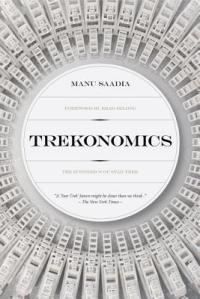
trekonomicsBook review: Manu Saadia, Trekonomics: The Economics of Star Trek (2016).

About a year ago, I heard Felix Salmon talking about a project he was shepherding; Trekonomics was going to be a crowdfunded book about the post-scarcity economics of Star Trek. Intrigued, I put the $10 on my credit card. And waited.

Confession: I’m not a Trekkie. Or a Trekker. (I don’t honestly know the difference between the two.) I mean, I grew up watching the original series with my dad, who’d watched it in its initial run. And when The Next Generation aired, my middle school heart was thrilled, and I think I watched the first season or so before stopping. And that (plus a couple movies and the reboots) is about the extent of my Star Trek knowledge.  Continue reading ““The Federation Does Not Have a Tax Policy …””

Avocados and Other (Delicious) Tax Shelters

Nice_AvocadosLast night, I flew back from the (wonderful!) AMT conference. After a three-hour storm delay, I landed at Chicago O’Hare and, walking to get my bag, I checked Twitter. A tweet from Voice of San Diego (VoSD) (which seems largely to be a geographically-focused ProPublica) highlighted a convergence between two of my favorite things: taxes and avocados.

I grew up in and around San Diego, and I grew up eating avocados (both in guacamole and BLAT form),[fn1] but I’ll confess that I’d never much thought about why there were so many avocados grown in San Diego; I probably always assumed that they were native to Mexico, and that San Diego had a similar climate to Mexico, so they were a natural fit. Continue reading “Avocados and Other (Delicious) Tax Shelters”

Church or Family Business? Puerto Rico Wants to Know

By: Sam BrunsonHacienda

On Friday, Shu-Yi posted an overview of Puerto Rico’s financial problems, and described the centrality of the island’s tax regime to those problems. Today, I’m going to dig into one particular aspect of Puerto Rican taxation: tax-exempt churches.

Last year, the Puerto Rican Treasury department launched an ambitious pilot program[fn1] under which it planned on auditing more than 40 tax-exempt organizations. Juan Zaragoza, Puerto Rico’s Secretary of Treasury, announced that this month the program moves to Phase 3: auditing churches.

As in the U.S., the Puerto Rican tax law exempts some nonprofit organizations from tax. Puerto Rican tax law explicitly exempts

Churches, church conventions or associations, as well as religious and apostolic organizations, including corporations and any community chest, fund, or foundation, organized and operated exclusively for religious purposes, no part of the net earnings of which inures to the benefit of any private shareholder or individual.[fn2]

Some tax-exempt churches, Zaragoza asserted, aren’t really churches, but rather family businesses. They make annual profits, just like a shoe store (and yes, his example was a shoe store), but, because they claim to be tax-exempt churches, they don’t pay taxes on their profits. Continue reading “Church or Family Business? Puerto Rico Wants to Know”

It’s Here! The #PanamaPapers Database

On April 3, 2016, the International Consortium of Investigative Journalists, in partnership with a number of news organizations, announced that it had received a leaked trove of 11.5 million documents from the Panamanian law firm Mossack Fonesca. Dubbed the “Panama Papers,” leak, the ICIJ documented how the wealthy and the powerful used Mossack Fonesca to move money around the world of tax havens and, at least sometimes, to hide it from their countries’ revenue agencies.

Originally, the ICIJ declined to make its data available, even to governments.[fn1] It explained that it is: Continue reading “It’s Here! The #PanamaPapers Database”

Stuck in the Middle With . . . the IRS?!?

By Sam Brunson

Pity the IRS.[fn1] It is, right now, stuck in the middle of a battle over religion. See, churches, like other public charities, are exempt from tax under section 501(c)(3). But the exemption comes with certain limitations, including an absolute prohibition on supporting or opposing candidates for office.

This prohibition has become something of a culture wars battleground, at least with respect to churches. Some churches argue that they have a moral and religious obligation to support candidates whose actions are in line with their beliefs, or, alternatively, to oppose candidates whose actions violate their beliefs. As such, they claim this prohibition violates their Free Exercise rights, and is unconstitutional, at least as applied to churches.

The funny thing is that, as best I can tell, only one church has ever lost its tax exemption for violating this campaigning prohibition. Continue reading “Stuck in the Middle With . . . the IRS?!?”

Grading the Candidates’ Tax Disclosure (Updated)

By Sam Brunson

Image by Ludwig. License.

Nearly two months ago, guesting on Prawfsblawg, I wrote about the state of the presidential candidates’ disclosure of their tax returns. Since then, they’ve gone through several more primaries, and we have a better idea of where each candidate stands in the electorate. So, as the semester winds up and my focus shifts to grading, I thought I’d warm up by grading the candidates on their level of tax disclosure.

A caveat before we begin: as tax historian Joseph Thorndike has noted (here and 150 Tax Notes 591 (2016)), while there’s a strong norm for candidates’ releasing their tax returns (consistently since 1980, and sporadically for at least a decade before that), they are under no legal obligation to do so. If we really care about seeing candidates’ tax returns, we should encourage Congress to make disclosure mandatory.

That said, my grades aren’t based on legal obligation. They’re based on some combination of the quality and quantity of the disclosure.  Continue reading “Grading the Candidates’ Tax Disclosure (Updated)”

Call for Papers: AALS 2017

At the 2017 AALS annual meeting (San Francisco, Jan. 3-17, 2017), the Section on Agency, Partnerships LLCs, and Unincorporated Associations and the Section on Nonprofit and Philanthropy Law are co-hosting a a joint program entitled “LLCs, New Charitable Forms, and and the Rise of Philanthrocapitalism.” The session will look at the tax, governance, and other policy implications of using for-profit LLCs as vehicles for philanthropy. I’ll paste the full call for papers after the break, but if you’re interested in participating, send a 1-2 page proposal to Mohsen Manesh or Garry W. Jenkins by July 1, 2016Continue reading “Call for Papers: AALS 2017”

Prince v. the IRS. Also, v. the French Government

Prince
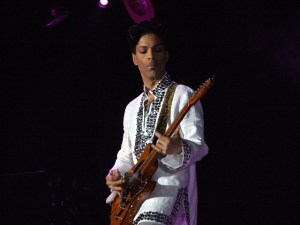
Photo by Scott Penner. CC BY-SA 3.0

Probably the apex of my listening to Prince was my freshman year of college, where I thrilled to his virtuosity, to his funk, and to the way it flummoxed other music majors when I told them that I’d spent the morning listening to Prince. (I also got into at least one BBS argument about whether Prince could play jazz if he wanted to; I argued, naturally, that he could.) Though I’ve only listened to him occasionally since, he holds a special place in my heart and in my ears.

Yesterday, when I read that he’d died, my first thoughts were memories of my freshman year. Like any right-thinking American, my next were whether he’d ever had any significant interaction with the tax law.

A quick search answered that: he did! Continue reading “Prince v. the IRS. Also, v. the French Government”