Tax Evasion and Risk Perceptions among Lawyers in China

Shu-Yi Oei

I recently read an interesting article by Prof. Benjamin van Rooij (UC Irvine), Weak Enforcement, Strong Deterrence: Dialogues with Chinese Lawyers about Tax Evasion and Compliance, 41 Law & Social Inquiry 288 (2016), available here.

The article studies a particular form of tax evasion practiced by some lawyers in China: The lawyer, although affiliated with a law firm, retains clients privately, accepts cash payments from such clients without giving the client a tax receipt, and does not report the case to the law firm. This behavior actually contains both a tax evasion and a business-driven purpose: it enables the lawyer to underreport income for tax purposes while also avoiding payment of a significant cut to the law firm. Unsurprisingly, the law prohibits these practices. The paper employs qualitative “semistructured” interviews with lawyers at large and medium-sized law firms using open-ended questions, in order to generate a nuanced picture of how enforcement, deterrence, and risk are perceived by these lawyers.

The findings are fascinating, and provide a unique perspective on legal ethics, tax compliance, and perceptions of enforcement and deterrence among lawyers in China. Continue reading “Tax Evasion and Risk Perceptions among Lawyers in China”

Tax Professor Letter Opposing Impeachment or Censure of IRS Commissioner Koskinen

By: Leandra Lederman

123 tax law professors recently signed a letter (available here) urging House leaders “to oppose any resolution to impeach or censure John Koskinen, the Commissioner of Internal Revenue.” Full disclosure: I am among the signatories. The letter explains not only that “[w]e believe that nothing that has been reported provides any basis for impeachment or censure” but also that impeachment or censure will undermine tax administration:

“The IRS carries out a vitally important mission for our country. Respect for the IRS fosters the voluntary compliance that is essential for our revenue system to work.

Impeachment or censure will harm the country by weakening our revenue system.  Impeachment or censure would disrupt the functioning of the IRS—which has had four Commissioners in as many years—leading to increased tax evasion, reduced revenue collection, and a higher national debt.  Impeachment or censure would also set a dangerous precedent and deter talented people from working to improve the country’s struggling revenue system.”

This is an important message and I hope House leaders will listen.

Continue reading “Tax Professor Letter Opposing Impeachment or Censure of IRS Commissioner Koskinen”

Walmart and Puerto Rico

By: David J. Herzig

Everyone knows by now the dire financial problems facing Puerto Rico.  (My co-blogger Shu-Yi Oei wrote about the default in Surly here.)  In order to generate liquidity to pay debt and run government operations, Puerto Rico began to look to the deepest pockets for help.  If you are looking for a deep pocket, look no further than Walmart.  The question facing Puerto Rico was how to get more money out of Walmart without actually targeting the corporation (that would be unconstitutional.)

The territory, instead, tinkered with an old law to created a tax hikes which on the face seemed neutral.  However, the law, according to Walmart, targeted primarily the large retail corporation. The after-tax effect of the corporate alternative minimum tax change was to raise Walmart’s Puerto Rican tax liability to over 90% of its income.

How did we get here? Last year, Puerto Rico enacted Act 72-2015 (Act 72) into law. The key component of the act was an increase in the Tangible Property Component (TPC) of the corporate AMT.  According to prior reporting, “The TPC piece of the AMT imposes a tax on the value of property transferred to an entity doing business in Puerto Rico from a related party outside of Puerto Rico.”

Then last December, Walmart filed suit styled, Wal-Mart Puerto Rico Inc. v. Zaragoza-Gomez, 15-cv-3018, U.S. District Court, District of Puerto Rico (San Juan) challenging Act 72.  According to Walmart, the tax was unconstitutional violating the commerce clause.  Moreover, the new tax raised the company’s estimated income tax to “an astonishing and unsustainable 91.5% of its net income.”

In March of 2016, the District Court agreed with Walmart and in a 109 page opinion stated, “Puerto Rico’s AMT, on its face, clearly discriminates against interstate commerce.”  Part of the story told by bond holders, is that in the course of the trial, it came to light the government of Puerto Rico might have been misleading their bond holders and this law was a kind of hail-mary.  Per the UBS report, “In the course of the trial, senior officials of the García administration were obliged to provide sworn testimony. Judge Fusté’s subsequent written opinion provided information that had been either knowingly or inadvertently withheld from investors by the Government Development Bank.”  So, yes, the tax was targeted at Walmart.  Also, the government of Puerto Rico was also not disclosing to its bond holders the true economic conditions.

Late last week, the 1st Circuit agreed with the District Court.   The 1st Circuit concluded, “As to the merits of the Commerce Clause challenge, the AMT is a facially discriminatory statute that does not meet the heightened level of scrutiny required to survive under the dormant Commerce Clause.”

Continue reading “Walmart and Puerto Rico”

DC Circuit Seems to have Decided IRS Violated Constitution Before Trial in True the Vote Appeal.

By: Philip Hackney

graphics-882729_1280In 2014, a District Court dismissed (based on 12(b)(6) and 12(b)(1) motions) the complaint of a number of conservative organizations who alleged that the IRS “targeted” them by subjecting them to greater scrutiny in their applications for tax exemption. The lead organization, True the Vote, sought 501(c)(3) charitable organization status; the others primarily sought 501(c)(4) social welfare organization status. The world became aware of this targeting controversy in May 2013 when Lois Lerner, the head of the Exempt Organizations division of the IRS apologized to the Tea Party and other conservative groups for how the IRS treated their applications. To this day Taxprof Blog continues the IRS Scandal post over three years later dedicated at least in part to this controversy.

The primary complaints were the second and fifth claims: (2)  the IRS violated the organizations First Amendment rights to freedom of speech, and (5) the IRS violated the Administrative Procedures Act. The District Court concluded that because the IRS had granted exempt status to these organizations, the complaints were moot. True the Vote appealed this dismissal to the DC Circuit Court of Appeals.

Last week the Circuit Court breathed new life into claims 2 and 5. Though the Court found that some of the complaints were moot (including Bivens complaints against IRS employees and a claim of violation of 6103 disclosure rules), it allowed claims 2 and 5 forward because it found that the IRS had not voluntarily ceased its unlawful actions.

In reading the opinion, I find astonishing that the Circuit Court appears to have already concluded, without trial, that the IRS acted unconstitutionally. I recognize that for a 12(b)(1) motion the court is to assume the complaint true, but the court appears to have done much more than make assumptions. I focus on this issue. Continue reading “DC Circuit Seems to have Decided IRS Violated Constitution Before Trial in True the Vote Appeal.”

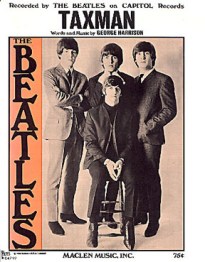
“Taxman” at 50

taxman20sheet20music
Updated lyrics are available here.

The Beatles’ hit song Taxman has just turned 50; it was released August 5, 1966 in the U.K. Taxman, written primarily by George Harrison, famously includes the lyrics

“Let me tell you how it will be
There’s one for you, nineteen for me
Cos I’m the taxman, yeah, I’m the taxman

Should five per cent appear too small
Be thankful I don’t take it all . . . .”

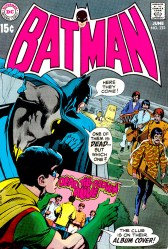
Apparently this song was at least partly inspired by the theme for the 1966 TV show, Batman! batman222june1970And, in the early 1980s, Weird Al Yankovic wrote a parody called “Pac-Man,” though it was not released  on any of his albums.
H&R Block used the Taxman song in a 2002 commercial literally showing only tax men: “It took an Act of Congress to pass 441 changes in the tax law. Will it take an act of God to understand them?” (There’s a different, more diverse version here.)

Did the Beatles really pay a 95% tax rate? According to a Bloomberg article, “The top rate for British taxpayers in the mid- Continue reading ““Taxman” at 50″

Examination of Allegations Against Clinton Foundation Part II

By: Philip Hackney

elections-1527438_1280

A week ago I considered one of three allegations Rep. Marsha Blackburn made against the Bill, Hillary & Chelsea Clinton Foundation in a letter Blackburn sent to the IRS, FBI, and FTC. I found the first allegation stated nothing of significance to the IRS. I now look at the other two and find them significantly wanting as well. Recently, IRS Commissioner Koskinen sent a letter indicating the IRS would investigate these complaints. I conclude they fail to state any complaint actionable by the IRS.

The second and third Blackburn allegations seem to come from a book by Peter Schweizer called Clinton Cash. Both allegations suggest that Sec. Clinton provided large governmental benefits in exchange for donations to the Clinton Foundation and payments to Bill Clinton. Both of the claims, already made by Presidential candidate Donald Trump, regarding Laureate University and Uranium One have been rated False and Mostly False by Politifact. Thus, it is difficult to take these allegations seriously.

Nevertheless, there are two things I do in this post. First. I discuss the factual conclusions of others regarding whether there was a quid pro quo arrangement associated with the second and third allegations. Then, I look at how the tax law might treat such arrangements were they true. Continue reading “Examination of Allegations Against Clinton Foundation Part II”

Examination of Allegations Against the Clinton Foundation

By: Philip Hackney

book-863418_1280Back in June I wrote disapprovingly of some actions of the Donald J. Trump Foundation. In that piece I promised to write about the Bill, Hillary & Chelsea Clinton Foundation too. Recently, Rep. Marsha Blackburn sent a letter that was scheduled to be sent to the FBI, the FTC, and the IRS. That letter makes a number of allegations about the misuse of the Clinton Foundation, and I figured these allegations would be a good place to analyze the performance of the Foundation that I had promised.

Blackburn alleges a number of things, but I am going to focus on her first allegation in this post because it is the only one that is a pure tax exemption question. She alleges that the Foundation is illegally operating outside the scope of its initial application for tax exemption to the IRS.  For reasons explained in the post below, I conclude there is very little involved in this claim and it is a misunderstanding of the law. There could be problems with the Foundation but this is not one of them.

UPDATE: I look at the remaining two Rep. Blackburn allegations here.

Continue reading “Examination of Allegations Against the Clinton Foundation”

Emerging Trend for Uber in Europe?

By: Diane Ring

Uber, one of the most prominent faces of the sharing economy, has not always been welcome in the EU. Similarly, Airbnb has experienced legal, regulatory, and public policy resistance across European countries. However, two recent developments in the EU suggest that, on balance, Europe might be staking out a regulatory path for the sharing economy that is intended to demonstrate the region’s support for the new sector. . . . Continue reading “Emerging Trend for Uber in Europe?”

Don’t Impeach IRS Commissioner Koskinen

Rep. Jason Chaffetz (R-Utah), Chair of the House Committee on Oversight and Government Reform, has introduced H. Res. 737, which would condemn and censure IRS Commissioner John Koskinen. Efforts to impeach or censure the Commissioner are the latest skirmish between Congress and the embattled IRS stemming from the IRS’s use of “Be On the Lookout” (BOLO) lists to screen for excessive political activity by applicants for tax-exempt status under Code section 501(c)(4). The American College of Tax Counsel (ACTC) has sent several House leaders a compelling letter expressing its “view that such actions are not commensurate with the alleged conduct” and its justifiable concern that resolutions to impeach and censure Commissioner Koskinen “will damage the agency at a time when it needs strong leadership.”

Readers may recall that Steve Miller was Acting Commissioner when the Treasury Inspector General for Tax Administration (TIGTA) released its report on the BOLO issue, entitled “Inappropriate Criteria Were Used to Identify Tax-Exempt Applications for Review” in May 2013. Miller resigned shortly after that, because President Obama asked Secretary of the Treasury Jack Lew to request Miller’s resignation. Daniel Werfel then became Acting Commissioner for about seven months. Mr. Koskinen did not become IRS Commissioner until Dec. 23, 2013. This was a challenging time to take on that role, given the state of the IRS’s relationship with Congress. The House Committee on Oversight and Government Reform held particularly partisan, contentious hearings. Continue reading “Don’t Impeach IRS Commissioner Koskinen”

The Tax Aspects of Pokémon Go

Adam Thimmesch
Assistant Professor, University of Nebraska-Lincoln College of Law

The new Pokémon Go app has already generated many discussions regarding the multiple ways that the game intersects with the law. I’ve previously opined on some of the broader issues, but, as a tax professor, my thoughts have naturally focused on that topic. Fortunately, the Surly Subgroup was nice enough to let me present those thoughts here in a guest post.

The tax issues that I’ve been thinking about stem largely from the fact that Pokémon Go is built on a freemium business model. That is, the app is free, but users can pay for certain “premium” features like additional Pokéballs, incense, and lure modules. (If these phrases mean nothing to you, here is a nice primer on the game.) Those purchases are all done through the purchase and use of an in-app currency called Pokécoins. The whole thing might sound silly, but the app is already generating over $1.5 million in daily revenue for its developer, Niantic, Inc. The company will also soon be selling “sponsored partnerships” that allow companies to be listed more prominently in the game. The potential revenue streams look plentiful at this point. So what are the tax issues?

Continue reading “The Tax Aspects of Pokémon Go”

IRS Announces More 2016 LITC Grants

By:  Francine Lipman

There has not been a great deal of good news lately about underserved communities or the IRS. But today America received some great news about nine new Low-Income Taxpayer Clinics (LITCs) in underserved areas across America. Five of the nine are in law schools. Continue reading “IRS Announces More 2016 LITC Grants”

Flying, an Alpaca Farm and Baseball Cards – What do they have in common?

By: Diane Ring

In teaching Basic Income Tax, I have found that teaching students about the lines between engaging in a trade or business, profit seeking, and hobbies helps them become comfortable using facts in tax analysis and argument. It confirms for students that tax law is a type of law demanding factual and legal analysis – facts do matter and they are not self-evident. Thus, in anticipation of my next class, I have been collecting (thanks to Tax Notes and the BNA Daily Tax Report) new examples of taxpayer failures to convince a court that their activity was, in fact, for profit. It turns out the pool is quite large, but some personal favorites have risen to the top . . . Continue reading “Flying, an Alpaca Farm and Baseball Cards – What do they have in common?”

Messi Sentenced To Jail for Tax Fraud

By David J. Herzig

In a statement today, the court (the decision is in Spanish) in the tax fraud trial of Lionel Messi and his father found them guilty with a sentence of 21 months.  Although, under the Spanish system Messi and his father will serve probation and not jail time.

The court rejected Messi’s side of the story.  He had been claiming that he did not know what he signed.  The court did not believe Messi and decided that he (my translations) “decided to remain in ignorance over time” in a situation that benefited him, “because he received returns of the funds”.

Because the strategy that they court thought Messi knew about and used was to a scheme to “create the appearance of assignment” of these rights to “companies located in countries whose tax legislation allowed opacity”.

Thus, the court added over 3.5 in Euros of fines (2 million for Messi and 1.5 for his father) for the scheme to conceal earnings from image rights.  Prior to the trial, Messi claimed to have paid the 5 million Euro tax deficiency.  Messi does retain appeal rights.

F.C. Barcelona issued this statement in support of Messi and his father.  As Shu-Yi pointed out to me, F.C. Barcelona might have it’s own agenda on tax schemes.  As the E.U. is about set to give a verdict against the Spanish clubs for violating the public spending provisions via tax breaks.  The opening of the inquiry stated, “Professional football clubs should finance their running costs and investments with sound financial management rather than at the expense of the taxpayer. Member states and public authorities must comply with EU rules on state aid in this sector as in all economic sectors.”

As a final thought, I do wonder, however, if that open probation affects his ability to travel via Visa to various countries, e.g., will Brexit matter for Messi?

More Merger Mayhem: Tax Lawyers Testifying

By: David J. Herzig

Great news, the awesome clerks at the Delaware Courts were nice enough to help me get my hands on the trial transcript.  I guess I have some heavy reading to do now.  My goal is to first look through the transcript to see if anything jumps off the pages.  My longer goal is to try to create a tax opinion using the transcript and any depositions if necessary. I would like to see whether I agreed with Cravath or L&W.   After all, the judge did not decide whether the transaction withstood a should opinion.  Rather, he plotted the various opinions and decided that there was not a sufficient cluster to consider a should opinion was warranted.

[As a quick aside, I can’t believe that all the documents are not readily available for free on the court web site.  The judge (chancellor) references the trial transcript in his opinion, yet, the supporting document is not available on-line for free.  I have free lexis access as an academic and can find portions of documents but not the docket or the document.  As a member of society, this certainly raises an access to justice problem. Thankfully, the clerks are super helpful and accommodated me.]

I also have received some thoughtful responses and theories about the case.  I will be wrapping them up into my opinion post later (sorry you have to follow me on twitter (@professortax) to know when it hits or better yet keep checking surlysubgroup.com).  But some of the best initial thoughts take into account some of my concerns.

First, I am still not sure why there was an out in the deal base on the should opinion. Continue reading “More Merger Mayhem: Tax Lawyers Testifying”

Improving Tax Compliance in a Globalized World

By Jennifer Bird-Pollan

I have spent the past two days in the beautiful “free city” of Rust, Austria.  (Among other things, Rust is known as a haven for storks, including those in the photos below.  Most buildings in the old town have stork nests on their roofs.)

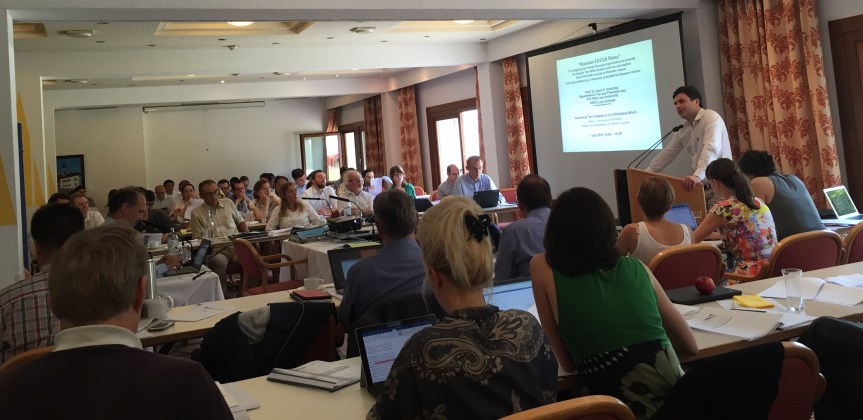
I am in Rust to attend a conference organized by the Institute of Austrian and International Tax Law of the Vienna University of Economics and Business.  The Institute organizes a conference in Rust every year using the same model.  Organizers first issue a call for contributors, each of whom writes a country report on the year’s topic, answering a series of questions prepared by Institute staff, describing the situation in his or her home country.  Contributors and participants include representatives of tax authorities, tax law and economics academics, practicing tax attorneys and accountants, and representatives of international organizations, among others.  The reports are circulated to participants in advance of the conference, and all are expected to prepare themselves by reading the country reports before arriving.  The two day conference then consists of the reporters presenting 3 minute “input statements” on a variety of topics, followed by discussion among the almost one hundred participants.  Here we are discussing an input statement from the Russian reporter, Professor Danil Vinnitskiy:

Rust Conference

As indicated in the title of my post, this year’s topic is tax compliance, and it has been fascinating to hear about the approaches of various governments including Kazakhstan, Indonesia, Norway, Russia, Germany, Nigeria, Croatia and many more.  Discussions have covered questions including the measurement of the tax gap, FATCA and other information exchange programs, inter-agency information exchange, and withholding procedures, among other things.  For those interested in learning more about these matters, the reports will ultimately be published in the coming months.

Professors Michael Lang and Alexander Rust host the conference, along with others from the Institute, and they understand that hard conference work should be accompanied by some opportunities to talk informally with other participants.  The informal events typically include a local wine tasting, a sunset dinner boat trip on the lovely Neusiedlersee, and many coffee breaks with opportunities for discussion with others.

Rust dinnerRust sunset

Having attended the Rust conference twice now, I can highly recommend it to others.  Keep an eye out for the call for participants for the 2017 conference!