Church or Family Business? Puerto Rico Wants to Know

By: Sam BrunsonHacienda

On Friday, Shu-Yi posted an overview of Puerto Rico’s financial problems, and described the centrality of the island’s tax regime to those problems. Today, I’m going to dig into one particular aspect of Puerto Rican taxation: tax-exempt churches.

Last year, the Puerto Rican Treasury department launched an ambitious pilot program[fn1] under which it planned on auditing more than 40 tax-exempt organizations. Juan Zaragoza, Puerto Rico’s Secretary of Treasury, announced that this month the program moves to Phase 3: auditing churches.

As in the U.S., the Puerto Rican tax law exempts some nonprofit organizations from tax. Puerto Rican tax law explicitly exempts

Churches, church conventions or associations, as well as religious and apostolic organizations, including corporations and any community chest, fund, or foundation, organized and operated exclusively for religious purposes, no part of the net earnings of which inures to the benefit of any private shareholder or individual.[fn2]

Some tax-exempt churches, Zaragoza asserted, aren’t really churches, but rather family businesses. They make annual profits, just like a shoe store (and yes, his example was a shoe store), but, because they claim to be tax-exempt churches, they don’t pay taxes on their profits. Continue reading “Church or Family Business? Puerto Rico Wants to Know”

EU State Aid Debate Lit Up the ABA Teaching Tax Session in DC

By: Diane Ring

As I blogged last week, the ABA Tax Section Teaching Tax Committee held a panel discussion Friday on the EU State Aid investigations on advance tax rulings. As I’ll discuss below, the panel was every bit as interesting as forecast. But first, a quick overview of what EU State Aid is all about:

EU State Aid Doctrine and Recent Controversy

Under Art. 107(1) of the Treaty on the Functioning of the European Union (as interpreted by the ECJ), if a member state provides state aid that distorts competition in the EU then the member must recover that aid from the benefiting entity to undo the distortive effects. Although this competition doctrine developed outside the tax context, it has previously been applied to tax benefits granted by a member state to a taxpayer. The European Commission oversees the investigation of state aid cases and issues the decisions.

Recently, though, application of the state aid doctrine to tax rulings issued by member states to multinationals has become a subject of tremendous controversy. In the past two years, the EC has been investigating tax rulings granted by member states to multinationals, including U.S. multinational taxpayers. The concern is that the multinationals receiving these rulings are not getting “mere” clarification of the law, but rather are securing a distinct advantage that creates distortion in the market. The U.S., along with various commenters, has expressed concern that these investigations might be disproportionately targeting U.S. businesses. Others have questioned whether the state aid rules are the most appropriate tool for combatting transfer pricing and/or double nontaxation situations that the EU finds problematic.

The Panel Discussion

During the discussion, it became apparent that there was a notable gap between the way many (but not all) in the U.S. view the European Commission’s recent state aid investigations involving U.S. taxpayers, and the EC’s vision of the role of the state aid doctrine in addressing potential harm caused by tax rulings granted to U.S. multinationals with very low effective tax rates. Thus, I was not surprised to hear these divergent positions characterized during the panel as “ships passing in the night”. What I did not anticipate was hearing the phrases “legal science fiction” (applied to certain suggested challenges to EC state aid decisions) or “a horror movie” (applied to the unfolding state aid investigations and decisions).

But the energy in the room was only part of the story. The panel provided very rich insights into the many complicated issues surrounding the current state aid investigations. I could not do them all justice here but thought I would highlight those that were mentioned by various panelists that really caught my attention:

Continue reading “EU State Aid Debate Lit Up the ABA Teaching Tax Session in DC”

Tax Policy and Puerto Rico’s Fiscal Crisis: An Insolvency Primer and Some Tax Things to Read

By: Shu-Yi Oei

I’ve been following the story of Puerto Rico’s default on its public corporation debt repayment obligations, which has been unfolding over the last several months. The latest happened on Monday, May 2 (well, technically Sunday), when Puerto Rico missed a major debt payment that was due to the bondholders of its Government Development Bank (GDB).

The topic has been well covered from the sovereign debt/insolvency angle over on Credit Slips, so I won’t go into that in detail here. As I understand it, the main points are these:

(1) Puerto Rico owes around $70 billion total outstanding debt to its creditors, of which a significant chunk is public corporation debt. Public corporations are corporations owned by the government of Puerto Rico. For example, the GDB is a public corporation.

(2) Unlike U.S. municipalities such as Detroit, Puerto Rico entities aren’t considered debtors for purposes of Chapter 9 of the U.S. Bankruptcy Code. They therefore don’t have access to the Chapter 9 municipal bankruptcy process. See 11 U.S.C. § 101(52). This is a bit of a head scratcher.

(3) In 2014, Puerto Rico’s legislature passed a law, the Puerto Rico Public Corporation Debt Enforcement and Recovery Act, which created a mechanism analogous to Chapter 9 bankruptcy by which Puerto Rico public corporations can restructure their debt. See Puerto Rico Passes New Municipal Reorganization Act: Puerto Rico Public Corporation Debt Enforcement and Recovery Act, 2014 P.R. Laws Act. No. 71, 128 Harv. L. Rev. 1320 (2015).

(4) Some bondholders filed a lawsuit, contending that Chapter 9 of the U.S. Bankruptcy Code preempts the Recovery Act. The First Circuit ruled that the Recovery Act is preempted. Franklin California Tax-Free Trust v. Puerto Rico, 805 F.3d 322 (1st Cir. 2015). The Supreme Court granted cert and heard oral arguments on March 22, 2016. No decision yet. For one scholar’s take on the issue, see Stephen J. Lubben, Puerto Rico and the Bankruptcy Clause, 88 Am. Bankr. L.J. 553 (2014).

(5) In light of all this, some have called for U.S. Congressional action, and there’s been legislation drafted to address Puerto Rico’s fiscal crisis that will allow for both restructuring and reform going forward. The House Committee on Natural Resources put forth a draft bill, the Puerto Rico Oversight, Management & Economic Stability Act (“PROMESA”). See also here for a helpful executive summary that accompanied an earlier draft. So far, that legislation has stalled, but they’re still trying.

There are many important issues in play, about which various stakeholders and commentators disagree. Some big ones are: (a) whether the draft PROMESA legislation raises retroactivity issues that make it unfair to bondholders (including mutual funds and their investors) who may be subject to restructuring ex post without having had notice of that possibility ex ante; (b) relatedly, whether creating a bankruptcy-like restructuring process for Puerto Rico is bad for bondholders because it prevents holdout creditors from holding up restructuring negotiations, (c) how much oversight and sovereignty Puerto Rico should cede (for example, different stakeholders feel differently about the installation of an oversight board); (d) the extent to which austerity measures are feasible and should be imposed [fn1], and (d) and what substantive reforms should be put enacted going forward.

So where does tax come in?

Continue reading “Tax Policy and Puerto Rico’s Fiscal Crisis: An Insolvency Primer and Some Tax Things to Read”

More on Income Share Agreements: Will Proposed Legislation Fix their Marketability Problem?

By: Diane Ring

Last week I blogged about the apparent resurgence of income share agreements (ISAs), noting for example, Purdue University’s planned offering to juniors and seniors this fall, and the $30 million capital infusion received by ISA provider Cumulus Funding. I discussed how regulatory uncertainty is one likely barrier to more widespread market interest in these instruments. This week I thought I would take a look at the current round of ISA-related legislation in the House and the Senate, which is aimed at addressing some of this uncertainty.

The current legislation is actually the second go round at legislating the consequences of some ISAs. In 2014, Senator Rubio and Representative Petri introduced the Investing in Student Success Act of 2014. That legislation went nowhere. In 2015, Senator Rubio introduced a revised version of his bill, following the introduction of a similar bill in the House by Representatives Todd Young and Jared Polis. Both 2015 bills have much in common, although the Rubio bill tracks the structure of his earlier version. The point of each bill is to clarify the legal and regulatory treatment for those ISAs that fall within the bill’s definition by providing affirmative legal treatment for covered ISAs. ISAs that don’t fall within the bill’s parameters aren’t necessarily barred—they just aren’t covered by the legislation and presumably are left in the same legal limbo in which all ISAs currently operate.

As my co-author Shu-Yi Oei and I have discussed elsewhere, trying to craft one set of rules to cover many types of ISAs is problematic, and as a result, the 2014 bill was both under- and over-inclusive. For example, although it might make sense to regulate ISAs used for education in a manner similar to student loans – such student loan treatment might be inappropriate for ISA funding used to start a business rather than for education. Also, we expressed concern about the possibility of long-term ISAs in which an individual effectively assigns away a significant percentage of future income for what might be virtually all of his or her working life (e.g., a 30 year ISA). The 2014 bill did not limit such agreements.

So, do the 2015 bills do any better?

Continue reading “More on Income Share Agreements: Will Proposed Legislation Fix their Marketability Problem?”

More on Charitable Organizations and Marijuana

By Benjamin Leff

Last Friday, Phil Hackney posted on this blog about IRS Denial 201615018 (4/8/16), in which the IRS denied tax-exempt status under section 501(c)(3) to an organization that planned to support the cultivation and distribution of medical marijuana in a state in which such activities were legal.  As Phil pointed out, the IRS held, among other things, that an organization whose purpose is the distribution of marijuana cannot be tax exempt under section 501(c)(3) because “a section 501(c)(3) organization cannot be created for a purpose that is illegal.”  This position is not new. The IRS took a similar position way back in 2012.

Phil and I pretty much agree about the law.  We both think that the IRS is probably right that under current law an organization whose charitable purpose includes engaging in illegal activities does not qualify for tax-exempt status under section 501(c)(3).  Phil says that the law is “absolutely clear on this front,” which I think is a little bit of an overstatement, but that’s a quibble at best.  The reason for this certainty is that the United States Supreme Court has held that an organization that had racially discriminatory admissions or dating policies could not qualify for tax-exemption under the so-called public policy doctrine, a common-law doctrine that applies to charitable trusts.  The argument for denying tax-exemption for illegal activities is a part of the public policy doctrine, the rationale being that nothing more clearly defines a jurisdiction’s fundamental public policies than its laws, and so illegal activities must violate public policy

Phil and I also agree on the “enforcement approach” that should ideally underlie the public policy doctrine.  We agree that when the IRS is called upon to apply the public policy doctrine, it should do so according to the brightest possible lines.  It should maintain “hard and fast” rules.  That is because the room for abuse is so great in this area, since the suspect organizations are almost always advancing unpopular or counter-majoritarian values.

Where Phil and I disagree is whether “illegality” provides an adequately bright line to satisfy this enforcement approach.  I think that even where conduct is facially “illegal,” there is ambiguity about whether it violates a fundamental public policy, and the IRS should hesitate before making a decision on that score.  When it errs in applying the public policy doctrine, it should always err in favor of the organization.  That is because when an organization’s conduct is illegal, there is always another enforcement entity that is empowered to enforce the law and prevent the illegal conduct.  The IRS should grant tax-exempt status and then defer to the substantive enforcement entity to use whatever sanctions are at its disposal to enforce the law … if it chooses to do so.

Continue reading “More on Charitable Organizations and Marijuana”

Dark Days: Blindfolding Nonprofit Regulators

By: Philip Hackney.

The Ways and Means Committee voted Thursday in favor of a bill, H.R. 5053, that would seriously hamper the ability of the IRS to enforce charitable tax law and nonprofit tax law generally. It is a bad-no-good-bill, that comes from folks who champion protection from the IRS, but whose real motive is to make it possible for wealthy individuals to act without hindrance in influencing political campaigns and politics generally. It emanates not from a place of conservatism, but a place of reactionarism and plutarchism (neither of which are words, but both of which probably should be :)). The Koch brothers support this bad bill for a reason.

The Bill will harm IRS regulation and make our already relatively secret-and-subject-to-corruption political contribution system more secret and more subject to corruption (the issue that democrats and interest groups focused upon in attacking the bill). The harm though can be expected to extend to the ability of the federal government and states to regulate individuals using nonprofits to accomplish their ends. Sometimes people running nonprofits do bad things. It will increase the dark in which our regulators try to police the nonprofit sector. Unfortunately, the IRS leant a hand to those trying to give donors greater secrecy as high level officials discussed eliminating schedule B back in December 2015. It is still not clear to me what they were thinking, but I genuinely hope we do not make such a foolish choice. As explained below, we have long recognized a regulatory need for this particular information.

What does this dastardly, seemingly well-intentioned, bill do? Continue reading “Dark Days: Blindfolding Nonprofit Regulators”

Rainy Saturday Tax Scholarship …

Irresponsibly Taxing Irresponsibility: The Individual Tax Penalty Under the Affordable Care Act 

Georgetown Journal on Poverty Law & Policy, Vol. 23, No. 3, Spring 2016 

In recent decades, Congress has used the federal income tax system increasingly to administer and deliver social benefits. This transition is consistent with the evolution of the American welfare system into workfare over the last several decades. As more and more social welfare benefits are conditioned upon work, family composition, and means-tested by income levels, the income tax system where this data is already systematically aggregated, authenticated, and processed has become the go-to administrative agency.

Continue reading “Rainy Saturday Tax Scholarship …”

The New Orleans Jazz and Heritage Festival (and Taxes)

By: Shu-Yi Oei

New Orleans is currently in the throes of Jazz Fest.

For those of you who don’t know what that is, Jazz Fest—or, the New Orleans Jazz and Heritage Festival—is a famous annual festival celebrating music and culture in New Orleans. It’s held at the New Orleans Fairgrounds. It spans seven days over two weekends. It draws hundreds of thousands of people.

But even that description doesn’t do the event justice. There are twelve different music stages and tents set up in the Fairgrounds and a lineup of over a hundred performance groups—this year’s headliners include Stevie Wonder, Pearl Jam, Paul Simon, Red Hot Chili Peppers, Snoop Dogg, and Van Morrison. There’s also a huge number of food and crafts vendors who set up at the Fest—over 200 food offerings sold! Some of us to go to the Fest at least as much for the food as for the music: my personal favorites include the Crawfish Monica, mango freeze, crawfish beignets, seafood stuffed mushrooms, and Chef Linda Green’s award-winning yakamein.

This past weekend, my colleague Ann Lipton and I traipsed down to the Fairgrounds to find the fun. While enjoying performances by Janelle Monáe (amazing), the Red Hot Chili Peppers (meh), Leroy Jones (so good), Herlin Riley (just, wow) and others, we chatted a bunch about vendor licensing and regulation at Fest. We even ran into an on-duty New Orleans revenue agent who was more than happy to tell us all about tax compliance at the Fest and kindly gave permission to blog about it.

After some research, some casual conversations, and some lurking around the food booths, here’s what we now know about Jazz Fest and taxes:

Continue reading “The New Orleans Jazz and Heritage Festival (and Taxes)”

A New Wave of Income Share Agreements

By: Diane Ring

Just a few years ago, Income Share Agreements, or ISAs, were garnering popular attention. ISAs are arrangements in which an individual receives upfront funding from investors, perhaps for education or a start-up business, in exchange for agreeing to pay a percentage of his or her future income for a period of time. Well-known examples included Fantex (which involved a stake in the future earnings of a professional athlete), as well as Upstart, Pave, and Lumni (which generally involved funding for education or business ventures). Although the structures and terms varied, the feature these ISAs had in common was the absence of a guaranteed return of principal and the degree to which the investor was investing in the personal, financial success of the funding recipient – a relationship some criticized as owning a piece of the funding recipient.

Ultimately, though, the market did not show tremendous interest in these instruments. Upstart and Pave shifted to traditional loan models, and Lumni reportedly has issued fewer than 30 ISAs in the United States. Fantex has remained active, but Fantex was always a little different, because it actually involved an issuance of stock in a corporation whose value effectively tracked the earnings performance of a pro athlete. Additionally, the Fantex investment had a novelty dimension, appealing to sports enthusiasts.

Why, though, was the market not that interested in ISAs? There are a few likely reasons:

Continue reading “A New Wave of Income Share Agreements”

John Kasich’s Tax Plan: 2008 Was Great!

Last week I wrote about Donald Trump’s dumbfounding decision, as the Republican frontrunner, to advocate for increasing taxes on the wealthy.  I left for today commentary on the amazing interview Ohio Governor John Kasich did with the Washington Post Editorial Board.  Essentially Gov. Kasich believes that we can obtain economic growth through spending cuts.  (Just to be clear why this is on a tax blog: spending and taxes go together like peanut butter and jelly).

It seems most pundits are speculating that there will be a contested Republic convention in Cleveland.  It has also been speculated that in that environment, a wildcard like, Gov. Kasich or Rep. Ryan, might end up the nomination.  Both Gov. Kasich and Rep. Ryan appear to hold the same position that spending cuts are good.  They believe that spending cuts plus tax cuts (I will address the tax cuts issue in a later post) will actually increase overall tax revenues through overall economic growth. It is not surprising that the two Republican establishment figures would hold such a belief.  This principle is alignment with popular thinking: polls show many Americans think spending cuts will have an economic benefit by a 55 to 18 percent margin.

I think, therefore, it is worth exploring why spending cuts as related to growth (economic and job) is not at all mainstream economic thinking.  But like all issues, here we have a complicated discussion.  It may be true that spending cuts help balance the budget which may grow the economy in other dimensions.  But spending in a recession, as most economic data seems to show, is the main way forward for job growth and to exit the recession.  Most mainstream economists believe: (1) that spending increases job growth on a temporary basis; (2) a reduction in spending will unwind the growth back to the baseline without spending; and (3) job growth will grow the economy.  However, in no way is there permanency attached to spending as related to job growth.  (This is the reason that Bernie Sander’s forecasts are of job growth in his plan are incorrect.  See this study.)

Continue reading “John Kasich’s Tax Plan: 2008 Was Great!”

SRLY, SRSLY: A Tale of Loss and Longing to Belong

By: Shu-Yi Oei

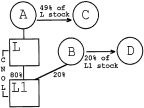
Over the past few days, we here at Surly Subgroup have received several requests for a post explaining our blog name. So, here’s a Very General primer for non-tax readers, and for our tax readers who maybe don’t spend all of their waking hours staring at the consolidated return rules.

Old lawyerly disclaimer habits die hard, so I’ll just say that the following discussion is Very General and mostly for fun. Others have written about this far more exhaustively. See, e.g., Martin J. McMahon, Jr., Understanding Consolidated Returns, 12 Fla. Tax Rev. 125 (2012) and four whole BNA Tax Management Portfolios.

Here are the key points:

Everybody Wants to Belong…

The general idea behind the consolidated return is that where there’s an affiliated group of corporations, a rule that requires each corporation in the group to file its own separate tax return may create frictions and transaction costs and may give rise to weird incentives and disincentives in the case of transactions between corporations in the group.

Enter the consolidated income tax return.

Continue reading “SRLY, SRSLY: A Tale of Loss and Longing to Belong”

Charitable Organizations and Marijuana?

In Denial 201615018 (released April 8, 2016 and for which I can only find a Tax Notes link) the IRS denied the charitable organization application of a nonprofit organization organized “to provide a way for your members to collectively and cooperatively cultivate and distribute medical marijuana for medical purposes to qualified patients and primary caregivers who come together to collectively and cooperatively cultivate physician-recommended marijuana.” The IRS denied the organization’s applications on two bases: (1) a charitable organization cannot engage in illegal activities and the distribution of marijuana is illegal under federal law; and (2)  it provided too much private benefit. I will focus only on the first basis.

Ben Leff and I have previously debated the issue of marijuana distribution and tax exemption. Ben contended that under certain circumstances a social welfare organization under 501(c)(4) could form to distribute marijuana and operate in a tax-exempt vehicle. The reason to try to do this instead of operating in a taxable vehicle is that under section 280E federal tax law prohibits marijuana distributors from deducting trade or business expenses. While I disagreed with Ben, neither of us argued that a charitable organization could engage in the distribution of marijuana. Both of us, and Ben should absolutely chime in, believed that the public policy/illegality limitation on charitable organizations is absolutely clear on this front: engaging in an illegal activity as a substantial purpose just does not cut it under charitable tax rules. Continue reading “Charitable Organizations and Marijuana?”

Free ABA Teleconference: The Tax Code and Income Inequality: Limitations and Political Opportunities (April 27)

On Wednesday, April 27, the ABA Section of Civil Rights and Social Justice will be sponsoring a free teleconference, entitled “The Tax Code and Income Inequality: Limitations and Political Opportunities.” The event is co-sponsored by the ABA Section of Taxation. Our co-blogger, Francine Lipman, is one of the speakers.

From the website:

“Welfare” has become “workfare,” delivered through the Tax Code, e.g., the Earned Income Tax Credit and Child Tax Credit.  How well is that really working for low and middle income Americans, much less those in poverty?  At the same time, tax deductions, credits—and avoidance/evasion schemes—are increasingly benefitting wealthy individuals and big corporations, which increasingly pay a smaller portion of federal tax revenue—revenue that could fund government programs,  bolster economic growth and benefit the bottom 99% by providing jobs and increase skills of lower income American.  Panelists will discuss how changes to the Tax Code can address income inequality in the U.S. and political opportunities for reform.

Attendance is free and you can sign up on the website.


A New Republican Idea: Raising Taxes on the Rich

What a crazy day for Republican Presidential candidates as related to their tax positions!! Donald Trump wants to raise taxes on the wealthy and Kasich (the supposed mainstream candidate) still thinks that you can grow the economy through spending cuts!

For now, I will just discuss Donald Trump truly anti-establishment position. He appeared in a town hall meeting on the Today show this morning. During the segment Savannah Guthrie asked Mr. Trump if he believes that taxes should be raised on the wealthy (see about 16:52 of the clip). He said he does, including on himself. That must have been a shock to the Republican base!

Mr. Trump’s bombshell is a window into the main idea I discussed in my introductory post. There is a “huuuuge” difference between the absolute rates and effective rates. This problem is very evident in the corporate tax world.  However, Mr. Trump’s statement shows it is just as prevalent with individual taxes.

Almost everyone (other than tax professors), especially the candidates (including Trump here), discuss taxes as related to absolute rates and not effective rates. For example, we can make the stated tax rate 75% or 90%. This stated rate means very little because that rate is applied to an adjusted gross income number. What really matters is how adjusted gross income is determined.  Rates do matter, but only if gross income and adjusted gross income are fairly similar (I’m look at you middle America).

To explain this let’s use an example.  Assume Mr. Trump’s gross income is $100, we do not take a rate (let’s use 40%) and multiply that by the $100 for $40 in tax due. We first allow a series of above-the-line (non-phased out) deductions to that gross income. In Mr. Trump’s case, this allows him to reduce his income to zero. Richard Rubin of the Wall Street Journal has done a great job writing about how Mr. Trump has reduced his taxes (to what number we don’t know since he will not release his returns).  From Rubin’s research, Mr. Trump uses from the usual, depreciation deductions, to the unusual, goat herds.  Even if Mr. Trump wanted to raising his stated rate to 100%, it would not matter; his effective tax rate might still be zero.  100% of zero is zero (for those math geeks, the formula is: 100% * 0 =0)

Continue reading “A New Republican Idea: Raising Taxes on the Rich”

Uber and Lyft Drivers and San Francisco Business Licensing

By: Shu-Yi Oei

As some of you know, Diane Ring and I have written a couple of papers recently about tax and regulatory issues in the sharing economy.

Well, here’s the latest news out of San Francisco: It was reported a few days ago that the San Francisco City Treasurer recently obtained data about the identities of a number of transportation network company (“TNC,” i.e., Uber and Lyft) drivers and has proceeded to send some 37,000 notices to drivers. The notices require those driving for seven or more days in a year to register as a business operating in the city and pay San Francisco’s business registration fee ($91 for those earning $100,000 or less). The Treasurer’s office apparently refuses to say how they got the data, in the interests of taxpayer confidentiality, but in any case, they now have it and are using it to enforce the business registration requirement and fee against TNC drivers operating in San Francisco.

The applicable regulation lives in San Francisco Business and Tax Regulations Code Article 12, sections 853 and 855 of which impose the registration requirement and fee. The registration requirement and fee are imposed on those “engaging in business” in the city, unless exempt, and as far as I can tell, Article 6, § 6.2-12 specifically imposes the regulation on a person who “utilizes the streets within the City in connection with the operation of motor vehicles for business purposes for all or part of any seven days during a tax year.” The move to require registration also seems consistent with the continued position of the TNC companies that their drivers are appropriately classified as independent contractors, as opposed to employees. So unless I’m missing something big, it’s hard to see how the law would not on its face apply to drivers.

Several aspects of this development are interesting:

Continue reading “Uber and Lyft Drivers and San Francisco Business Licensing”