The Art of the (Budget) Deal

By Daniel Hemel and David Herzig

Who Holds the Trump Card on Reconciliation?

Republicans on Capitol Hill are reportedly planning to use the filibuster-proof budget reconciliation process to repeal the Affordable Care Act and overhaul the tax code. Against that background, Sam Wice says that “the most powerful person in America” in 2017 will be Senate Parliamentarian Elizabeth MacDonough, the nonpartisan official who will “determine” how much of their agenda Republicans can pass through reconciliation. This, of course, is an exaggeration: like it or not, the most powerful person in America in 2017 will be Donald J. Trump, who will wield all the power of the imperial presidency. But Wice’s post helpfully directs our attention to the budget reconciliation process, the rules of which quite likely will determine whether the Republican leadership on Capitol Hill can repeal the ACA and reform the tax laws.

Yet while one should not underestimate the importance of reconciliation, one should also not overestimate the power of the Parliamentarian in the reconciliation process. As a formal matter, the Parliamentarian’s role is advisory; and as a practical matter, the Parliamentarian has little say over significant aspects of reconciliation. Other actors—most notably, Senate Budget Committee Chairman Mike Enzi (R-Wy.)—wield at least as much influence as the Parliamentarian. Most importantly, Enzi—not MacDonough—will determine whether the provisions in any reconciliation bill violate various rules against deficit-increasing legislation being passed via reconciliation. And unlike the Parliamentarian, the Budget Committee Chairman is very hard to fire.

Reconciliation measures can begin in either or both chambers. However, since the ultimate vote on the budget measure occurs in the Senate, we’ll focus on the Senate side of the reconciliation process for purposes of this discussion. On the House side, the Rules Committee Chair and the Budget Committee Chair will wield outsized influence as well. We expect Pete Sessions (R-Tex.) to stay on as House Rules Committee Chair; as for the House Budget Committee Chair, the race is on for a replacement to Tom Price, the Georgia Republican recently tapped as Trump’s Health and Human Services Secretary.

To understand why the Budget Committee Chair is as powerful as he is, a bit of background on reconciliation may be helpful. Continue reading “The Art of the (Budget) Deal”

Trump’s Emolument Tax Problem

By: David J. Herzig (photo from Vox.com)

When a businessperson who runs many active businesses runs and wins for President, clearly there would be many second order problems associated with inherent conflicts between running corporations and the country.  When President-elect Trump won the office, many of these conflicts have bubbled to the surface.

For example, to avoid a conflict of interest between benefiting one’s personal holdings and the Country’s best interests, assets of the President are placed in a blind trust.  As many have pointed out, this works only when the President does not know the nature of the holdings.  Putting existing businesses into a blind trust does not stop the President for knowing the underlying assets of the trust.  The conflict is not ameliorated by trust structure.  Nor, by the way, would it be fixed if President elect Trump divests but the family continues to own the assets.

For this post, I want to consider the current discussion related to the blind trust problem called emolument.  Many prior to the election probably have not heard much about the idea of emolument.  Larry Tribe and others believe that President elect Trump’s ownership of active business assets, even in a blind trust, would violate, Article I, Section 9, Clause 8 of the Constitution which prevents the President from accepting “presents” or “Emolument” from foreign states.  Others, like Andy Grewal, do not believe that mere ownership of assets triggers the Emolument Clause.

If the solution to the blind trust and Emolument Clause problems is a divesture of President elect Trump’s assets as many advocate, this would trigger (to borrow a catch phrase of President elect Trump’s) huuuuuuge tax problem.

Continue reading “Trump’s Emolument Tax Problem”

The Halloween Parent Tax

halloween-candy1By Sam Brunson

I was asked on Twitter about the Halloween Parent Tax. And with Halloween coming up, it seemed like it needed a post. So here you are:

Design Considerations

You’ve got a couple options here. Are you going to create an income tax? A consumption tax? A head tax? Each is slightly different, in certain relevant ways:

Income Tax: This is probably what you think of when you think of the Halloween Parent Tax. Essentially, children are required to give their parents some percentage of the candy they get. (My wife’s parents imposed a 15-percent Halloween Parent Tax when she was growing up.) There are some design complications here—for example, are you taking a percentage of the number of pieces of candy the kids get? Or do different kinds of candy have different values? And do you take size into account in calculating candy value?[fn1] Continue reading “The Halloween Parent Tax”

Outraged Yet? A Tax Reason the Pentagon’s Clawback Sucks — Updated

By: Sam Brunson

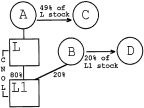
cngYesterday, both my Facebook and WBEZ told me about how the Pentagon is clawing back bonuses it paid—a decade ago!—to members of the California National Guard as reenlistment bonuses. [Update, 10/26/16: today, Defense Secretary Ash Carter ordered the Pentagon to suspend its efforts to claw back the bonuses. Note, though, that there’s no indication that it will return any portion of bonuses that have already been clawed back, so the tax issues still stand, afaik.] 

The whole story is pretty enraging, but, so that I don’t bury my particular lede too far: though the stories don’t discuss the tax consequences to the soldiers, the soldiers are likely to miss out on significant deductions that they deserve.

To understand why, you need to know about the clawbacks. I’ll let the LA Times do the hard explanatory work, but in brief: in the mid-2000s, the military was facing recruitment shortfalls, so it started offering super-generous incentives to the military to get them to reenlist, and it paid those incentives (often $15,000 or more) upfront, essentially replicating private sector signing bonuses.  Continue reading “Outraged Yet? A Tax Reason the Pentagon’s Clawback Sucks — Updated”

Congratulations to the Newly Elected Members of the American Law Institute!

By: Francine J. Lipman

The American Law Institute (ALI) has just announced its newly elected members. The members who join ALI from across the country will bring their diverse backgrounds and areas of legal expertise to ALI’s work. Fifteen of the 45 new members are professors, sixteen are partners (or the equivalent) in law firms, seven are judges, six are in private industry, and one is a government legal advisor.

“One of the most exciting aspects of being President of the ALI is meeting some of today’s most important and inspiring legal minds as they are elected into The American Law Institute. I look forward to having the opportunity to work alongside these new members in continuing the ALI’s efforts in clarifying the law,” said ALI President Roberta Cooper Ramo. Continue reading “Congratulations to the Newly Elected Members of the American Law Institute!”

Will the Supreme Court Hear a Retroactive Taxation Case This Term?

By: David J. Herzig

Earlier this year, the Washington Supreme Court held that the retroactive application of the legislature’s amendment to a Business & Occupation (B&O) tax exemption revising the definition of “direct seller’s representative” to conform to the Washington Department of Revenue’s interpretation of the exemption did not violate a taxpayer’s rights under due process, collateral estoppel, or separation of powers principle.

Like most states, Washington had a B&O tax for “the act or privilege of engaging in business activities.”  Under the original law, out-of-state sellers were exempt if they acted through a representative.  DOT Foods shows up in Washington and sells through a wholly owned subsidiary to avoid the B&O tax.

In 1999, the Washington Department of Revenue changed its interpretation of the statute to subject DOT and others to the B&O tax.  Dot challenged that change (215 P.3d 185 (Wash. 2009) “DOT I”)) and won.  DOT I applied for the tax periods 2000-2006.

DOT then sought a refund for the period Jan. 2005 – Aug. 2009 (not the time period of DOT I).  In the meantime, in 2010 the Washington State Legislature changed Wash. Rev. Code Sec. 82.04.423(2) in response to the DOT I ruling.  The statute both retroactively and prospectively changed the statute. Based on the statutory change, the Washington Department of Revenue rejected the refund claim.

For the period covered by DOT I, DOT and Washington agreed on a settlement for a 97% refund for B&O taxes paid.  For the May 2006 to December 2007 period (after DOT I), the refund request was denied.  DOT challenged the retroactive application under the theories of collateral estoppel, separation of powers, and due process.  DOT lost in the Washington Supreme Court and now has appealed to the US Supreme Court.

The test for whether or not retroactive tax legislation satisfies Due Process is United States v. Carlton, 512 U.S. 26 (1994).  Carlton  applied a rational basis test.  The Court stated retroactive tax legislation would not violate due process if, “legitimate legislative purpose furthered by rational means.”  According to the ACTC brief,   “The Washington Supreme Court ignored the unique circumstances of the Carlton case, which involved the correction of an obvious legislative error that was identified very soon after the statute was enacted and which the taxpayer was admittedly exploiting for its own benefit.”

Continue reading “Will the Supreme Court Hear a Retroactive Taxation Case This Term?”

Make Way for Ducklings?

Shu-Yi Oei 

Professor Charlotte Crane (Northwestern) presented Integrating a Fragmented Corporate Income Tax at BC Law School’s Tax Policy Workshop yesterday. Briefly, the paper is focused on recent proposals to integrate the corporate income tax, in particular, the yet-to-be-released Orrin Hatch proposal from the Senate Finance Committee. I’m no corporate tax expert, but the workshop afforded me the excuse to wade like a duckling through the recent literature…a nice break from other projects.

The corporate integration debate refers to the question of whether to eliminate the corporate double tax (i.e., the tax on both the corporation and its shareholders on the same underlying income) and replace it with a single layer of tax. Many have argued that this would reduce tax burdens, minimize economic distortions, and bring us closer to tax neutrality in investment decisions. Others have argued that corporate integration achieved through shifting the corporate tax to the shareholder level will enhance progressivity and fairness.

The integration debate has raged for decades, with important Treasury and ALI studies in 1992 and 1993, and a surge of recent academic and policy interest. There are various design possibilities, including: integration via a shareholder credit (a.k.a. imputation), integration via a dividend deduction paired with a shareholder withholding tax, integration via a shareholder dividend exclusion, flow-through taxation, and others. A couple of recent proposals: Toder and Viard have suggested eliminating the corporate tax and replacing it with taxation of shareholder dividends and gains at ordinary rates, with gains taxed on a mark-to-market (accrual) basis. And Gruber and Altshuler even more recently proposed pairing a lowered (15%) corporate tax rate with ordinary income taxation of shareholder dividends and capital gains (including an interest charge on deferred shareholder liabilities designed to minimize behavioral distortions).

Continue reading “Make Way for Ducklings?”

Pro Bono Week Free ABA Tax Justice CLE

By: Francine J. Lipman

There are many wonderful reasons to be a member of the ABA – Section of Taxation, including the Tax Section’s commitment to pro bono and outreach especially its education efforts with its people and its purse to work on the front lines with less fortunate and vulnerable neighbors across America. I can say without hesitation the ABA not only talks the talk, but it walks the walk. Indeed we are partnering with the ABA Civil Rights and Social Justice Section to present a free webinar on October 24 during pro bono week 2016. Tax justice at its best. I am a proud ABA tax justice passion warrior, join us in our efforts to help others as it is the gift that keeps on giving … We can, do, and will make a difference in the lives of countless American families.


images-2 Continue reading “Pro Bono Week Free ABA Tax Justice CLE”

International tax meets Japanese anime

By: Diane Ring

On Sunday, international tax lawyers and advisers from private sector, government officials, tax representatives from international organizations, in-house counsel, and tax academics converged on the convention center in Madrid for the annual conference of the International Fiscal Association (IFA).

But we were not alone.

An adjacent exhibition hall hosted “Japan Weekend 2016” a celebration of Japanese anime and manga. I had no trouble finding my place – I was unlikely to confuse international tax lawyers with the costumed crowd that channeled Alice in Wonderland meets the Flash. Once the tax conference got underway, though, I began to contemplate similarities between the two events, in particular, the meaning and role of reality and its construction. . . Continue reading “International tax meets Japanese anime”

Debate Prep: The Candidates’ Estate Tax Plans

By David Herzig

With the first Presidential debate tonight, we are sure (or at least I hope) to hear about various tax plans.  I would expect that the estate tax would be a topic of conversation since there is such a sharp contrast between the candidates.  The current reporting spins that Donald Trump wants to eliminate the estate tax; while, Hillary Clinton wants to tax the rich through a two-prong increase on the estate tax.  I thought it would be useful in advance of the debate to discuss the candidates’ actual estate tax plans. (If there is a PA for Lester Holt looking for some last minute questions for the candidates – scroll to the bottom and steal away no attribution needed!)

Currently, there is an estate (or death) tax. Unfortunately for the fisc, the tax accounts for less than 1 percent of federal revenue.  (See, Tax Foundation). What is amazing is that at other points in time, the tax actually raised revenue and effected many estates.  The primary reason for the drop in revenues even though overall net worth has increased, is related to the exemption amount available for taxpayers.  In 1976, the exemption amount per estate was $60,000 while today it is $5.45 million.  (I tackle a lot of these issues in my upcoming University of Southern California Law Review article).

Continue reading “Debate Prep: The Candidates’ Estate Tax Plans”

I’ve Got ITINs on My Mind

By: Francine J. Lipman

Individual Taxpayer Identification Number (ITIN) Holders Pay Over $45 Billion Annually in Federal, State, and Local Taxes

Among the many amazing opportunities I have had as a law professor at the University of Nevada, Las Vegas is continuing my work with immigrants on their tax issues. As I have written about at length unauthorized immigrants pay many tens of billions of dollars a year in taxes including federal (about 4.4 million ITIN tax returns were filed in 2015 paying over $23 billion including $18.1 in federal income taxes and $5.5 in self-employment taxes), state, and local income, property, sales, excise, etc. ($12 billion annually), and payroll taxes (about $12 billion a year in net Social Security and Medicare taxes for which they currently receive no current or future benefit).

ITINs GENERALLY

Nevertheless, Congress continues to challenge this population with respect to their tax compliance. If you do not know what an ITIN is then this issue likely does not directly affect you … however if you want a quick education the National Immigration Law Center (NILC) has a great primer available in English and Spanish here. Since 1996, IRS has issued about 21 million ITINs although only about 5 million are currently being used. Congress had previously enacted legislation causing any ITIN not used for five years to expire. However, that legislation was not given a chance to be enforced, because Congress has been busy enacting more recent ITIN expiration legislation that supersedes the five year law.

THE CURRENT ITIN on my mind ISSUE

ITIN EXPIRATIONS

In the recently enacted PATH Act of 2015 (Protecting Americans from Tax Hikes), among other matters, all ITINs issued before 2013 will be expiring and have to be renewed. An ITIN issued after December 31, 2012, will remain valid unless the person to whom it was issued does not file a tax return—or is not included as a dependent on the return of another taxpayer—for three consecutive years.

Congress has phased-in the expiration of ITINS as follows:

IF THE ITIN WAS ISSUED         THE ITIN EXPIRES ON

before January 1, 2008                    January 1, 2017
in 2008                                             January 1, 2018
in 2009 or 2010                                January 1, 2019
in 2011 or 2012                                January 1, 2020

In an effort to streamline the process, the IRS is identifying the first wave of ITINs expiring on January 1, 2017 as ITINs with the middle digits of 78 or 79. The IRS will identify the respective middle digits for the second, third, and fourth waves of expirations in time.

HOW TO RENEW BEGINNING October 1, 2016 

ITINs scheduled to expire as of January 1, 2017 (middle digits 78 or 79 or any ITIN not used on a tax return for the last three consecutive years (e.g., 2013, 2014, and 2015)), can be renewed using the newly revised for this purpose Form W7 (available here) also known as an Application for IRS Individual Taxpayer Identification Number. No tax return is required for a renewal application.

The application including all required original documents (e.g., passport) must be mailed to Internal Revenue Service, ITIN Operation, P.O. Box 149342, Austin, TX 78714-9342. The anticipated time that the IRS will take to renew or issue an ITIN outside of peak processing times (between January and April) has historically been about six weeks. However, in a recent press conference the IRS said that they would be sending 400,000 letters to ITIN holders with expiring ITNs so there could be a much longer waiting period. The National Taxpayer Advocate has written about the ITIN application backlog and bottleneck in her 2015 Report to Congress as Most Serious Problem Number 18.

Any original documents or certified copies submitted in support of an ITIN application are supposed to be returned within 65 days. Taxpayers who do not receive their original and certified documents within 65 days of mailing them to the IRS may call 1-800-908-9982 to check on their documents.

CERTIFIED ACCEPTANCE AGENTS   Not surprisingly, many immigrants will not want to send original documents to the IRS. In lieu of sending original documentation, taxpayers may be eligible to use an IRS authorized Certified Acceptance Agent (CAA) or make an appointment at a designated IRS Taxpayer Assistance Center location. CAAs often charge a fee for services rendered although some of the large chains of retail tax preparation companies are advertising free ITIN renewal services. I would advise taxpayers to proceed with caution as there may be ancillary costs, charges, or fees. The Consumer Federation of America, among others including myself, have written about the high cost of tax assistance services for low-income taxpayers and the potential for consumer abuse including price gouging.

FAMILY ITIN APPLICATIONS   The IRS will accept a Form W-7 renewal application from each member of a family if at least one of the family members listed on a tax return has an ITIN with the middle digits of 78 or 79. If one family member has middle digits 78 or 79, all family members who have an ITIN may submit a Form W-7 renewal application at the same time.

FINANCIAL CONSEQUENCES IF ITINs Are NOT Renewed

Until ITINs are renewed, returns with expired ITINs will be processed and treated as timely filed, but the returns will be processed without any exemptions and/or credits claimed and no refund will be paid. The taxpayer will receive a notice from the IRS explaining the delay in any refund and that ITINs must be renewed. Once ITINs are renewed, any exemptions and credits will be processed and any allowed refunds will be paid. If ITINs are not renewed, taxpayers may be subject to interest and penalties for any tax owed as a result of disallowed exemptions and credits.

images


HELP IS AVAILABLE

The more than 130 Low-Income Taxpayer Clinics across the country should be able to answer questions and point you in the right direction to get assistance. To find the contact information for a LITC in your area look at this user-friendly map and list in English and Spanish here.

Moreover, the NILC and other immigrant advocate groups and pro bono lawyers like myself are always here to lend a hand. On November 16th, UNLV will be hosting a Continuing Legal Education program titled “Everything You Need to Know About the NEW Taxpayer Identification Number (ITIN) Renewal Process” from 12:30 – 2:30 p.m. at William S. Boyd School of Law, Moot Court Room. Join us.

images-1


2015 Poverty Measures Released: Antipoverty Relief Delivered through the IRC = EITC & CTC

By:  Francine J. Lipman

“Few topics in American society have more myths and stereotypes surrounding them than poverty, misconceptions that distort both our politics and our domestic policymaking.” Mark R. Rank

The U.S. Census Bureau of the Department of Commerce: Economics and Statistics Administration has released the 2015 poverty measures and the news is eye-poppingly good. The Supplemental Poverty Measure (SPM), the most comprehensive poverty measure, dropped one percent from 2014. Down from 15.3% to 14.3% — nevertheless more than  Continue reading “2015 Poverty Measures Released: Antipoverty Relief Delivered through the IRC = EITC & CTC”

Court Says No to Uber Class Action Settlement: What does that mean for worker classification?

By: Diane Ring

A major question in the sharing economy is the status of workers – are they employees or independent contractors? Of course, no single answer would apply across the entire sector but the debate has been most prominent in ridesharing. At the center of this debate are two litigations against Uber in California and Massachusetts (in January 2015 the Massachusetts case was transferred to the Northern District of California). The suits, brought on behalf of Uber drivers in the two states, “alleged [among other claims] that Uber misclassified its drivers as independent contractors rather than employees.” Reclassification as an employee would entitle drivers to various protections and potential compensation under state labor law. Three years into the litigation, the plaintiffs agreed on a settlement with Uber, which would provide for monetary relief of $84 million (plus an additional $16 million contingent on an initial public offering). The bulk of this payment would be split into two funds, with approximately $5-6 million for Massachusetts drivers, and approximately $56-66.9 million for California drivers.  Payouts to drivers would be based on miles driven under a formula.  Continue reading “Court Says No to Uber Class Action Settlement: What does that mean for worker classification?”

Ireland, Apple, and State Aid

EUMaybe you heard: Apple owes up to €13 billion in back taxes, plus interest, to Ireland. And maybe you also heard that Ireland doesn’t want Apple to pay. So what’s up?

appleFirst a caveat: I don’t have any particular expertise in European Union law, so I’m going off of news reports[fn1] and the European Commission’s press release. (As of when I’m writing this on Tuesday afternoon, the actual opinion isn’t up on the EC’s website. I’ll add a link when it’s available.)

In short: members of the EU can establish their own tax systems; the EU doesn’t have any authority over those systems. Over the last two years or so, though, the EC has been looking at special tax deals member countries have been giving to companies; where it finds that a country has provided special tax treatment to one particular company (and not granted similar tax treatment to other companies), it has held that the country provided “state aid” to that company. The EU treaty prohibits state aid and, when a member country provides such aid, the EC can require that country to recover the taxes it should have collected from the company in question. Though this Apple ruling is the most recent, last year the EC determined that Luxembourg and the Netherlands had used tax rulings to provide state aid to Fiat and Starbucks, and it is still looking into tax rulings provided by Luxembourg to McDonald’s and Amazon. Continue reading “Ireland, Apple, and State Aid”

Tax Evasion and Risk Perceptions among Lawyers in China

Shu-Yi Oei

I recently read an interesting article by Prof. Benjamin van Rooij (UC Irvine), Weak Enforcement, Strong Deterrence: Dialogues with Chinese Lawyers about Tax Evasion and Compliance, 41 Law & Social Inquiry 288 (2016), available here.

The article studies a particular form of tax evasion practiced by some lawyers in China: The lawyer, although affiliated with a law firm, retains clients privately, accepts cash payments from such clients without giving the client a tax receipt, and does not report the case to the law firm. This behavior actually contains both a tax evasion and a business-driven purpose: it enables the lawyer to underreport income for tax purposes while also avoiding payment of a significant cut to the law firm. Unsurprisingly, the law prohibits these practices. The paper employs qualitative “semistructured” interviews with lawyers at large and medium-sized law firms using open-ended questions, in order to generate a nuanced picture of how enforcement, deterrence, and risk are perceived by these lawyers.

The findings are fascinating, and provide a unique perspective on legal ethics, tax compliance, and perceptions of enforcement and deterrence among lawyers in China. Continue reading “Tax Evasion and Risk Perceptions among Lawyers in China”