An Amicus Brief on Behalf of the Commissioner in Altera

Susie Morse (Texas) and Steve Shay (Harvard) recently blogged on Procedurally Taxing about the amicus brief they spearheaded and in which I joined, along with Dick Harvey, Ruth Mason, and Bret Wells. The brief, which is available on SSRN, is one of two amicus briefs arguing in favor of the Commissioner’s position before the Ninth Circuit in Altera Corp. v. Commissioner.

In Altera, the U.S. Tax Court invalidated under section 706(2)(A) of the Administrative Procedure Act (APA) a transfer-pricing regulation–Treas. Reg.  § 1.482-7(d)(2)(2003)–on the ground that the regulation was arbitrary and capricious. The regulation required commonly controlled taxpayers wishing to benefit from a safe harbor applicable to cost-sharing agreements to include stock-based compensation as an expense. The Tax Court found that requirement arbitrary and capricious because of evidence Treasury received in the notice-and-comment process that parties not under common control did not share stock-based compensation costs.

Our brief argues in part that, as Treasury stated in the Preamble to the regulation, cost-sharing agreements between uncontrolled parties are not sufficiently comparable to controlled-party transactions to constitute reliable evidence under the standards of Code section 482. In a nutshell, that is because (1) stock-based compensation is an economic cost, (2) transacting parties can adjust another provision of their agreement to achieve the same result, and (3) unrelated parties might prefer not to take on the risk of a counterparty’s stock–a concern that doesn’t arise in controlled-party transactions. The brief argues that Treasury’s actions, including its explanation in the Preamble, were sufficient as a matter of administrative law. Susie and Steve’s excellent blog post on Procedurally Taxing provides more detail.

Messi Sentenced To Jail for Tax Fraud

By David J. Herzig

In a statement today, the court (the decision is in Spanish) in the tax fraud trial of Lionel Messi and his father found them guilty with a sentence of 21 months.  Although, under the Spanish system Messi and his father will serve probation and not jail time.

The court rejected Messi’s side of the story.  He had been claiming that he did not know what he signed.  The court did not believe Messi and decided that he (my translations) “decided to remain in ignorance over time” in a situation that benefited him, “because he received returns of the funds”.

Because the strategy that they court thought Messi knew about and used was to a scheme to “create the appearance of assignment” of these rights to “companies located in countries whose tax legislation allowed opacity”.

Thus, the court added over 3.5 in Euros of fines (2 million for Messi and 1.5 for his father) for the scheme to conceal earnings from image rights.  Prior to the trial, Messi claimed to have paid the 5 million Euro tax deficiency.  Messi does retain appeal rights.

F.C. Barcelona issued this statement in support of Messi and his father.  As Shu-Yi pointed out to me, F.C. Barcelona might have it’s own agenda on tax schemes.  As the E.U. is about set to give a verdict against the Spanish clubs for violating the public spending provisions via tax breaks.  The opening of the inquiry stated, “Professional football clubs should finance their running costs and investments with sound financial management rather than at the expense of the taxpayer. Member states and public authorities must comply with EU rules on state aid in this sector as in all economic sectors.”

As a final thought, I do wonder, however, if that open probation affects his ability to travel via Visa to various countries, e.g., will Brexit matter for Messi?

Improving Tax Compliance in a Globalized World

By Jennifer Bird-Pollan

I have spent the past two days in the beautiful “free city” of Rust, Austria.  (Among other things, Rust is known as a haven for storks, including those in the photos below.  Most buildings in the old town have stork nests on their roofs.)

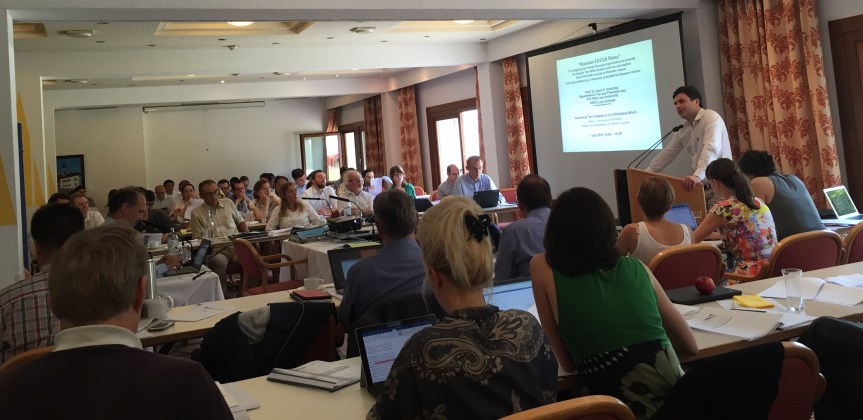
I am in Rust to attend a conference organized by the Institute of Austrian and International Tax Law of the Vienna University of Economics and Business.  The Institute organizes a conference in Rust every year using the same model.  Organizers first issue a call for contributors, each of whom writes a country report on the year’s topic, answering a series of questions prepared by Institute staff, describing the situation in his or her home country.  Contributors and participants include representatives of tax authorities, tax law and economics academics, practicing tax attorneys and accountants, and representatives of international organizations, among others.  The reports are circulated to participants in advance of the conference, and all are expected to prepare themselves by reading the country reports before arriving.  The two day conference then consists of the reporters presenting 3 minute “input statements” on a variety of topics, followed by discussion among the almost one hundred participants.  Here we are discussing an input statement from the Russian reporter, Professor Danil Vinnitskiy:

Rust Conference

As indicated in the title of my post, this year’s topic is tax compliance, and it has been fascinating to hear about the approaches of various governments including Kazakhstan, Indonesia, Norway, Russia, Germany, Nigeria, Croatia and many more.  Discussions have covered questions including the measurement of the tax gap, FATCA and other information exchange programs, inter-agency information exchange, and withholding procedures, among other things.  For those interested in learning more about these matters, the reports will ultimately be published in the coming months.

Professors Michael Lang and Alexander Rust host the conference, along with others from the Institute, and they understand that hard conference work should be accompanied by some opportunities to talk informally with other participants.  The informal events typically include a local wine tasting, a sunset dinner boat trip on the lovely Neusiedlersee, and many coffee breaks with opportunities for discussion with others.

Rust dinnerRust sunset

Having attended the Rust conference twice now, I can highly recommend it to others.  Keep an eye out for the call for participants for the 2017 conference!

The EU, Robots, and Star Trek

By Diane Ring

Even in the midst of great turmoil surrounding the Brexit vote, I was intrigued by recent reports that the EU is contemplating taxing robots on their “labor.” My initial reaction was that this focus on “sophisticated autonomous” robotic forms was Star Trek meets employment taxes, reminiscent of an episode in which the ship’s android officer, Data, asserts and argues for status as a sentient being rather than a piece of shipboard machinery to be disposed of at will. See generally Episode 9, Season 2 (“The Measure of a Man”) of Star Trek: The Next Generation.

While my sci-fi vision of EU legislation was enticing, it turns out that the motivations for this proposal were grounded in much more immediate concerns . . . Continue reading “The EU, Robots, and Star Trek”

Uncle Sam as Danish Tax Collector

By: Diane Ring

Who says that real global tax cooperation is dead? During a very interesting conference on international tax held in Boston a couple of weeks ago, a recent U.S. tax case was discussed and caught my attention: Torben Dileng v. Commissioner (D.Ct. N. Ga., Jan. 15, 2016). In that case, a U.S. District Court ruled that the IRS could collect $2.5M of Danish taxes owed by a Danish citizen who was resident in the U.S.

IRS as Danish tax collector– what was this all about? Continue reading “Uncle Sam as Danish Tax Collector”

The #PanamaPapers Come to the U.S.!

Today’s New York Times has a story about U.S. citizens and residents who have shown up in the Panama Papers. The ICIJ has shared its documents with the Times, which has found at least 2,400 U.S.-based clients over the last decade.[fn1]

The story (which you need to read) details some of the services Mossack Fonesca provided for four wealthy U.S. clients: entrepreneur William R. Ponsoldt, former CEO and chair of Citigroup Sanford I. Weill, Boston Capital Partners managing parter Harald Joachim von der Goltz, and financial author and life coach Marianna Olszewski.

Clearly, at least some of the services Mossack Fonesca provided were legal; some, however, were remarkably shady (for example, it looks like some clients used the offshore structuring to evade gift taxes, and some clients explicitly wanted to set up offshore structures to hide money from potential judgment creditors). Continue reading “The #PanamaPapers Come to the U.S.!”

Follow-up Friday: Messi and McDonald’s

By David J. Herzig

In what I’m dubbing follow-up Friday, I wanted to give a quick update to two stories I am following regarding tax avoidance structuring.  One on the corporate side: the French Tax Authority Raids on Multinationals; and, one on the individual side: the Messi Tax Fraud Trial. Both stories are heating up.

French Tax Raids

imgres

It was reported overnight that McDonald’s French headquarters was raided by French taxing authorities.  Unlike the Google raid that was reported in real time, this raid appeared to take place on May 18.

Much like the Google raid this investigation is centered on tax avoidance.  McDonald’s problems seem to have started in December when a lawsuit was brought against the company for understating earnings.  Apparently, in France, workers are entitled to a share of profits. A February 2015 report stated that McDonald’s avoided almost 1 billion euros of taxes using its Luxembourg subsidiary.

I guess Diane Ring was correct in her comment that all multinationals should be preparing for tax raids in France.  If you don’t have a plan in place, you should be working on one now.  Finally, Professor Byrnes at Texas A&M wrote an interesting story on his blog about routes for the United States to increase its involvement.

Messi Tax Fraud Trial

The most trustworthy news outlet, World Soccer Talk, is reporting that Lionel Messi will testify on June 2 for in his tax fraud trial.  As I previously reported, the trial is due to start on May 31.

A fascinating wrinkle that the article points out is that although there is potential jail time (22 months) if Messi is convicted of tax fraud, often that sentence is suspended.  “However, any such sentence would likely be suspended as is common in Spain for first offences carrying a sentence of less than two years.”

As I keep looking into sports figures tax avoidance planning, more and more amazing items come to light.  In January, Kelly Phillips Erb, reported in Forbes about another FC Barcelona player, Javier Mascherano, pled guilty to not paying tax for 2011 and 2012.  How fun would it be if two players of the NY Yankees were convicted of tax fraud.

These stories are why I love Europe!

French Tax Authorities Raid Google

By: David J. Herzig

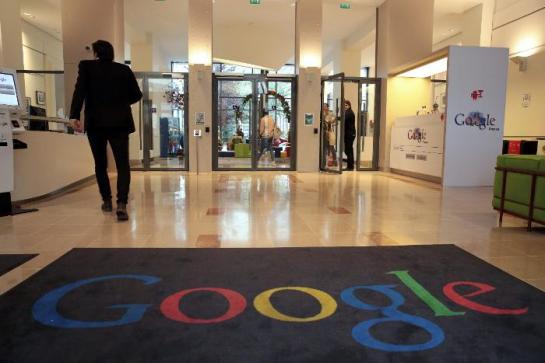
Don’t ever say that The Surly Subgroup is not on some breaking news.  It is being reported starting at 5 am French time some 100 French authorities conducted a “ultra secrète” raid on Google’s Paris headquarters.  This past February, Google was assessed a deficiency of some 1.6 Billion euros in back taxes.

5825007_google-paris_545x460_autocrop


Une perquisition a lieu ce mardi au siège de Google à Paris.  LP/F. DUGIT

There is nothing really new about the Google tax story.  Members of the European Union are in constant complaint about the use of tax strategies used by multinationals.  With awesome names such as the Double Irish with a Dutch Sandwich, multinationals that have portable revenue generation items, e.g., algorithms, can house those assets in low tax EU jurisdictions such as Ireland.  By then using EU laws to their advantage, e.g., EU tax law protects companies from paying tax in a non-permanent establishment country, they can avoid or mitigate tax.

In January this year, Google settled similar claims with the United Kingdom.   Continue reading “French Tax Authorities Raid Google”

Can EU-wide Corporate Consolidation Be Revived?

By: Diane Ring

On Tuesday, Shuyi  mentioned the EU’s Common Consolidated Corporate Tax Base proposal (CCCTB) in her post, noting some interesting parallels between maritime/bankruptcy coordination and international tax efforts at coordination. This motivated me to take a look at the recent developments that have happened around the CCCTB proposal. The CCCTB would provide a single set of rules for calculating the income of businesses operating in the EU – and would allow for such businesses to file a single consolidated return for their EU activities. The group’s income would then be allocated across the member states. Under this scheme, individual EU member states would still be able to tax their portion of the group’s income at their own country-specific tax rate. But I was curious–the CCCTB proposal is not new; it has been around for more than a decade. What has been happening on this stalled cooperation front? And, more importantly, will the EU’s announced re-launch of the proposal have a greater chance of success than previous attempts? Continue reading “Can EU-wide Corporate Consolidation Be Revived?”

A Tax Professor Feels a Little at Sea

boaty
Credit: https://nameourship.nerc.ac.uk

Last Thursday, Tulane Law School held its annual faculty scholarly retreat, which basically means we cloistered ourselves in a downtown conference room and workshopped eight papers over the course of a day. ’twas a nice end-of-semester opportunity to appreciate and engage with everybody’s work. I got to be discussant on a paper by my colleague, Martin Davies, Cross-Border Insolvency and Admiralty: A Middle Path of Reciprocal Comity, a working version of which was recently published in the Comité Maritime International 2015 Yearbook.  Martin is the Director of Tulane’s Maritime Law Center, and he has kindly given me permission to blog the paper here.

Warning: This blog post discusses areas of law that are only marginally related to tax law, which some may find unsettling. On the other hand, the paper implicates some interesting jurisdictional and distributional issues that parallel some of those found in international tax.

Continue reading “A Tax Professor Feels a Little at Sea”

Lionel Messi, Tax Fraud and the Panama Papers

I have been fascinated by the accusations of tax fraud levied against soccer superstar Lionel Messi and his father by the Spanish tax authorities.  Right when I thought the story could not get more interesting of course Messi is tied to the Panama Papers.  As much as I like Hermione (h/t Shu-Yi), I love Messi!

As a quick background for non-sports and football (I mean soccer) fans, Messi is the greatest soccer player in the world and maybe the greatest soccer player of all time.  As a point of reference, he would be the equivalent of Michael Jordan, Joe Montana, Babe Ruth rolled into one player.  Imagine what would happen if LeBron James were accused right now of tax fraud by the IRS?  This would dominate ESPN and probably network television.  Well, this is what is happening in the rest of the world with Messi.

Last year, a bombshell was dropped when the Spanish taxing authorities accused Messi of defrauding Spain of more than $5 million. Continue reading “Lionel Messi, Tax Fraud and the Panama Papers”

Harry Potter/Panama Papers Fan Fiction Alert (Rated: Fiction T)

By: Shu-Yi Oei

Confession: I love Mallory Ortberg, and after today, I might love her even more.

Here’s the latest from Mallory and The Toast: Harry Potter/Panama Papers Fan Fiction! This, after various news sources reported that Emma Watson was named in the Panama Papers data leak as having set up a BVI offshore company.

(Hat tip: Various friends on Facebook)

Perhaps my favorite line: “I used to be a lot of things,’ Hermione said decisively. ‘I have money now instead.’” Boom! Harry Potter meets Ayn Rand.

The fan fiction is very funny, but honestly, I am personally more taken by Ortberg’s beautifully crafted pseudo-legal disclaimer:

“*WITH THE IMPORTANT CAVEAT THAT THE OFFICIAL LINE RIGHT NOW IS THAT HER SHELL CORPORATION WAS CREATED SO SHE COULD PURCHASE PROPERTY PRIVATELY AND WITHOUT FANFARE, WHICH IS CERTAINLY POSSIBLE, I DON’T MEAN TO IMPLY SHE IS 100% A TAX DODGER BUT IT CERTAINLY RAISES SOME QUESTION, OKAY, BACK TO THE FAN FICTION NOW, AGAIN BEARING IN MIND THAT THIS IS JUST FOR THE SHEER DELIGHT OF PICTURING A LIBERTARIAN HERMIONE IN A SMOKY ROOM CREATING SHELL CORPORATIONS AND BUILDING TAX SHELTERS, ALSO HERE IS A QUICK PRIMER ON THE PANAMA PAPERS IF YOU’RE UNFAMILIAR OR READ A PRIMER A FEW WEEKS AGO AND THEN FORGOT”

The tone is so spot on, it made me weep.

In seriousness, though, the fact that the Panama Papers has made The Toast (which can generally be described as a feminist website with lots of literary and pop culture references) tells us something about how public opinions surrounding offshore tax evasion and structuring become disseminated throughout popular consciousness. Sure, organizations like Tax Justice Network and Oxfam write about tax havens and offshore evasion all the time and those venues tend to be more salient to us tax people. But public opinion surrounding convulsive events such as data leaks is also shaped in other popular fora as well—in this case, by Ortberg using the fierce set of tools at her disposal (humor, sarcasm, wit, movie references, an encyclopedic knowledge of random things like the history of the Protestant church, Greek mythology, and 19th century Gothic romance novels, etc.). Whether and how these informal modes of opinion transmission actually affect legal and political outcomes is a question that needs systematic inquiry.

It’s Here! The #PanamaPapers Database

On April 3, 2016, the International Consortium of Investigative Journalists, in partnership with a number of news organizations, announced that it had received a leaked trove of 11.5 million documents from the Panamanian law firm Mossack Fonesca. Dubbed the “Panama Papers,” leak, the ICIJ documented how the wealthy and the powerful used Mossack Fonesca to move money around the world of tax havens and, at least sometimes, to hide it from their countries’ revenue agencies.

Originally, the ICIJ declined to make its data available, even to governments.[fn1] It explained that it is: Continue reading “It’s Here! The #PanamaPapers Database”

EU State Aid Debate Lit Up the ABA Teaching Tax Session in DC

By: Diane Ring

As I blogged last week, the ABA Tax Section Teaching Tax Committee held a panel discussion Friday on the EU State Aid investigations on advance tax rulings. As I’ll discuss below, the panel was every bit as interesting as forecast. But first, a quick overview of what EU State Aid is all about:

EU State Aid Doctrine and Recent Controversy

Under Art. 107(1) of the Treaty on the Functioning of the European Union (as interpreted by the ECJ), if a member state provides state aid that distorts competition in the EU then the member must recover that aid from the benefiting entity to undo the distortive effects. Although this competition doctrine developed outside the tax context, it has previously been applied to tax benefits granted by a member state to a taxpayer. The European Commission oversees the investigation of state aid cases and issues the decisions.

Recently, though, application of the state aid doctrine to tax rulings issued by member states to multinationals has become a subject of tremendous controversy. In the past two years, the EC has been investigating tax rulings granted by member states to multinationals, including U.S. multinational taxpayers. The concern is that the multinationals receiving these rulings are not getting “mere” clarification of the law, but rather are securing a distinct advantage that creates distortion in the market. The U.S., along with various commenters, has expressed concern that these investigations might be disproportionately targeting U.S. businesses. Others have questioned whether the state aid rules are the most appropriate tool for combatting transfer pricing and/or double nontaxation situations that the EU finds problematic.

The Panel Discussion

During the discussion, it became apparent that there was a notable gap between the way many (but not all) in the U.S. view the European Commission’s recent state aid investigations involving U.S. taxpayers, and the EC’s vision of the role of the state aid doctrine in addressing potential harm caused by tax rulings granted to U.S. multinationals with very low effective tax rates. Thus, I was not surprised to hear these divergent positions characterized during the panel as “ships passing in the night”. What I did not anticipate was hearing the phrases “legal science fiction” (applied to certain suggested challenges to EC state aid decisions) or “a horror movie” (applied to the unfolding state aid investigations and decisions).

But the energy in the room was only part of the story. The panel provided very rich insights into the many complicated issues surrounding the current state aid investigations. I could not do them all justice here but thought I would highlight those that were mentioned by various panelists that really caught my attention:

Continue reading “EU State Aid Debate Lit Up the ABA Teaching Tax Session in DC”