TurboTax vs. H&R Block: Deductible Moving Expenses and Haunted Houses

Scrolling through my Twitter feed, I saw this Promoted Tweet:

Curious, I looked to see what it was responding to. TurboTax, it turns out, will have a (pretty awesome, actually) new Super Bowl ad, starring Kathy Bates: Continue reading “TurboTax vs. H&R Block: Deductible Moving Expenses and Haunted Houses”

The Art of the (Budget) Deal

By Daniel Hemel and David Herzig

Who Holds the Trump Card on Reconciliation?

Republicans on Capitol Hill are reportedly planning to use the filibuster-proof budget reconciliation process to repeal the Affordable Care Act and overhaul the tax code. Against that background, Sam Wice says that “the most powerful person in America” in 2017 will be Senate Parliamentarian Elizabeth MacDonough, the nonpartisan official who will “determine” how much of their agenda Republicans can pass through reconciliation. This, of course, is an exaggeration: like it or not, the most powerful person in America in 2017 will be Donald J. Trump, who will wield all the power of the imperial presidency. But Wice’s post helpfully directs our attention to the budget reconciliation process, the rules of which quite likely will determine whether the Republican leadership on Capitol Hill can repeal the ACA and reform the tax laws.

Yet while one should not underestimate the importance of reconciliation, one should also not overestimate the power of the Parliamentarian in the reconciliation process. As a formal matter, the Parliamentarian’s role is advisory; and as a practical matter, the Parliamentarian has little say over significant aspects of reconciliation. Other actors—most notably, Senate Budget Committee Chairman Mike Enzi (R-Wy.)—wield at least as much influence as the Parliamentarian. Most importantly, Enzi—not MacDonough—will determine whether the provisions in any reconciliation bill violate various rules against deficit-increasing legislation being passed via reconciliation. And unlike the Parliamentarian, the Budget Committee Chairman is very hard to fire.

Reconciliation measures can begin in either or both chambers. However, since the ultimate vote on the budget measure occurs in the Senate, we’ll focus on the Senate side of the reconciliation process for purposes of this discussion. On the House side, the Rules Committee Chair and the Budget Committee Chair will wield outsized influence as well. We expect Pete Sessions (R-Tex.) to stay on as House Rules Committee Chair; as for the House Budget Committee Chair, the race is on for a replacement to Tom Price, the Georgia Republican recently tapped as Trump’s Health and Human Services Secretary.

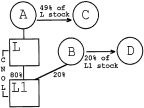
To understand why the Budget Committee Chair is as powerful as he is, a bit of background on reconciliation may be helpful. Continue reading “The Art of the (Budget) Deal”

Trump’s Emolument Tax Problem

By: David J. Herzig (photo from Vox.com)

When a businessperson who runs many active businesses runs and wins for President, clearly there would be many second order problems associated with inherent conflicts between running corporations and the country.  When President-elect Trump won the office, many of these conflicts have bubbled to the surface.

For example, to avoid a conflict of interest between benefiting one’s personal holdings and the Country’s best interests, assets of the President are placed in a blind trust.  As many have pointed out, this works only when the President does not know the nature of the holdings.  Putting existing businesses into a blind trust does not stop the President for knowing the underlying assets of the trust.  The conflict is not ameliorated by trust structure.  Nor, by the way, would it be fixed if President elect Trump divests but the family continues to own the assets.

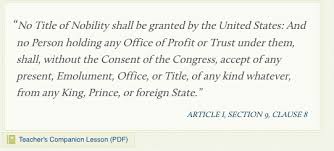
For this post, I want to consider the current discussion related to the blind trust problem called emolument.  Many prior to the election probably have not heard much about the idea of emolument.  Larry Tribe and others believe that President elect Trump’s ownership of active business assets, even in a blind trust, would violate, Article I, Section 9, Clause 8 of the Constitution which prevents the President from accepting “presents” or “Emolument” from foreign states.  Others, like Andy Grewal, do not believe that mere ownership of assets triggers the Emolument Clause.

If the solution to the blind trust and Emolument Clause problems is a divesture of President elect Trump’s assets as many advocate, this would trigger (to borrow a catch phrase of President elect Trump’s) huuuuuuge tax problem.

Continue reading “Trump’s Emolument Tax Problem”

Cooking The Books Podcast on Trump’s Taxes

By: David J. Herzig

Today Pulitzer Prize winning journalist, David Cay Johnston, Phil Hackney, and I got together for a 30 minute podcast discussion regarding the recent NY Times follow-up article about Mr. Trump’s $916 million tax loss (“NOL”).

Here is link if you missed hyper-link above: http://share.sparemin.com/recording-5131

The topics ranged from the current tax reporting regarding Mr. Trump’s 1990s tax returns to the Trump Foundation to potential criminal sanctions against Mr. Trump.  It was fantastic to be a part of and I hope everyone listens.

Continue reading “Cooking The Books Podcast on Trump’s Taxes”

The Halloween Parent Tax

halloween-candy1By Sam Brunson

I was asked on Twitter about the Halloween Parent Tax. And with Halloween coming up, it seemed like it needed a post. So here you are:

Design Considerations

You’ve got a couple options here. Are you going to create an income tax? A consumption tax? A head tax? Each is slightly different, in certain relevant ways:

Income Tax: This is probably what you think of when you think of the Halloween Parent Tax. Essentially, children are required to give their parents some percentage of the candy they get. (My wife’s parents imposed a 15-percent Halloween Parent Tax when she was growing up.) There are some design complications here—for example, are you taking a percentage of the number of pieces of candy the kids get? Or do different kinds of candy have different values? And do you take size into account in calculating candy value?[fn1] Continue reading “The Halloween Parent Tax”

Trump’s Abuse of Trump Foundation — Criminal Tax Implications?


By: Philip Hackney, Oct. 3, 2016

donald-j-trump-1342298_1280-1

Much attention is being paid to how Donald Trump could have amassed a $900 million NOL in the mid 90s. I remain laser-focused on the Donald J. Trump Foundation.  For this blog post I ask the question: could Mr. Trump’s misuse of the private foundation that he leads result in criminal sanctions under tax law?

I think there is enough evidence to open a criminal investigation into his activities. Nevertheless, a criminal prosecution is highly unlikely for both political reasons and issues of proof (ignorance of the law is a defense). Still, I think the IRS has a duty to open an investigation under the egregious set of facts I lay out.

Here is the important thing to keep in mind as you consider the arguments I lay out in this post: Donald Trump does not own the Foundation and its property does not belong to him. It does not matter from whom the money came. He is the president of a nonprofit organization that is entrusted with money to be used for charitable purposes that benefit the public. Continue reading “Trump’s Abuse of Trump Foundation — Criminal Tax Implications?”

A $916 Million Loss? #TrumpLeaks

By Sam Brunson

trump-returnThe New York Times reported tonight that in 1995, Republican presidential candidate Donald Trump may have claimed a $916 loss, a loss substantial enough that it could have allowed him to avoid paying taxes for nearly two decades.

The push notification for the story showed up on my phone at 8:30 pm Central time on a Saturday, so I haven’t had time to really dig into it. I’m sure that, over the next few days, we’ll have something more substantive to say. But in the meantime, a couple thoughts:  Continue reading “A $916 Million Loss? #TrumpLeaks”

When your job is predicting the future

rainBy: Diane Ring

In a post earlier this week, I considered how the international tax conference I was attending (the annual worldwide meeting of the International Fiscal Association, IFA) had something in common with the Japanese anime and manga conference hosted in the adjacent venue. Soon the anime event ended and the tax conference continued, but with a new neighbor – the Meteorological Technology World Expo 2016. No costumes – but some interesting, though puzzling, equipment outside in the courtyard. I thought about the big task of meteorology—predicting the future. Turns out that in-house tax advisors have the same job, it’s just that instead of rain, they predict the tax implications of business decisions for the C-suite. But the tax advisors do it without the tech, and there is a lot to keep them up at night . . . Continue reading “When your job is predicting the future”

Debate Prep: The Candidates’ Estate Tax Plans

By David Herzig

With the first Presidential debate tonight, we are sure (or at least I hope) to hear about various tax plans.  I would expect that the estate tax would be a topic of conversation since there is such a sharp contrast between the candidates.  The current reporting spins that Donald Trump wants to eliminate the estate tax; while, Hillary Clinton wants to tax the rich through a two-prong increase on the estate tax.  I thought it would be useful in advance of the debate to discuss the candidates’ actual estate tax plans. (If there is a PA for Lester Holt looking for some last minute questions for the candidates – scroll to the bottom and steal away no attribution needed!)

Currently, there is an estate (or death) tax. Unfortunately for the fisc, the tax accounts for less than 1 percent of federal revenue.  (See, Tax Foundation). What is amazing is that at other points in time, the tax actually raised revenue and effected many estates.  The primary reason for the drop in revenues even though overall net worth has increased, is related to the exemption amount available for taxpayers.  In 1976, the exemption amount per estate was $60,000 while today it is $5.45 million.  (I tackle a lot of these issues in my upcoming University of Southern California Law Review article).

Continue reading “Debate Prep: The Candidates’ Estate Tax Plans”

Can His Fans #SaveNelly?

By Sam Brunson

Photo by reeb0k2008. CC BY 2.0

I listened to Nelly’s “Hot in Herre” last night. And I’m not alone—apparently, over the last couple days, Nelly’s Spotify streams have tripled as compared with the week before.

Why? Taxes, of course.

Apparently, Nelly has joined the storied ranks of popular entertainers who don’t pay their taxes. (See also Willie Nelson, Lauryn Hill, MC Hammer, and Jerry Lee Lewis, among others.[fn1])  Continue reading “Can His Fans #SaveNelly?”

Trump, Churches and Politics

Photo: Evan Vucci/AP

By David J. Herzig

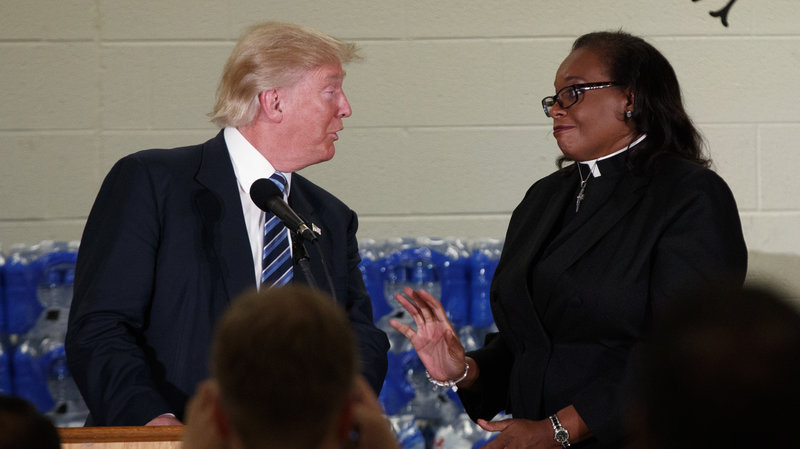
One of the leads in today’s news cycle was the Flint Pastor, Rev. Faith Green Timmons of the Bethel United Methodist Church, interrupting Republican Presidential Candidate Donald Trump during a speech at her church.

According to the story, Rev. Timmons, intervened during Mr. Trump’s speech  when he started attacking Democratic Presidential Candidate Hillary Clinton stating, “Mr. Trump, I invited you here to thank us for what we’ve done in Flint, not give a political speech, …”. To which Mr. Trump responded, “OK. That’s good. Then I’m going back onto Flint, OK? Flint’s pain is a result of so many different failures, …”.

I headed to Twitter to state that Rev. Timmons was doing the right thing protecting her churches charitable exemption by halting the political speech.  Quick blackletter law: churches, like other public charities, are exempt from tax under section 501(c)(3). But like all exemptions there are certain limitations, including an absolute prohibition on supporting or opposing candidates for office.  In IRS Publication 1828, the IRS position is clear,  “churches and religious organizations, are absolutely prohibited from directly or indirectly participating in, or intervening in, any political campaign on behalf of (or in opposition to) any candidate for elective public office.”  (For a primer on the topic, my co-blogger Sam Brunson wrote for Surly here and for a full blown analysis see his work for University of Colorado’s law review here).  Churches can’t (although they often do) engage in political speech.  Maybe Rev. Timmons was attempting to protect the church’s exemption.

However, as Lloyd Mayer pointed out on Twitter, having a candidate appear at your church two months before the election might in itself be political speech regardless of the topic actually discussed.  This would be true unless the church gave the same amount of “air time” to the opponent.  Publication 1828 supports Professor Mayer’s view.  Statements made by the religious leader of the church at an official church function or through use of the church’s assets would be improper political campaign intervention.  Hosting only one candidate regardless of the topic would seem to be an endorsement of that candidate and thus improper political campaign intervention.

Continue reading “Trump, Churches and Politics”

Court Says No to Uber Class Action Settlement: What does that mean for worker classification?

By: Diane Ring

A major question in the sharing economy is the status of workers – are they employees or independent contractors? Of course, no single answer would apply across the entire sector but the debate has been most prominent in ridesharing. At the center of this debate are two litigations against Uber in California and Massachusetts (in January 2015 the Massachusetts case was transferred to the Northern District of California). The suits, brought on behalf of Uber drivers in the two states, “alleged [among other claims] that Uber misclassified its drivers as independent contractors rather than employees.” Reclassification as an employee would entitle drivers to various protections and potential compensation under state labor law. Three years into the litigation, the plaintiffs agreed on a settlement with Uber, which would provide for monetary relief of $84 million (plus an additional $16 million contingent on an initial public offering). The bulk of this payment would be split into two funds, with approximately $5-6 million for Massachusetts drivers, and approximately $56-66.9 million for California drivers.  Payouts to drivers would be based on miles driven under a formula.  Continue reading “Court Says No to Uber Class Action Settlement: What does that mean for worker classification?”

Time for the ABA/Tax Times!

images

By: Francine J. Lipman

Professor Linda Beale and her team of dedicated editors and staff have once again produced an outstanding issue of ABA Section of Taxation Times.

This issue of TT features a farewell from the exceptional outgoing ABA/Tax Section Chair , George C. Howell, III, Hunton & Williams LLP, Richmond, VA and a welcome from the enthusiastic and energetic incoming ABA/Tax Section Chair William H. Caudill, Norton Rose Fulbright LLP, Houston TX. I personally appreciate the focus and support both of these gentlemen have given, are giving, and will continue to give to the Tax Section’s pro bono and public service efforts as well as their commitment to diversity and inclusion. Thank you ABA – Tax Section for reaching out for a greater good!

Next, Professors Joe Bankman   att-16aug-bankman-joseph.jpg   and James E. Maule  att-16aug-maule-james-edward.jpg  engage in a thoughtful point-counterpoint discussion on the important issue of tax filing simplification.

The brilliant Jasper L. Cummings, Jr. in “Spending Without Appropriations: Who’s to Complain?” discusses the recent Affordable Care Act (ACA) decision of United States House of Representatives v. Burwell, 2016 U.S. Dist. LEXIS 62646 (D. D.C. 2016). In the decision, Judge Rosemary M. Collyer ruled that DHHS cannot pay insurance companies the costs they incur in reducing the “cost sharing” for some ACA insurance policy holders. The court enjoined further payments to the insurance companies for those costs, but stayed the injunction pending appeal, which surely will occur. In other words, the House of Representatives won.

On a lighter note, here is a new tax tune, titled OVDP (Offshore Voluntary Disclosure Program), by Robert S. Steinberg of Palmetto Bay, FL, sung to the tune of “Tonight,” by Leonard Bernstein & Stephen Sondheim, from West Side Story. Unknown

Finally, Tax Law Professors take note,          PR

SEPTEMBER 6, 2016, the 16th Annual Law Student Tax Challenge begins so spread the word to your students near and far!

And there are even more treasures in the August issue of the Tax Times, but I will let you dig up those pearls of wisdom yourself!  There is something for every tax professional in the ABA-TT.images-2


Tax Canon, Music Edition

A week and a half ago, Leandra posted some of the history and context of the Beatle’s “Taxman.” It got me thinking about something I’ve been wondering about for a while: what songs are out there that talk about tax?[fn1]

I’ve found a couple places that have addressed the question, but they’re all deficient. “Sound Opinions” did a show on the question this last April, but, in spite of calling it the “Tax Day Special,” they included songs about money broadly, not taxes specifically.

VH1 got the taxes (mostly) right (“Take the Money and Run” is a stretch for my purposes), but limited themselves to 10 songs, and all of the songs are rock songs. (Still, I’m going to steal several of theirs for this.)  Continue reading “Tax Canon, Music Edition”

“Taxman” at 50

taxman20sheet20music
Updated lyrics are available here.

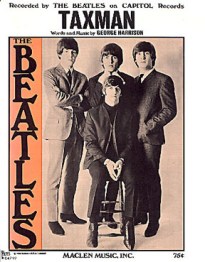
The Beatles’ hit song Taxman has just turned 50; it was released August 5, 1966 in the U.K. Taxman, written primarily by George Harrison, famously includes the lyrics

“Let me tell you how it will be
There’s one for you, nineteen for me
Cos I’m the taxman, yeah, I’m the taxman

Should five per cent appear too small
Be thankful I don’t take it all . . . .”

Apparently this song was at least partly inspired by the theme for the 1966 TV show, Batman! batman222june1970And, in the early 1980s, Weird Al Yankovic wrote a parody called “Pac-Man,” though it was not released  on any of his albums.

H&R Block used the Taxman song in a 2002 commercial literally showing only tax men: “It took an Act of Congress to pass 441 changes in the tax law. Will it take an act of God to understand them?” (There’s a different, more diverse version here.)

Did the Beatles really pay a 95% tax rate? According to a Bloomberg article, “The top rate for British taxpayers in the mid- Continue reading ““Taxman” at 50″