Rio 2016!

rioThe Rio Olympics start this weekend.[fn1] And, in spite of the catastrophe that the Rio Olympics may potentially be, we’ll be watching (in the same way John Oliver excoriated FIFA for 12 minutes before announcing that he was “still so excited” for the World Cup).

U.S. Olympians are likely to win a collective 100 or so medals over the next couple weeks. And, in addition to medals, winners will receive cash payments from the U.S. Olympic Committee—it will pay $25,000 for a gold, $15,000 for a silver, and $10,000 for a bronze. Continue reading “Rio 2016!”

Examination of Allegations Against Clinton Foundation Part II

By: Philip Hackney

elections-1527438_1280

A week ago I considered one of three allegations Rep. Marsha Blackburn made against the Bill, Hillary & Chelsea Clinton Foundation in a letter Blackburn sent to the IRS, FBI, and FTC. I found the first allegation stated nothing of significance to the IRS. I now look at the other two and find them significantly wanting as well. Recently, IRS Commissioner Koskinen sent a letter indicating the IRS would investigate these complaints. I conclude they fail to state any complaint actionable by the IRS.

The second and third Blackburn allegations seem to come from a book by Peter Schweizer called Clinton Cash. Both allegations suggest that Sec. Clinton provided large governmental benefits in exchange for donations to the Clinton Foundation and payments to Bill Clinton. Both of the claims, already made by Presidential candidate Donald Trump, regarding Laureate University and Uranium One have been rated False and Mostly False by Politifact. Thus, it is difficult to take these allegations seriously.

Nevertheless, there are two things I do in this post. First. I discuss the factual conclusions of others regarding whether there was a quid pro quo arrangement associated with the second and third allegations. Then, I look at how the tax law might treat such arrangements were they true. Continue reading “Examination of Allegations Against Clinton Foundation Part II”

Emmet Till and The Panama Papers

Photo AP.

By David J. Herzig

Yesterday (July 25) would have been Emmet Till’s 75th birthday.  Since high school I have been fascinated by his story and the impact he had on the Civil Rights movement. For those who don’t know, Mr. Till was born and lived in Chicago.  While visiting his relatives in Mississippi in 1955, at the age of 14, he was killed for allegedly flirting with a white women.  His killers (although an all white jury acquitted both men they both admitted to the killings in this Look Magazine article) were the husband of the woman, Roy Bryant and his half-brother J. W. Milam.

The death of Mr. Till is often credited with a mobilizing factor in the Civil Rights Movement.  For those interested, here is an excellent PBS documentary on the topic.

Thankfully, it did not take long to justify a post on a tax blog about a Civil Rights hero.  The son of one of Mr. Till’s killers name seems to show up in the Panama Papers.  According to the Clarion Ledger, “Harvey T. Milam of Ocean Springs, whose father, J.W., shot Till in 1955, appears in” the Panama Papers.  Apparently, Harvey had quite a scheme involving using off-shore insurance companies.  I may actually have to do some digging around to find out more about the alleged scheme.

What’d I Miss?

I’ve been traveling for the last month or so, a significant portion of that time without any internet access.

Whatd I MissThat doesn’t mean, of course, that I’ve been totally starved of news. With a 10-, 7-, and 4-year-old, I couldn’t miss the existence of Pokémon Go, and I’ve caught up (at least slightly) on the big, general news of the day. But by and large, I haven’t opened my Lexis Daily Federal Tax Tracker in a month. I’ll naturally read what my co-bloggers have written here, but I’m curious if there’s any other important tax happenings that I might not have seen.

So tell me: What’d I miss?

Examination of Allegations Against the Clinton Foundation

By: Philip Hackney

book-863418_1280Back in June I wrote disapprovingly of some actions of the Donald J. Trump Foundation. In that piece I promised to write about the Bill, Hillary & Chelsea Clinton Foundation too. Recently, Rep. Marsha Blackburn sent a letter that was scheduled to be sent to the FBI, the FTC, and the IRS. That letter makes a number of allegations about the misuse of the Clinton Foundation, and I figured these allegations would be a good place to analyze the performance of the Foundation that I had promised.

Blackburn alleges a number of things, but I am going to focus on her first allegation in this post because it is the only one that is a pure tax exemption question. She alleges that the Foundation is illegally operating outside the scope of its initial application for tax exemption to the IRS.  For reasons explained in the post below, I conclude there is very little involved in this claim and it is a misunderstanding of the law. There could be problems with the Foundation but this is not one of them.

UPDATE: I look at the remaining two Rep. Blackburn allegations here.

Continue reading “Examination of Allegations Against the Clinton Foundation”

Emerging Trend for Uber in Europe?

By: Diane Ring

Uber, one of the most prominent faces of the sharing economy, has not always been welcome in the EU. Similarly, Airbnb has experienced legal, regulatory, and public policy resistance across European countries. However, two recent developments in the EU suggest that, on balance, Europe might be staking out a regulatory path for the sharing economy that is intended to demonstrate the region’s support for the new sector. . . . Continue reading “Emerging Trend for Uber in Europe?”

The Tax Aspects of Pokémon Go

Adam Thimmesch
Assistant Professor, University of Nebraska-Lincoln College of Law

The new Pokémon Go app has already generated many discussions regarding the multiple ways that the game intersects with the law. I’ve previously opined on some of the broader issues, but, as a tax professor, my thoughts have naturally focused on that topic. Fortunately, the Surly Subgroup was nice enough to let me present those thoughts here in a guest post.

The tax issues that I’ve been thinking about stem largely from the fact that Pokémon Go is built on a freemium business model. That is, the app is free, but users can pay for certain “premium” features like additional Pokéballs, incense, and lure modules. (If these phrases mean nothing to you, here is a nice primer on the game.) Those purchases are all done through the purchase and use of an in-app currency called Pokécoins. The whole thing might sound silly, but the app is already generating over $1.5 million in daily revenue for its developer, Niantic, Inc. The company will also soon be selling “sponsored partnerships” that allow companies to be listed more prominently in the game. The potential revenue streams look plentiful at this point. So what are the tax issues?

Continue reading “The Tax Aspects of Pokémon Go”

Alcatraz!

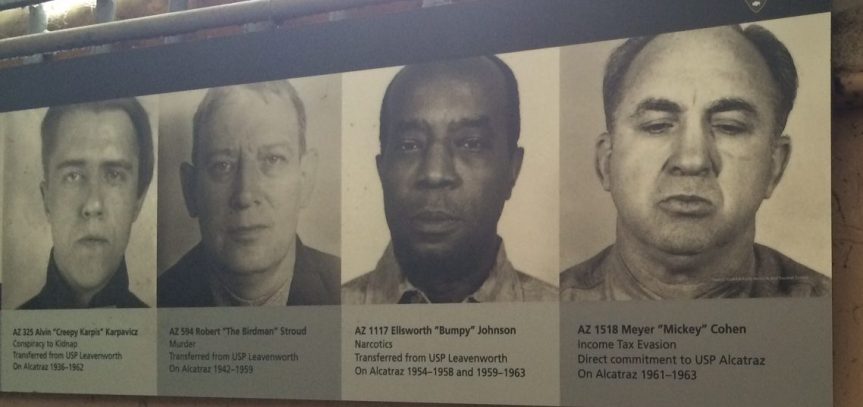
Early in the Alcatraz Cellhouse Audio Tour, my wife pointed out one of the pictures in D-Block: right next to people imprisoned for narcotics offenses, conspiracy to kidnap, and murder was Mickey Cohen, in Alcatraz for tax evasion. IMG_4029

Tax evasion! Alcatraz was a pretty harsh punishment for not paying your taxes. Unless, of course, you weren’t really sent to Alcatraz for not paying taxes, Which, of course, Cohen wasn’t. Neither was the inmate at the other side of the picture: Al Capone.   Continue reading “Alcatraz!”

Messi Sentenced To Jail for Tax Fraud

By David J. Herzig

In a statement today, the court (the decision is in Spanish) in the tax fraud trial of Lionel Messi and his father found them guilty with a sentence of 21 months.  Although, under the Spanish system Messi and his father will serve probation and not jail time.

The court rejected Messi’s side of the story.  He had been claiming that he did not know what he signed.  The court did not believe Messi and decided that he (my translations) “decided to remain in ignorance over time” in a situation that benefited him, “because he received returns of the funds”.

Because the strategy that they court thought Messi knew about and used was to a scheme to “create the appearance of assignment” of these rights to “companies located in countries whose tax legislation allowed opacity”.

Thus, the court added over 3.5 in Euros of fines (2 million for Messi and 1.5 for his father) for the scheme to conceal earnings from image rights.  Prior to the trial, Messi claimed to have paid the 5 million Euro tax deficiency.  Messi does retain appeal rights.

F.C. Barcelona issued this statement in support of Messi and his father.  As Shu-Yi pointed out to me, F.C. Barcelona might have it’s own agenda on tax schemes.  As the E.U. is about set to give a verdict against the Spanish clubs for violating the public spending provisions via tax breaks.  The opening of the inquiry stated, “Professional football clubs should finance their running costs and investments with sound financial management rather than at the expense of the taxpayer. Member states and public authorities must comply with EU rules on state aid in this sector as in all economic sectors.”

As a final thought, I do wonder, however, if that open probation affects his ability to travel via Visa to various countries, e.g., will Brexit matter for Messi?
The EU, Robots, and Star Trek

By Diane Ring

Even in the midst of great turmoil surrounding the Brexit vote, I was intrigued by recent reports that the EU is contemplating taxing robots on their “labor.” My initial reaction was that this focus on “sophisticated autonomous” robotic forms was Star Trek meets employment taxes, reminiscent of an episode in which the ship’s android officer, Data, asserts and argues for status as a sentient being rather than a piece of shipboard machinery to be disposed of at will. See generally Episode 9, Season 2 (“The Measure of a Man”) of Star Trek: The Next Generation.

While my sci-fi vision of EU legislation was enticing, it turns out that the motivations for this proposal were grounded in much more immediate concerns . . . Continue reading “The EU, Robots, and Star Trek”

Tax Times @ ABA Section of Taxation

By Francine J. Lipmanth

Supervising Editor Professor of Law Linda Beale and her team of outstanding ABA – Tax Section editors, Anne Dunn and Isel Pizarro, and staff have put together an exceptional June 2016 issue of the digital Tax Times. Features include . . . Continue reading “Tax Times @ ABA Section of Taxation”

Minnesota Dogs Breathe (Woof) a Sigh of Relief: Pet Trusts Now Legal

By Diane Ring

IMG_6307Perhaps you heard a chorus of joyous barking across the state of Minnesota recently — now you know why. Until just over two weeks ago, every state in the U.S., plus Washington, D.C., recognized statutory pet trusts, except Minnesota. But on May 22, 2016, the Minnesota Governor signed legislation approving pet trusts. The legislation, which had been sponsored in the House by Rep. Dennis Smith and in the Senate by Sen. Scott Dibble, allows the creation of a legally enforceable trust that provides for the care of an animal that was alive during the grantor’s lifetime. The terms of the trust can be enforced by a person appointed in the trust, or if no one is appointed, the court may appoint someone. Moreover, anyone having an “interest in the welfare of the animal” may petition the court to appoint someone to enforce the trust or remove the person so designated in the trust document. The trust would terminate on the death of the last surviving animal (or 90 years if shorter). Any remaining proceeds would be distributed pursuant to the trust’s terms, or if the trust fails to specify, then to the “grantor’s heirs-at-law determined as if the grantor died intestate domiciled in [Minnesota] at the time of distribution.”
This all seems pretty straightforward, so why was Minnesota the last state? Continue reading “Minnesota Dogs Breathe (Woof) a Sigh of Relief: Pet Trusts Now Legal”

Did John Oliver just give away some CODI income on Last Week Tonight?

By: Shu-Yi Oei

So John Oliver just forgave $15 million of debt on his talk show.

See video @ around 17:15.

Specifically, Oliver apparently set up a debt-buying company (CARP), which bought $15 million worth of incurred medical debt of nearly 9,000 people for $60,000, less than half a cent on the dollar. And then he forgave the $15 million of debt on television. The Washington Post reports that “this is the largest one-time giveaway ever on television, beating out Oprah Winfrey’s famous “you get a car! You get a car!” episode, which cost that show $8 million.” (Smart talk show economics, to top Oprah’s giveaway while only paying $60,000 for the debt.)

Of course, because tax professors love talking about the tax consequences of Oprah’s free car giveaway, I wondered whether this $15 million debt forgiveness event was going to result in cancellation of indebtedness income to some of the debtors whose debt was forgiven. As tax people know, IRC Section 61(a)(12) provides that income from the cancellation of indebtedness is includible in gross income. But IRC Section 108 provides that there is no gross income in certain circumstances–for example, if the debtor is in Title 11 bankruptcy, or is insolvent, or if the debt is certain types of real property related indebtedness.

Would CARP have to send these folks a Form 1099-C?  And would some of them then have CODI income due to the debt forgiveness?

Continue reading “Did John Oliver just give away some CODI income on Last Week Tonight?”

The #PanamaPapers Come to the U.S.!

Today’s New York Times has a story about U.S. citizens and residents who have shown up in the Panama Papers. The ICIJ has shared its documents with the Times, which has found at least 2,400 U.S.-based clients over the last decade.[fn1]

The story (which you need to read) details some of the services Mossack Fonesca provided for four wealthy U.S. clients: entrepreneur William R. Ponsoldt, former CEO and chair of Citigroup Sanford I. Weill, Boston Capital Partners managing parter Harald Joachim von der Goltz, and financial author and life coach Marianna Olszewski.

Clearly, at least some of the services Mossack Fonesca provided were legal; some, however, were remarkably shady (for example, it looks like some clients used the offshore structuring to evade gift taxes, and some clients explicitly wanted to set up offshore structures to hide money from potential judgment creditors). Continue reading “The #PanamaPapers Come to the U.S.!”

“The Federation Does Not Have a Tax Policy …”

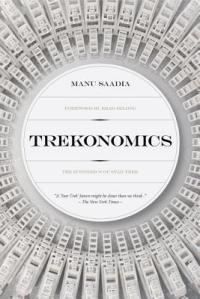
trekonomicsBook review: Manu Saadia, Trekonomics: The Economics of Star Trek (2016).

About a year ago, I heard Felix Salmon talking about a project he was shepherding; Trekonomics was going to be a crowdfunded book about the post-scarcity economics of Star Trek. Intrigued, I put the $10 on my credit card. And waited.

Confession: I’m not a Trekkie. Or a Trekker. (I don’t honestly know the difference between the two.) I mean, I grew up watching the original series with my dad, who’d watched it in its initial run. And when The Next Generation aired, my middle school heart was thrilled, and I think I watched the first season or so before stopping. And that (plus a couple movies and the reboots) is about the extent of my Star Trek knowledge.  Continue reading ““The Federation Does Not Have a Tax Policy …””