State Tax Reform Amidst Cajun Sausage Making

Steven Sheffrin
Professor of Economics & Director of the Murphy Institute, Tulane University

It was not quite Cajun boudin being prepared in Baton Rouge this winter and spring, but the sausage being concocted in the Louisiana Legislature was equally spicy. With low oil prices and years of “creative” budgets under Governor Bobby Jindal, the new Governor, John Bel Edwards, and the Legislature faced an initial budget shortfall of roughly 16 percent of the state general fund for the next fiscal year. Three separate legislative sessions later, they did reach a balanced budget, although with less revenue than the Governor had wanted. The revenue raisers included a dizzying array of sales tax changes that only temporarily limited exemptions, temporary limits on the refundability of business credits, and various other “haircuts” for business. Not exactly the purest of tax reforms.

But buried in this avalanche of legislation were some serious reforms of the Louisiana corporate tax along the lines that my colleagues and I had recommended to the Legislature last year.

Continue reading “State Tax Reform Amidst Cajun Sausage Making”

Tax Lawyers Kill $38 Billion Merger

By: David J. Herzig

I remember one of my first days at GT we were advising on a corporate merger.  At the end of the process (of course), the M&A group asked tax to sign off on the deal.  Everything was done and this was supposed to be a rubber stamp.  Well, as you can guess by now, the tax consequences of the deal as structure were disastrous and the whole deal had to be restructured.  I remember vividly the corporate lawyers saying as they walked out the door, this is why we never ask tax anything!

Today, a judge killed the proposed $38 billion merger between Energy Transfer Equity (“ETE”) and the Williams Companies. Chancery Court Vice Chancellor Sam Glasscock ruled that ETE could back out of the deal because of taxes. [UPDATE: The link is not consistently working so here is the web link to the court: http://courts.delaware.gov/opinions/list.aspx?ag=court%20of%20chancery%5D  Latham & Watkins, actually, tax lawyers at three top firms (L&W, Gibson Dunn and Morgan Lewis and one law professor) could not opine that the deal was tax neutral under 721 despite one law professor and Cravath saying the deal worked.  This opinion is a rather big deal for M&A lawyers.  Usually, conditions precedent like this won’t allow one side to back out of a transaction.

This is a tax blog not a M&A blog, so, I thought I could show how a $38 billion deal was structured and some lessons that could be learned by examining the deal post-mortem. The post is rather long but I hope super interesting to partnership tax people.

As a total aside, the tax side sounds to me like cover. The $6B payout to Williams shareholders as part of the deal was bridge financing.  This bridge financing dried up when the value of the assets dropped to about half after the agreement because of a drop in energy prices. From the opinion, “In light of its obligation to deliver $6.05 billion in cash, the Partnership and its Chairman Kelcy Warren have become increasingly troubled with its potential overall debt levels.”  But failure to conduct a proper thought experiment regarding the guaranteed payment by the tax lawyers created the controversy.

According to the ruling, “The Proposed Transaction is an unusual structure, accommodating Williams’ desire for its stockholders to continue to be holders of publicly traded common stock (as opposed to partnership units) and to receive a substantial cash payment, in return for Williams’ assets being acquired by the Partnership.”

L&W was asked by ETE to issue a should opinion that “ETC and the Partnership “should” be treated by the tax authorities as a tax-free exchange under Section 721(a) of the Internal Revenue Code (the “721 Opinion”).” L&W could not issue the opinion and the Chancellor allowed, quite unusually, ETE to pull out of the deal.

Now, it was not like Williams was without adequate counsel.  Cravath, Swaine & Moore LLP was deal and tax counsel to them and Gibson, Dunn & Crutcher LLP was additional deal counsel.  For that matter, Morgan, Lewis & Bockius LLP  (tax counsel) and Wachtell, Lipton, Rosen & Katz (deal counsel) also served as counsel to to ETE.

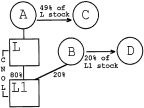
According to the opinion here was the proposed deal:

Continue reading “Tax Lawyers Kill $38 Billion Merger”

Consumer Financial Regulation Meets Income Share Agreements

By: Shu-Yi Oei

On Wednesday, I spoke at the National Association of Consumer Credit Administrators (NACCA) 81st Annual Meeting and Regulators’ Training Symposium in Minneapolis. The panel was “Trends in Lending: Emerging Loan Products,” and the topic I was asked to discuss was income share agreements (ISAs).

The Powerpoint slides from the talk are here. The last slide contains a partial source list for those who’d like to read more about income share agreements.

I have some thoughts, following the presentation, and after sitting in a couple of (non-tax) panels on lending and regulation:

(1) Legal Scholarship and Restlessness

The NACCA invitation supports my longstanding theory about restlessness and legal scholarship. The theory is that two (or three, or four) years after you did the project (and are likely bored with it) is when anyone else notices that you’ve even done it at all. Therefore, to me, a big part of the scholarly endeavor is really the ongoing fight against your own internal boredom-clock (which, if you’re like me, is likely a tad…accelerated).[fn1]

In this case, Diane Ring and I wrote about ISA transactions back in 2014. See Human Equity? Regulating the New Income Share Agreements, 68 Vand. L. Rev. 681 (2015). And then we became convinced that the industry had sputtered and tanked and so our attention transitioned to other projects.[fn2] But folks I spoke to at the NACCA conference—as well as others I’ve have talked to—assure me that this is not so! Fast-forward to 2016 and new offerings by Cumulus Funding and Purdue University suggest that perhaps the ISA market is not entirely dead after all. Also, those ISAs entered into between 2012-14 (offered by companies like Pave and Upstart) have been percolating in the ether, and the full array of their tax and other regulatory consequences are presumably becoming clearer as time goes on. State regulators are now starting to pay attention and think about how to weigh in. So the time seems right to refocus the attention on an old scholarly project.

Continue reading “Consumer Financial Regulation Meets Income Share Agreements”

Universal Basic Income and Marginal Rates

By: Benjamin M. Leff

Last week I posted some preliminary thoughts about a Universal Basic Income (UBI), arguing that it doesn’t make much sense to talk about a UBI outside the context of reforming the tax code, because a UBI without tax reform is just a mind-bogglingly large tax cut.  After the post, I got a tweet from Daniel Hemel about the effect of such reform on marginal rates: “Totally agree w/your UBI analysis, though to keep effective TR constant we would have to raise marginal TR on middle class.”  He’s right that to talk about a UBI in the context of fundamental tax reform without talking about marginal rates is silly.

First, a quick primer on marginal rates for non-tax readers.  Continue reading “Universal Basic Income and Marginal Rates”

Minnesota Dogs Breathe (Woof) a Sigh of Relief: Pet Trusts Now Legal

By Diane Ring

IMG_6307Perhaps you heard a chorus of joyous barking across the state of Minnesota recently — now you know why. Until just over two weeks ago, every state in the U.S., plus Washington, D.C., recognized statutory pet trusts, except Minnesota. But on May 22, 2016, the Minnesota Governor signed legislation approving pet trusts. The legislation, which had been sponsored in the House by Rep. Dennis Smith and in the Senate by Sen. Scott Dibble, allows the creation of a legally enforceable trust that provides for the care of an animal that was alive during the grantor’s lifetime. The terms of the trust can be enforced by a person appointed in the trust, or if no one is appointed, the court may appoint someone. Moreover, anyone having an “interest in the welfare of the animal” may petition the court to appoint someone to enforce the trust or remove the person so designated in the trust document. The trust would terminate on the death of the last surviving animal (or 90 years if shorter). Any remaining proceeds would be distributed pursuant to the trust’s terms, or if the trust fails to specify, then to the “grantor’s heirs-at-law determined as if the grantor died intestate domiciled in [Minnesota] at the time of distribution.”

This all seems pretty straightforward, so why was Minnesota the last state? Continue reading “Minnesota Dogs Breathe (Woof) a Sigh of Relief: Pet Trusts Now Legal”

Teaching Tax – At Home and Abroad

by Jennifer Bird-Pollan

I’ve just finished my sixth year of teaching tax at the University of Kentucky, which is longer than I’ve done any other professional task, but I still feel like I’m a beginner.  I have started to develop strong classroom preferences (students may not use computers in my classes, I prefer lots of participation, and I prefer textbooks that elucidate concepts, rather than trying to hide the ball).  But at the same time I have many more questions about the best way to do this work (what should I cover and leave out, given the time constraints?  how can I encourage students to prepare seriously ahead of time, while still giving robust answers to student questions in class?).  I am eager to hear from others, both my co-bloggers and visitors, what they think about these issues, and I plan to devote future blog posts to some of my thoughts about these questions.  However, having just finished teaching “International Aspects of U.S. Tax Law” at the Vienna University of Economics and Business for the second time, I thought I’d focus here on some of the differences I have observed teaching U.S. income tax law abroad.   Continue reading “Teaching Tax – At Home and Abroad”

Uncle Sam as Danish Tax Collector

By: Diane Ring

Who says that real global tax cooperation is dead? During a very interesting conference on international tax held in Boston a couple of weeks ago, a recent U.S. tax case was discussed and caught my attention: Torben Dileng v. Commissioner (D.Ct. N. Ga., Jan. 15, 2016). In that case, a U.S. District Court ruled that the IRS could collect $2.5M of Danish taxes owed by a Danish citizen who was resident in the U.S.

IRS as Danish tax collector– what was this all about? Continue reading “Uncle Sam as Danish Tax Collector”

Universal Basic Income “Arithmetic”

Benjamin M. Leff

Last week, Eduardo Porter wrote a column pointing out that there is some interest currently – both internationally and in the United States – in a “universal basic income” (or “UBI”).  Under a UBI, the government provides each citizen with an annual cash payout of a certain amount.  The idea appeals to thinkers on both the left and the right, for slightly different reasons.  Porter argues that it’s a bad idea for a number of reasons, but he argues that “the first hurdle is arithmetic.”  He then goes on to argue that the cost to provide a universal basic income of $10,000 each for 300 million American citizens would be $3 trillion (pretty simple math so far), and that is “nearly all the tax revenue collected by the federal government.”  So, obviously, a nonstarter.

Daniel Hemel, a brand new assistant professor over at University of Chicago blogging at Whatever Source Derived, does a little “back-of-the envelope calculation,” in which he points out how silly Porter’s arithmetic is.  It’s ridiculous to think of instituting a universal basic income without simultaneously changing the tax code.  If the tax code stayed exactly the same, then a universal basic income would either be a tremendously expensive social program or a tremendous tax cut for everyone, depending on how you want to look at it.  But Hemel points out that we wouldn’t keep the tax code exactly the same if we instituted a universal basic income.  Instead, we could probably cut the personal exemption and the standard deduction.  Who needs a zero tax rate if the first $10,000 you earn is a gift straight from the government?  You also don’t need the earned income tax credit or child tax credit, since the universal basic income is basically a refundable credit available to everyone.  Then, Hemel suggests cutting a bunch of other deductions to pay for the UBI, like the deduction for state and local taxes, the mortgage interest deduction, and some others, and he produces $1.119 trillion dollars of savings, which would fund a UBI of $3,450 per person.  Not the $10,000 per person that would completely eliminate poverty for any family with children and almost completely eliminate poverty overall, but not a bad start.

But Hemel hasn’t gone far enough either, because he hasn’t considered a complete overhaul of the income tax.  Continue reading “Universal Basic Income “Arithmetic””

Obamacare, ACOs, and Tax-Exemption

By: Philip Hackney door-349807_1280

Sometimes, well probably every time, when I teach about hospitals qualifying as tax-exempt charitable organizations I tell the joke from the movie Airplane that goes like this:

Rumack: You’d better tell the Captain we’ve got to land as soon as we can. This woman has to be gotten to a hospital.

Elaine Dickinson: A hospital? What is it?

Rumack: It’s a big building with patients, but that’s not important right now.

The point of this joke is an important one to me. It helps to illuminate the fact that the “promotion of health” as a charitable purpose is focused heavily on a space and an activity combined. Generally for the promotion of health to qualify as a charitable purpose there must be a physical building where doctors and nurses relieve the suffering of the afflicted. Not just any promotion of health suffices. Running a cheap pharmacy just does not cut it. Providing sperm to the women of your choice for free, even though it may effect health, simply does not cut it either (don’t ask, just read the opinion). What about health insurance? Generally, because of section 501(m) of the Code, health insurance does not qualify. However, health maintenance organizations (HMOs) that sell health services in exchange for a monthly fee that also own a building where they treat patients can qualify.

That brings us to a recent IRS denial of the application for charitable status of an organization operated as an “accountable care organization” (“ACO”), a creature of Obamacare. Continue reading “Obamacare, ACOs, and Tax-Exemption”

Ohio is First in Country to Make § 529A ABLE Accounts Available to Residents of All 50 States

2016-06-01 STABLE Account Launch 2By: Stephanie Hoffer

The ABLE Act is finally a reality for residents with qualifying disabilities in all 50 states, who now may open tax-preferred savings accounts through Ohio’s Stable Account program.  The ABLE law, which I’ve previously covered  on this blog and for TaxProf, allows individuals with disabilities to save money in tax-preferred savings accounts without jeopardizing their eligibility for Medicaid and other programs that make life in the community possible.  As I have previously written, with the ABLE account, Congress has provided not only a tax advantage that may offset some of the cost imposed by society on individuals with disabilities, it also has taken a first step toward treating them like adults whose dignity and autonomy matter.   Congratulations to the State of Ohio and to Treasurer Josh Mandel’s  team for making the law a reality.

Follow-up Friday: Messi and McDonald’s

By David J. Herzig

In what I’m dubbing follow-up Friday, I wanted to give a quick update to two stories I am following regarding tax avoidance structuring.  One on the corporate side: the French Tax Authority Raids on Multinationals; and, one on the individual side: the Messi Tax Fraud Trial. Both stories are heating up.

French Tax Raids

imgres

It was reported overnight that McDonald’s French headquarters was raided by French taxing authorities.  Unlike the Google raid that was reported in real time, this raid appeared to take place on May 18.

Much like the Google raid this investigation is centered on tax avoidance.  McDonald’s problems seem to have started in December when a lawsuit was brought against the company for understating earnings.  Apparently, in France, workers are entitled to a share of profits. A February 2015 report stated that McDonald’s avoided almost 1 billion euros of taxes using its Luxembourg subsidiary.

I guess Diane Ring was correct in her comment that all multinationals should be preparing for tax raids in France.  If you don’t have a plan in place, you should be working on one now.  Finally, Professor Byrnes at Texas A&M wrote an interesting story on his blog about routes for the United States to increase its involvement.

Messi Tax Fraud Trial

The most trustworthy news outlet, World Soccer Talk, is reporting that Lionel Messi will testify on June 2 for in his tax fraud trial.  As I previously reported, the trial is due to start on May 31.

A fascinating wrinkle that the article points out is that although there is potential jail time (22 months) if Messi is convicted of tax fraud, often that sentence is suspended.  “However, any such sentence would likely be suspended as is common in Spain for first offences carrying a sentence of less than two years.”

As I keep looking into sports figures tax avoidance planning, more and more amazing items come to light.  In January, Kelly Phillips Erb, reported in Forbes about another FC Barcelona player, Javier Mascherano, pled guilty to not paying tax for 2011 and 2012.  How fun would it be if two players of the NY Yankees were convicted of tax fraud.

These stories are why I love Europe!

SSA Guidance Changes the Impact of Section 529A


By: Stephanie Hoffer

Passed as part of the Stephen Beck, Jr. Achieving a Better Life Experience Act of 2014 (the “ABLE Act”), IRC § 529A permits the creation of savings accounts, similar to college savings accounts, for individuals with qualifying disabilities.  Although ABLE accounts are tax-preferred, tax preference is not the star of the show.  Rather, the key feature of ABLE is its requirement that when determining an account owner’s eligibility for federal benefits like Medicaid and Supplemental Security Income (SSI), “any amount (including earnings thereon) in the ABLE account . . . of the individual, any contributions to the ABLE account of the individual, and any distribution for qualified disability expenses (as defined in subsection (e)(5) of such section) shall be disregarded . . . .”  Medicaid, in particular, is important for individuals with qualifying disabilities because it covers social services that enable individuals to remain in the community rather than in institutional settings.  SSI is also important, and not just as a source of income.  In many states, eligibility for Medicaid is pegged to eligibility for SSI, and income and asset limitations apply to both.

As I noted in my prior article about ABLE, one viable interpretation of the statute could be that income contributed to an ABLE account is not countable income when determining an account owner’s eligibility for SSI (which, again, in many states is the key to Medicaid eligibility).  Such an interpretation would be in keeping with Congress’s goals for ABLE, one of which was to overcome perverse incentives against savings faced by individuals with disabilities.  But the Social Security Administration, in recently released POMS guidance, took a different position.  The POMS provides, “[t]he fact that a person uses his or her income to contribute to an ABLE account does not mean that his or her income is not countable for SSI purposes.”  So it’s back to the drawing board for individuals like Sarah Wolff, a woman with Down Syndrome who testified before the Senate Finance Committee, “I currently work two part-time jobs, and my employers have been gracious enough to work with me so I do not earn more than seven-hundred dollars a month . . . .”  ABLE could have (and I believe it was meant to) provide Sarah with a place to save her extra income so that she could cover her own disability-related expenses and rely less on the government.  SSA chose the well-worn path to dependence instead.

@ProfHoffer

Presidential Tax Transparency Act

By: David J. Herzig

I was given a heads up yesterday about new legislation requiring disclosure of a presidential candidate’s tax returns (thanks Janet Novack). In the wake of our coverage of the tax issues related to the presidential race, it is worth mentioning the legislation proposed by Senate Finance Committee Ranking Member Ron Wyden, D-Ore.

According to the press release: “‘Since the days of Watergate, the American people have had an expectation that nominees to be the leader of the free world not hide their finances and personal tax returns,’ said Wyden.

“The Presidential Tax Transparency Act says that within 15 days of becoming the nominee at the party convention, the candidate must release their most recent 3 years of tax returns to the Federal Election Commission (FEC). Should the candidate refuse to comply, the Treasury Secretary will provide the tax returns directly to the FEC for public release.”

A summary of the bill is here and the full text is here.

As an initial matter, I am in favor of codifying a rule requiring the disclosure of tax returns if you a candidate for president on any State’s ballot. As I read the legislation, there seem to be major problems with the language of the statute.  This makes me think that the legislation is more of a publicity stunt then a force for meaningful change.

Here are some of the problems I see with the legislation: Continue reading “Presidential Tax Transparency Act”

Will New Data on the Volume of Sharing Economy Workers Prompt Tax Reform?

By: Diane Ring

Sharing economy and other platform workers are frequently classified as independent contractors and bear many of their own costs. Thus, these workers whom we don’t think of as “small businesses”—and don’t really think of themselves as small businesses—are thrust into the exciting world of quarterly reporting and calculation of proper deductions. Exciting if you are a tax lawyer, but less so if you are making limited income and are facing daunting tax compliance requirements. Despite these compliance challenges, there has not been much movement in responding to the tax challenges faced by sharing economy workers. These observations about the sharing economy sector have been around for a while; they were the focus of two forthcoming articles by my co-author, Shu-Yi Oei, and me (Can Sharing Be Taxed? and The Tax Lives of Uber Drivers: Evidence from Internet Discussion Forums).

Yesterday, a new report coming out of American University echoed our observations and findings. Caroline Bruckner of the Kogod Tax Policy Center presented testimony (and a supporting report) to Congress regarding the size and scope of worker participation in the sharing economy. Her goal was not to provide a definitive calculation nationwide of sharing and platform workers, but to offer a solid sense of the scale of participation in the sector (more than 2.5 million individuals) and note important growth trends. Based on the percentage of the American workforce active in the sharing/platform sector, she urged more government attention to reform that would address the tax compliance and administration challenges in this sector.

Will Congress and Treasury/IRS respond? Continue reading “Will New Data on the Volume of Sharing Economy Workers Prompt Tax Reform?”