Trump’s Emolument Tax Problem

By: David J. Herzig (photo from Vox.com)

When a businessperson who runs many active businesses runs and wins for President, clearly there would be many second order problems associated with inherent conflicts between running corporations and the country.  When President-elect Trump won the office, many of these conflicts have bubbled to the surface.

For example, to avoid a conflict of interest between benefiting one’s personal holdings and the Country’s best interests, assets of the President are placed in a blind trust.  As many have pointed out, this works only when the President does not know the nature of the holdings.  Putting existing businesses into a blind trust does not stop the President for knowing the underlying assets of the trust.  The conflict is not ameliorated by trust structure.  Nor, by the way, would it be fixed if President elect Trump divests but the family continues to own the assets.

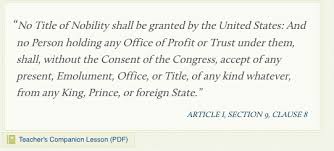
For this post, I want to consider the current discussion related to the blind trust problem called emolument.  Many prior to the election probably have not heard much about the idea of emolument.  Larry Tribe and others believe that President elect Trump’s ownership of active business assets, even in a blind trust, would violate, Article I, Section 9, Clause 8 of the Constitution which prevents the President from accepting “presents” or “Emolument” from foreign states.  Others, like Andy Grewal, do not believe that mere ownership of assets triggers the Emolument Clause.

If the solution to the blind trust and Emolument Clause problems is a divesture of President elect Trump’s assets as many advocate, this would trigger (to borrow a catch phrase of President elect Trump’s) huuuuuuge tax problem.

Continue reading “Trump’s Emolument Tax Problem”

Letter Urging the Senate to Vote on U.S. Tax Court Nominations

Over 50 tax law professors have signed a letter (available here) urging the U.S. Senate to vote on U.S. Tax Court nominees Elizabeth Ann Copeland and Vik Edwin Stoll. Unfortunately, these nominations may not get much attention in the wake of the election. However, the signatories (myself included) are urging the Senate to schedule a vote on these nominees, both of whom were favorably reported out of the Senate Finance Committee over a year ago. Danshera Cords has more on Procedurally Taxing.

Podcast: Require Candidates to Disclose Tax Returns?

By: Philip Hackney

On this morning where we have a newly elected president, Sam Brunson and I discussed in a #CookingtheBooks Podcast whether Congress should pass legislation requiring a presidential candidate to disclose some number of years of tax returns in order to run for office.

Sam argued here on the blog a couple of days ago that this should be a requirement. I agree with him, but neither of us believe the failure to disclose those returns was a critical factor in a Trump win. We just think it tells the American people something important about the person who will be leading the country.

We also discussed a little bit about what tax policy might look like in a Trump administration. Sam, ever the optimist, is worried but not terribly about Trump tax policy. Feeling a bit pessimistic myself this morning, and having lived through 8 years of Governor Jindal in Louisiana and very afraid that this will lead to enormous deficits.

In the end, we look very much forward to critiquing Trump tax policy as much as we would have critiqued Clinton tax policy.

Anyway, give the podcast a listen and let us know what you think. We enjoy the medium as another channel for discussing tax policy.

Donald Trump —> Mandatory Tax Return Disclosure

So it looks like Trump wasn’t lying when he said he wouldn’t release his tax returns—it’s Election Day,[fn1] and we still haven’t seen them.[fn2]

As has been endlessly pointed out, every Republican nominee for president since Ronald Reagan has released his tax returns, and most nominees since the 1970s have. Trump, in refusing to release his returns, is flouting a long-standing norm.

The thing is, though, he’s run a campaign largely based on flouting norms. And it’s not like the norm was aging well, anyway. Sure, there were candidates with exemplary releases. But there were candidates—on both sides of the aisle (I’ve got my eye on you, Bernie Sanders!) who did less than the bare minimum, releasing only one or two years’ worth of returns, and only really releasing their 1040s. (Several months ago, I graded candidates’ tax return disclosures here.)  Continue reading “Donald Trump —> Mandatory Tax Return Disclosure”

Cooking The Books Podcast on Trump’s Taxes

By: David J. Herzig

Today Pulitzer Prize winning journalist, David Cay Johnston, Phil Hackney, and I got together for a 30 minute podcast discussion regarding the recent NY Times follow-up article about Mr. Trump’s $916 million tax loss (“NOL”).

Here is link if you missed hyper-link above: http://share.sparemin.com/recording-5131

The topics ranged from the current tax reporting regarding Mr. Trump’s 1990s tax returns to the Trump Foundation to potential criminal sanctions against Mr. Trump.  It was fantastic to be a part of and I hope everyone listens.

Continue reading “Cooking The Books Podcast on Trump’s Taxes”

On Trump and Tax Opinions

Every so often, Brunson and Herzig carve out a day to swap long-winded emails, then those emails are published on the Internet.

Sam-

trump-returnI am sure you have seen by now the NY Times story about Donald Trump’s purported tax positions from the 1990.  The NY Times has been following up on a story they originally published about a month ago reporting that Mr. Trump reportedly had a $990 million net operating loss (“NOL”).  After the story, there was rampant speculation about the loss.

If Mr. Trump used exclusively all of his money to buy properties or casinos or whatever and those assets were used in a trade or business and those assets went down in value, Mr. Trump would suffer a real economic loss.  This real economic loss would then generate a real tax loss.  At the time, most tax experts thought that Mr. Trump may have used some of his money but all used loans.  I think I was quoted as saying this was likely given his prior statements about being the king of debt. Continue reading “On Trump and Tax Opinions”

Does the IRS Permit Churches to Endorse Candidates Through an “Alternate Channel”?

By Benjamin Leff

While we’re all waiting for one of my co-bloggers to say something smart about this, I thought I’d say a little more about campaign intervention by 501(c)(3) organizations.

Brian Galle asks by tweet, ” can we have a cite for the claim that a church cannot electioneer through a c(4)?”  In a prior post, I said, “The short answer is that IRS guidance on campaign intervention differs from its guidance on lobbying because it denies 501(c)(3) organizations who want to endorse candidates the ‘alternate channel’ that is provided for lobbying. And therefore current guidance is unconstitutional.” But I didn’t explain that claim. Furthermore, the D.C. Circuit Court seems to disagree with me, since it stated in the leading case on campaign intervention by a 501(c)(3) organization: “the Church can initiate a series of steps that will provide an alternate means of political communication that will satisfy the standards set by the concurring justices in Regan.”  So, here’s my justification for claiming that the IRS’s guidance is insufficient: Continue reading “Does the IRS Permit Churches to Endorse Candidates Through an “Alternate Channel”?”

Yale Daily News Endorsed a Candidate -Political Campaign Intervention?

By: Philip Hackney, Oct. 31, 2016

Last week the Yale Daily News a college newspaper run by students associated with Yale University endorsed Hillary Clinton for president. While a newspaper endorsing a candidate for president is usually the ordinary course of business, when that newspaper is a section 501(c)(3) organization, its an issue. A charitable organization is absolutely prohibited from intervening in a political campaign.

On Friday October 28, I joined my tax prof friends and many surly bloggers Ben Leff, Sam Brunson, David Herzig and Andy Grewal to discuss in a Sparemin Podcast whether YDN put its exemption at risk or not. We had had a dispute on twitter and decided that a podcast discussion might enhance our understanding of one another’s views. It certainly helped me. Give it a listen yourself. Let us know what you think. Continue reading “Yale Daily News Endorsed a Candidate -Political Campaign Intervention?”

The Halloween Parent Tax

halloween-candy1By Sam Brunson

I was asked on Twitter about the Halloween Parent Tax. And with Halloween coming up, it seemed like it needed a post. So here you are:

Design Considerations

You’ve got a couple options here. Are you going to create an income tax? A consumption tax? A head tax? Each is slightly different, in certain relevant ways:

Income Tax: This is probably what you think of when you think of the Halloween Parent Tax. Essentially, children are required to give their parents some percentage of the candy they get. (My wife’s parents imposed a 15-percent Halloween Parent Tax when she was growing up.) There are some design complications here—for example, are you taking a percentage of the number of pieces of candy the kids get? Or do different kinds of candy have different values? And do you take size into account in calculating candy value?[fn1] Continue reading “The Halloween Parent Tax”

Outraged Yet? A Tax Reason the Pentagon’s Clawback Sucks — Updated

By: Sam Brunson

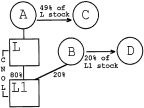
cngYesterday, both my Facebook and WBEZ told me about how the Pentagon is clawing back bonuses it paid—a decade ago!—to members of the California National Guard as reenlistment bonuses. [Update, 10/26/16: today, Defense Secretary Ash Carter ordered the Pentagon to suspend its efforts to claw back the bonuses. Note, though, that there’s no indication that it will return any portion of bonuses that have already been clawed back, so the tax issues still stand, afaik.] 

The whole story is pretty enraging, but, so that I don’t bury my particular lede too far: though the stories don’t discuss the tax consequences to the soldiers, the soldiers are likely to miss out on significant deductions that they deserve.

To understand why, you need to know about the clawbacks. I’ll let the LA Times do the hard explanatory work, but in brief: in the mid-2000s, the military was facing recruitment shortfalls, so it started offering super-generous incentives to the military to get them to reenlist, and it paid those incentives (often $15,000 or more) upfront, essentially replicating private sector signing bonuses.  Continue reading “Outraged Yet? A Tax Reason the Pentagon’s Clawback Sucks — Updated”

Congratulations to the Newly Elected Members of the American Law Institute!

By: Francine J. Lipman

The American Law Institute (ALI) has just announced its newly elected members. The members who join ALI from across the country will bring their diverse backgrounds and areas of legal expertise to ALI’s work. Fifteen of the 45 new members are professors, sixteen are partners (or the equivalent) in law firms, seven are judges, six are in private industry, and one is a government legal advisor.

“One of the most exciting aspects of being President of the ALI is meeting some of today’s most important and inspiring legal minds as they are elected into The American Law Institute. I look forward to having the opportunity to work alongside these new members in continuing the ALI’s efforts in clarifying the law,” said ALI President Roberta Cooper Ramo. Continue reading “Congratulations to the Newly Elected Members of the American Law Institute!”

Will the Supreme Court Hear a Retroactive Taxation Case This Term?

By: David J. Herzig

Earlier this year, the Washington Supreme Court held that the retroactive application of the legislature’s amendment to a Business & Occupation (B&O) tax exemption revising the definition of “direct seller’s representative” to conform to the Washington Department of Revenue’s interpretation of the exemption did not violate a taxpayer’s rights under due process, collateral estoppel, or separation of powers principle.

Like most states, Washington had a B&O tax for “the act or privilege of engaging in business activities.”  Under the original law, out-of-state sellers were exempt if they acted through a representative.  DOT Foods shows up in Washington and sells through a wholly owned subsidiary to avoid the B&O tax.

In 1999, the Washington Department of Revenue changed its interpretation of the statute to subject DOT and others to the B&O tax.  Dot challenged that change (215 P.3d 185 (Wash. 2009) “DOT I”)) and won.  DOT I applied for the tax periods 2000-2006.

DOT then sought a refund for the period Jan. 2005 – Aug. 2009 (not the time period of DOT I).  In the meantime, in 2010 the Washington State Legislature changed Wash. Rev. Code Sec. 82.04.423(2) in response to the DOT I ruling.  The statute both retroactively and prospectively changed the statute. Based on the statutory change, the Washington Department of Revenue rejected the refund claim.

For the period covered by DOT I, DOT and Washington agreed on a settlement for a 97% refund for B&O taxes paid.  For the May 2006 to December 2007 period (after DOT I), the refund request was denied.  DOT challenged the retroactive application under the theories of collateral estoppel, separation of powers, and due process.  DOT lost in the Washington Supreme Court and now has appealed to the US Supreme Court.

The test for whether or not retroactive tax legislation satisfies Due Process is United States v. Carlton, 512 U.S. 26 (1994).  Carlton  applied a rational basis test.  The Court stated retroactive tax legislation would not violate due process if, “legitimate legislative purpose furthered by rational means.”  According to the ACTC brief,   “The Washington Supreme Court ignored the unique circumstances of the Carlton case, which involved the correction of an obvious legislative error that was identified very soon after the statute was enacted and which the taxpayer was admittedly exploiting for its own benefit.”

Continue reading “Will the Supreme Court Hear a Retroactive Taxation Case This Term?”

ClassCrits IX: The New Corporatocracy and Election 2016

Surly bloggers Sam Brunson, David Herzig and I (and Leslie Book over at Procedurally Taxing) are attending the ClassCrits IX conference hosted by Loyola University Chicago School of Law today and tomorrow. From the call for papers back in March:

As the U.S. presidential election approaches, our 2016 conference will explore the role of corporate power in a political and economic system challenged by inequality and distrust as well as by new energy for transformative reform.

There are some notable tax-related panels happening at the conference, along with other interesting panels relating to corporations and democracy:

Taxation, Social Justice and Development (Friday 10/21/16)

Doron Narotzki, University of Akron Business Administration
Corporate Social Responsibility and Taxation: The Next Step of the Evolution

Rohan Grey, Binzagr Institute for Sustainable Prosperity & Nathan Tankus, Modern Money Network
Corporate Taxation in a Modern Monetary Economy: Legal History, Theory, Prospects

Karl Botchway, CUNY Technology & Jamee Moudud, Sarah Lawrence Economics
Capacity Building, Taxation and Corporate power in Africa

Martha T. McCluskey, SUNY Buffalo Law, Corporatocracy and Class in State and Local “Job-Creation” Subsidies

Distributing Wealth, Law and Power (Friday 10/21/16)

Goldburn P. Maynard, Jr., University of Louisville Law
A Plea for Courts to Abolish the Judicially Created Right of the Wealthy to Avoid Estate Taxes

Victoria J. Haneman, Concordia University Law
The Collision of Holographic Wills and the 120-Hour Rule

Doron Narotzki, University of Akron Business Administration
Dark Pools, High-Frequency Trading and the Financial Transaction Tax: A Solution or Complication?

Robert Ashford, Syracuse University Law
Why Working But Poor?

Critical Perspectives on Tax Law (Saturday 10/22/16)

Shu-Yi Oei, Tulane University Law
The Troubling Case of Offshore Tax Enforcement

Les Book, Villanova University Law
Bureaucratic Oppression and the Tax System

Samuel Brunson, Loyola University Chicago Law
Avoiding Progressivity: RICs, Pease, and the AMT

David Herzig, Valparaiso University Law
Let Prophets Be (Non) Profits

Talking Tax on Twitter

twitterbird_rgbBy Sam Brunson

I was reminded yesterday both why I love Twitter and why Twitter is such a valuable tool for tax academics (and others).

See, yesterday I participated in two (or, actually, three) conversations about different tax topics. And, notwithstanding the inherent limitations of the medium (especially the 140-character limit), the discussions were both substantive and informative.  Continue reading “Talking Tax on Twitter”

Make Way for Ducklings?

Shu-Yi Oei 

Professor Charlotte Crane (Northwestern) presented Integrating a Fragmented Corporate Income Tax at BC Law School’s Tax Policy Workshop yesterday. Briefly, the paper is focused on recent proposals to integrate the corporate income tax, in particular, the yet-to-be-released Orrin Hatch proposal from the Senate Finance Committee. I’m no corporate tax expert, but the workshop afforded me the excuse to wade like a duckling through the recent literature…a nice break from other projects.

The corporate integration debate refers to the question of whether to eliminate the corporate double tax (i.e., the tax on both the corporation and its shareholders on the same underlying income) and replace it with a single layer of tax. Many have argued that this would reduce tax burdens, minimize economic distortions, and bring us closer to tax neutrality in investment decisions. Others have argued that corporate integration achieved through shifting the corporate tax to the shareholder level will enhance progressivity and fairness.

The integration debate has raged for decades, with important Treasury and ALI studies in 1992 and 1993, and a surge of recent academic and policy interest. There are various design possibilities, including: integration via a shareholder credit (a.k.a. imputation), integration via a dividend deduction paired with a shareholder withholding tax, integration via a shareholder dividend exclusion, flow-through taxation, and others. A couple of recent proposals: Toder and Viard have suggested eliminating the corporate tax and replacing it with taxation of shareholder dividends and gains at ordinary rates, with gains taxed on a mark-to-market (accrual) basis. And Gruber and Altshuler even more recently proposed pairing a lowered (15%) corporate tax rate with ordinary income taxation of shareholder dividends and capital gains (including an interest charge on deferred shareholder liabilities designed to minimize behavioral distortions).

Continue reading “Make Way for Ducklings?”