Tax Evasion and Risk Perceptions among Lawyers in China

Shu-Yi Oei

I recently read an interesting article by Prof. Benjamin van Rooij (UC Irvine), Weak Enforcement, Strong Deterrence: Dialogues with Chinese Lawyers about Tax Evasion and Compliance, 41 Law & Social Inquiry 288 (2016), available here.

The article studies a particular form of tax evasion practiced by some lawyers in China: The lawyer, although affiliated with a law firm, retains clients privately, accepts cash payments from such clients without giving the client a tax receipt, and does not report the case to the law firm. This behavior actually contains both a tax evasion and a business-driven purpose: it enables the lawyer to underreport income for tax purposes while also avoiding payment of a significant cut to the law firm. Unsurprisingly, the law prohibits these practices. The paper employs qualitative “semistructured” interviews with lawyers at large and medium-sized law firms using open-ended questions, in order to generate a nuanced picture of how enforcement, deterrence, and risk are perceived by these lawyers.

The findings are fascinating, and provide a unique perspective on legal ethics, tax compliance, and perceptions of enforcement and deterrence among lawyers in China. Continue reading “Tax Evasion and Risk Perceptions among Lawyers in China”

Faculty Hiring: University of Richmond School of Law

I’m passing along a hiring announcement from Jessica Erickson, who is chairing Faculty Appointments at the University of Richmond School of Law:

The University of Richmond School of Law seeks to fill two entry-level tenure-track positions for the 2017-2018 academic year, including one in tax law.  Candidates should have outstanding academic credentials and show superb promise for top-notch scholarship and teaching.  The University of Richmond, an equal opportunity employer, is committed to developing a diverse workforce and student body and to supporting an inclusive campus community.  Applications from candidates who will contribute to these goals are strongly encouraged. 

Inquiries and requests for additional information may be directed to Professor Jessica Erickson, Chair of Faculty Appointments, at lawfacultyapp@richmond.edu

It’s Complicated.

By: Shu-Yi Oei

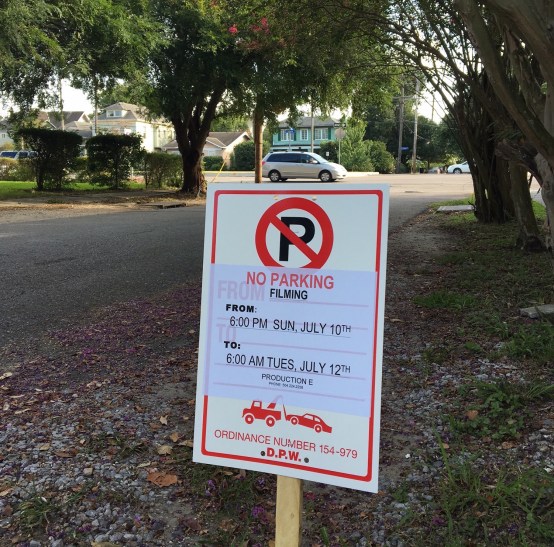
I’ve been thinking a lot about movies lately, partly because this pesky sign appeared outside my house a couple of days ago, and partly because of the Louisiana film tax credit, which has been all over the local news.

film sign 2

A couple of days ago, an Associated Press article reported that Louisiana’s motion picture industry was down by 90% this year as filmmakers moved production to states with more generous tax incentives. (I guess that puts the filming outside my house in the 10%?). It was also reported that Governor John Bel Edwards and the Louisiana Economic Development agency are going to commence an examination of the film tax credit and its economic impact in Louisiana. As the news reports indicate, the decline in movie production activity is undoubtedly due to the fact that, facing a state budget deficit, legislators placed caps and limitations on the credit in legislation passed last year. The most material change was an aggregate $180 million cap on the credit for tax years 2015-18, which will then sunset. RS: 47:6007(C)(1)(d)(ii). As a result, movie production has reportedly moved to states with more generous film tax incentives.

The Louisiana film tax credit is a complex beast, and I can’t cover all its intricacies here. But some broad policy points are worth mentioning. Continue reading “It’s Complicated.”

Consumer Financial Regulation Meets Income Share Agreements

By: Shu-Yi Oei

On Wednesday, I spoke at the National Association of Consumer Credit Administrators (NACCA) 81st Annual Meeting and Regulators’ Training Symposium in Minneapolis. The panel was “Trends in Lending: Emerging Loan Products,” and the topic I was asked to discuss was income share agreements (ISAs).

The Powerpoint slides from the talk are here. The last slide contains a partial source list for those who’d like to read more about income share agreements.

I have some thoughts, following the presentation, and after sitting in a couple of (non-tax) panels on lending and regulation:

(1) Legal Scholarship and Restlessness

The NACCA invitation supports my longstanding theory about restlessness and legal scholarship. The theory is that two (or three, or four) years after you did the project (and are likely bored with it) is when anyone else notices that you’ve even done it at all. Therefore, to me, a big part of the scholarly endeavor is really the ongoing fight against your own internal boredom-clock (which, if you’re like me, is likely a tad…accelerated).[fn1]

In this case, Diane Ring and I wrote about ISA transactions back in 2014. See Human Equity? Regulating the New Income Share Agreements, 68 Vand. L. Rev. 681 (2015). And then we became convinced that the industry had sputtered and tanked and so our attention transitioned to other projects.[fn2] But folks I spoke to at the NACCA conference—as well as others I’ve have talked to—assure me that this is not so! Fast-forward to 2016 and new offerings by Cumulus Funding and Purdue University suggest that perhaps the ISA market is not entirely dead after all. Also, those ISAs entered into between 2012-14 (offered by companies like Pave and Upstart) have been percolating in the ether, and the full array of their tax and other regulatory consequences are presumably becoming clearer as time goes on. State regulators are now starting to pay attention and think about how to weigh in. So the time seems right to refocus the attention on an old scholarly project.

Continue reading “Consumer Financial Regulation Meets Income Share Agreements”

Did John Oliver just give away some CODI income on Last Week Tonight?

By: Shu-Yi Oei

So John Oliver just forgave $15 million of debt on his talk show.

See video @ around 17:15.

Specifically, Oliver apparently set up a debt-buying company (CARP), which bought $15 million worth of incurred medical debt of nearly 9,000 people for $60,000, less than half a cent on the dollar. And then he forgave the $15 million of debt on television. The Washington Post reports that “this is the largest one-time giveaway ever on television, beating out Oprah Winfrey’s famous “you get a car! You get a car!” episode, which cost that show $8 million.” (Smart talk show economics, to top Oprah’s giveaway while only paying $60,000 for the debt.)

Of course, because tax professors love talking about the tax consequences of Oprah’s free car giveaway, I wondered whether this $15 million debt forgiveness event was going to result in cancellation of indebtedness income to some of the debtors whose debt was forgiven. As tax people know, IRC Section 61(a)(12) provides that income from the cancellation of indebtedness is includible in gross income. But IRC Section 108 provides that there is no gross income in certain circumstances–for example, if the debtor is in Title 11 bankruptcy, or is insolvent, or if the debt is certain types of real property related indebtedness.

Would CARP have to send these folks a Form 1099-C?  And would some of them then have CODI income due to the debt forgiveness?

Continue reading “Did John Oliver just give away some CODI income on Last Week Tonight?”

US Tax Scholarship in Comparative Perspective

By: Shu-Yi Oei

Does tax scholarship look different across different countries? If so, how? And why? In a recently posted paper on SSRN, Wolfgang Schön of the Max Planck Institute for Tax Law and Public Finance looks at these questions, focusing on a comparison of tax law scholarship in the United States and Germany. The abstract is here. Briefly, the paper delineates key distinctive features of US and German tax scholarship and analyzes the similarities and differences between the two. As someone who teaches at a law school with a strong international, comparative and civil law tradition, I found many aspects of this paper interesting and informative, and agreed with many of its arguments. I won’t go into all of them here, but two stood out as especially thought provoking.

First, Schön points out that in US tax scholarship (and in US legal scholarship in general), the “internal” approach to scholarship—that is, doctrinal analyses and interpretations of law—has largely been replaced by an “external” approach that analyzes jurisprudence and the impact of legal rules from an “outsider” (i.e., policy or interdisciplinary) perspective. German academics, by contrast, are more likely to adhere to an internal approach that focuses on systematizing, understanding, and categorizing legal doctrine. This observation doesn’t strike me as very controversial. What was intriguing, however, was Schön’s claim that this external turn is due, in part, to the fact that US academics have less influence over the direction and what he calls the “production” of the actual law than their German counterparts. Specifically, he argues that US judges are less likely and less obliged to consult academic writing in coming to decisions than judges in Germany. Thus, many US legal academics gravitate towards the “external” approach, rather than simply being content to make a limited (and likely ignored) doctrinal contribution. This sounds right to me, at least on the US side. (Anecdotally, I have heard more than one person point out that one’s academic and theoretical freedom is very much tied to the fact that one’s theories are irrelevant to pretty much everybody, and that this is the very thing that allows legal scholars to really push the theoretical and policy boundaries.)

Continue reading “US Tax Scholarship in Comparative Perspective”

Tax at Midlife

I am at the Association of Mid-Career Tax Professors (AMT) Annual Conference today and tomorrow, along with Surly co-bloggers Jennifer Bird-Pollan, Sam Brunson, and Stephanie Hoffer. The conference is hosted by Dennis Ventry and Darien Shanske at UC Davis. Sam, Stephanie, and I are on the organizing committee, along with Dennis and Brian Galle. The conference itself is, I think, Brian’s brainchild–thanks, Brian!

I’m presenting an early-stage piece called The Distributive Case against Offshore Tax Enforcement, which I hope to workshop more extensively over the fall and spring. Jennifer is presenting Taxes, Democracy, and Investment Treaties; Stephanie, Corporate Acquisitions and Integration; and Sam, Playthings of the Wealthy: RICs, Pease, and the AMT.

A question I keep asking myself is: What’s the mission of the AMT conference? Or more broadly, what should we be focusing on at this stage of our scholarly lives?

Back in the day when dinosaurs roamed the earth and I used to attend the still-extant Junior Tax Workshop, the goals were pretty clear: Continue reading “Tax at Midlife”

A Tax Professor Feels a Little at Sea

boaty
Credit: https://nameourship.nerc.ac.uk

Last Thursday, Tulane Law School held its annual faculty scholarly retreat, which basically means we cloistered ourselves in a downtown conference room and workshopped eight papers over the course of a day. ’twas a nice end-of-semester opportunity to appreciate and engage with everybody’s work. I got to be discussant on a paper by my colleague, Martin Davies, Cross-Border Insolvency and Admiralty: A Middle Path of Reciprocal Comity, a working version of which was recently published in the Comité Maritime International 2015 Yearbook.  Martin is the Director of Tulane’s Maritime Law Center, and he has kindly given me permission to blog the paper here.

Warning: This blog post discusses areas of law that are only marginally related to tax law, which some may find unsettling. On the other hand, the paper implicates some interesting jurisdictional and distributional issues that parallel some of those found in international tax.

Continue reading “A Tax Professor Feels a Little at Sea”

Money Monster Review over at BLPB

Last Friday, I went and saw Money Monster, the new Jodie Foster-directed movie with Julia Roberts and George Clooney in it. For the three of you thinking about seeing Money Monster instead of, say, Captain America: Civil War, my colleague, Ann Lipton has the securities law-ish review over at Business Law Profs Blog. Bottom line: Entertainment good, securities law not so good. Also, there’s a line about tax in there somewhere.


Harry Potter/Panama Papers Fan Fiction Alert (Rated: Fiction T)

By: Shu-Yi Oei

Confession: I love Mallory Ortberg, and after today, I might love her even more.

Here’s the latest from Mallory and The Toast: Harry Potter/Panama Papers Fan Fiction! This, after various news sources reported that Emma Watson was named in the Panama Papers data leak as having set up a BVI offshore company.

(Hat tip: Various friends on Facebook)

Perhaps my favorite line: “I used to be a lot of things,’ Hermione said decisively. ‘I have money now instead.’” Boom! Harry Potter meets Ayn Rand.

The fan fiction is very funny, but honestly, I am personally more taken by Ortberg’s beautifully crafted pseudo-legal disclaimer:

“*WITH THE IMPORTANT CAVEAT THAT THE OFFICIAL LINE RIGHT NOW IS THAT HER SHELL CORPORATION WAS CREATED SO SHE COULD PURCHASE PROPERTY PRIVATELY AND WITHOUT FANFARE, WHICH IS CERTAINLY POSSIBLE, I DON’T MEAN TO IMPLY SHE IS 100% A TAX DODGER BUT IT CERTAINLY RAISES SOME QUESTION, OKAY, BACK TO THE FAN FICTION NOW, AGAIN BEARING IN MIND THAT THIS IS JUST FOR THE SHEER DELIGHT OF PICTURING A LIBERTARIAN HERMIONE IN A SMOKY ROOM CREATING SHELL CORPORATIONS AND BUILDING TAX SHELTERS, ALSO HERE IS A QUICK PRIMER ON THE PANAMA PAPERS IF YOU’RE UNFAMILIAR OR READ A PRIMER A FEW WEEKS AGO AND THEN FORGOT”

The tone is so spot on, it made me weep.

In seriousness, though, the fact that the Panama Papers has made The Toast (which can generally be described as a feminist website with lots of literary and pop culture references) tells us something about how public opinions surrounding offshore tax evasion and structuring become disseminated throughout popular consciousness. Sure, organizations like Tax Justice Network and Oxfam write about tax havens and offshore evasion all the time and those venues tend to be more salient to us tax people. But public opinion surrounding convulsive events such as data leaks is also shaped in other popular fora as well—in this case, by Ortberg using the fierce set of tools at her disposal (humor, sarcasm, wit, movie references, an encyclopedic knowledge of random things like the history of the Protestant church, Greek mythology, and 19th century Gothic romance novels, etc.). Whether and how these informal modes of opinion transmission actually affect legal and political outcomes is a question that needs systematic inquiry.

Tax Policy and Puerto Rico’s Fiscal Crisis: An Insolvency Primer and Some Tax Things to Read

By: Shu-Yi Oei

I’ve been following the story of Puerto Rico’s default on its public corporation debt repayment obligations, which has been unfolding over the last several months. The latest happened on Monday, May 2 (well, technically Sunday), when Puerto Rico missed a major debt payment that was due to the bondholders of its Government Development Bank (GDB).

The topic has been well covered from the sovereign debt/insolvency angle over on Credit Slips, so I won’t go into that in detail here. As I understand it, the main points are these:

(1) Puerto Rico owes around $70 billion total outstanding debt to its creditors, of which a significant chunk is public corporation debt. Public corporations are corporations owned by the government of Puerto Rico. For example, the GDB is a public corporation.

(2) Unlike U.S. municipalities such as Detroit, Puerto Rico entities aren’t considered debtors for purposes of Chapter 9 of the U.S. Bankruptcy Code. They therefore don’t have access to the Chapter 9 municipal bankruptcy process. See 11 U.S.C. § 101(52). This is a bit of a head scratcher.

(3) In 2014, Puerto Rico’s legislature passed a law, the Puerto Rico Public Corporation Debt Enforcement and Recovery Act, which created a mechanism analogous to Chapter 9 bankruptcy by which Puerto Rico public corporations can restructure their debt. See Puerto Rico Passes New Municipal Reorganization Act: Puerto Rico Public Corporation Debt Enforcement and Recovery Act, 2014 P.R. Laws Act. No. 71, 128 Harv. L. Rev. 1320 (2015).

(4) Some bondholders filed a lawsuit, contending that Chapter 9 of the U.S. Bankruptcy Code preempts the Recovery Act. The First Circuit ruled that the Recovery Act is preempted. Franklin California Tax-Free Trust v. Puerto Rico, 805 F.3d 322 (1st Cir. 2015). The Supreme Court granted cert and heard oral arguments on March 22, 2016. No decision yet. For one scholar’s take on the issue, see Stephen J. Lubben, Puerto Rico and the Bankruptcy Clause, 88 Am. Bankr. L.J. 553 (2014).

(5) In light of all this, some have called for U.S. Congressional action, and there’s been legislation drafted to address Puerto Rico’s fiscal crisis that will allow for both restructuring and reform going forward. The House Committee on Natural Resources put forth a draft bill, the Puerto Rico Oversight, Management & Economic Stability Act (“PROMESA”). See also here for a helpful executive summary that accompanied an earlier draft. So far, that legislation has stalled, but they’re still trying.

There are many important issues in play, about which various stakeholders and commentators disagree. Some big ones are: (a) whether the draft PROMESA legislation raises retroactivity issues that make it unfair to bondholders (including mutual funds and their investors) who may be subject to restructuring ex post without having had notice of that possibility ex ante; (b) relatedly, whether creating a bankruptcy-like restructuring process for Puerto Rico is bad for bondholders because it prevents holdout creditors from holding up restructuring negotiations, (c) how much oversight and sovereignty Puerto Rico should cede (for example, different stakeholders feel differently about the installation of an oversight board); (d) the extent to which austerity measures are feasible and should be imposed [fn1], and (d) and what substantive reforms should be put enacted going forward.

So where does tax come in?

Continue reading “Tax Policy and Puerto Rico’s Fiscal Crisis: An Insolvency Primer and Some Tax Things to Read”

“Unofficial” Jazz Fest (and Arbitrage, and Licensing, and Taxes)

By: Shu-Yi Oei

blogged on Wednesday about taxes and tax enforcement at Jazz Fest, a.k.a. the New Orleans Jazz and Heritage Festival. Today’s follow-on post celebrates the phenomenon that I call “unofficial” Jazz Fest.

There’s “official” Jazz Fest, which is what happens after you’ve bought your ticket, gone through security, and are within the confines of the New Orleans Fairgrounds (where the Fest is held). And then there’s “unofficial” Jazz Fest, which is what goes on in the surrounding Fairgrounds neighborhood outside the Fest. [fn.1] As I described in Wednesday’s post, “official” Jazz Fest is a big deal, well organized, and highly regulated. The music programming unfolds on a tight schedule. Only approved food and craft vendors are allowed, and those vendors need to be properly licensed and pay some sort of booth fee in order to sell at Jazz Fest. The organizers exert significant control over the food items sold—the Jazz Fest website says that “‘carnival’ food items or beverages” will be not sold and that duplication of food offerings is minimal.

“Unofficial” Jazz Fest, as I call it, is what happens in the area outside the gates of the Fairgrounds. On Fest days, the neighborhood is transformed into its own unique microclimate of festive Festy-ness. Here, street vendors hawk wares such as hats, kooziessecond-line umbrellas, water, and art. no vending(There are “No Street Vending Allowed” signs posted, but those don’t seem to be given much weight.) Popup brass bands play for tips on the sidewalks. Some neighborhood residents hire bands and throw backyard parties, some of which you can attend for a fee (or, perhaps, crash unnoticed). New Orleans, like many other cities, has business licensing requirements, including mobile vendor licenses, and some of these vendors are clearly licensed, though it’s plausible that others might not be.

Many of these behaviors look like classic arbitrage: You can of course buy or enjoy most of those items or services in the official Jazz Fest, but they’re more expensive once you’re inside the Fairgrounds and committed to being there (general admission tickets allow single entry only). This creates obvious opportunities for unofficial vendors to sell products more cheaply just outside the Jazz Fest entrance gates. So, for example, it gets hot in New Orleans in April/May, and Fest rules allow you to bring in “Factory-sealed bottled water for personal consumption.” Bottled water sells for $3 in the Fest. But there are lots of people selling it out of a cooler for $1 in the surrounding streets, so it really makes sense to buy your water before you enter. From the seller’s point of view, if she buys 78 24-count cases of bottled water from Costco, it comes up to under 27 cents a bottle before tax. The incentive to make dollar-a-bottle sales outside the Fairgrounds on Fest days is obvious.

Others of these activities look like something close to agglomeration:  Continue reading ““Unofficial” Jazz Fest (and Arbitrage, and Licensing, and Taxes)”

Tulane Law is Looking for a Visiting Tax Professor

Here’s an announcement from Tulane. We’re looking for a visiting tax professor to cover tax courses for either Fall 2016 or the 2016-17 academic year. If you have questions, please feel free to contact me. I’m happy to wax lyrical about Tulane Law, our tax and other programming at the Murphy Institute, and New Orleans.

Tulane Law School is currently accepting applications for a visiting tax professor for either the Fall of 2016 or for the entire 2016-2017 Academic Year.  Visitors would be expected to teach basic Income Tax and other tax related courses.  Applicants at any career stage are encouraged.  To apply, please submit a CV along with a statement of interest and any supporting documentation.  Applications and questions may be directed to Vice Dean Ronald J. Scalise Jr. at rscalise@tulane.edu.   Tulane University is an equal opportunity/affirmative action employer committed to excellence through diversity.  All eligible candidates are invited to apply. 

The New Orleans Jazz and Heritage Festival (and Taxes)

By: Shu-Yi Oei

New Orleans is currently in the throes of Jazz Fest.

For those of you who don’t know what that is, Jazz Fest—or, the New Orleans Jazz and Heritage Festival—is a famous annual festival celebrating music and culture in New Orleans. It’s held at the New Orleans Fairgrounds. It spans seven days over two weekends. It draws hundreds of thousands of people.

But even that description doesn’t do the event justice. There are twelve different music stages and tents set up in the Fairgrounds and a lineup of over a hundred performance groups—this year’s headliners include Stevie Wonder, Pearl Jam, Paul Simon, Red Hot Chili Peppers, Snoop Dogg, and Van Morrison. There’s also a huge number of food and crafts vendors who set up at the Fest—over 200 food offerings sold! Some of us to go to the Fest at least as much for the food as for the music: my personal favorites include the Crawfish Monica, mango freeze, crawfish beignets, seafood stuffed mushrooms, and Chef Linda Green’s award-winning yakamein.

This past weekend, my colleague Ann Lipton and I traipsed down to the Fairgrounds to find the fun. While enjoying performances by Janelle Monáe (amazing), the Red Hot Chili Peppers (meh), Leroy Jones (so good), Herlin Riley (just, wow) and others, we chatted a bunch about vendor licensing and regulation at Fest. We even ran into an on-duty New Orleans revenue agent who was more than happy to tell us all about tax compliance at the Fest and kindly gave permission to blog about it.

After some research, some casual conversations, and some lurking around the food booths, here’s what we now know about Jazz Fest and taxes:

Continue reading “The New Orleans Jazz and Heritage Festival (and Taxes)”

SRLY, SRSLY: A Tale of Loss and Longing to Belong

By: Shu-Yi Oei

Over the past few days, we here at Surly Subgroup have received several requests for a post explaining our blog name. So, here’s a Very General primer for non-tax readers, and for our tax readers who maybe don’t spend all of their waking hours staring at the consolidated return rules.

Old lawyerly disclaimer habits die hard, so I’ll just say that the following discussion is Very General and mostly for fun. Others have written about this far more exhaustively. See, e.g., Martin J. McMahon, Jr., Understanding Consolidated Returns, 12 Fla. Tax Rev. 125 (2012) and four whole BNA Tax Management Portfolios.

Here are the key points:

Everybody Wants to Belong…

The general idea behind the consolidated return is that where there’s an affiliated group of corporations, a rule that requires each corporation in the group to file its own separate tax return may create frictions and transaction costs and may give rise to weird incentives and disincentives in the case of transactions between corporations in the group.

Enter the consolidated income tax return.

Continue reading “SRLY, SRSLY: A Tale of Loss and Longing to Belong”