Updates on the Williams/ETE Merger

By: David J. Herzig

On Saturday, I posted about a merger gone bad that I thought only a couple partnership tax people would find interesting.

Essentially, a $38 Billion merger was torpedoed because neither, Latham, Morgan Lewis nor Gibson Dunn could conclude that the merger qualified as tax-free under 721.[1]  The fight between the the tax attorneys was whether the transaction was truly a partnership formation eligible under 721 with a 731 distribution or if the transaction was a disguised sale under the anti-Otey regulations (Treas. Reg. § 1.707-3).[2]  Chancery Court Vice Chancellor Sam Glasscock [http://courts.delaware.gov/opinions/list.aspx?ag=court%20of%20chancery%5] ruled, since there was enough uncertainty that the proposed transaction could not be eligible for 721 treatment under a should opinion standard, Energy Transfer Equity (ETE) could back out of the deal.  Williams stated that they will appeal.

I honestly thought no one would care about the post.  But, it looks like people care, so I will try to keep up with the case and post updates here.  I actually have some other thoughts on the transaction that I will post as they become more developed.

To some of the updates, here is a link to a letter to the shareholders of the Williams Continue reading “Updates on the Williams/ETE Merger”

Tax Lawyers Kill $38 Billion Merger

By: David J. Herzig

I remember one of my first days at GT we were advising on a corporate merger.  At the end of the process (of course), the M&A group asked tax to sign off on the deal.  Everything was done and this was supposed to be a rubber stamp.  Well, as you can guess by now, the tax consequences of the deal as structure were disastrous and the whole deal had to be restructured.  I remember vividly the corporate lawyers saying as they walked out the door, this is why we never ask tax anything!

Today, a judge killed the proposed $38 billion merger between Energy Transfer Equity (“ETE”) and the Williams Companies. Chancery Court Vice Chancellor Sam Glasscock ruled that ETE could back out of the deal because of taxes. [UPDATE: The link is not consistently working so here is the web link to the court: http://courts.delaware.gov/opinions/list.aspx?ag=court%20of%20chancery%5D  Latham & Watkins, actually, tax lawyers at three top firms (L&W, Gibson Dunn and Morgan Lewis and one law professor) could not opine that the deal was tax neutral under 721 despite one law professor and Cravath saying the deal worked.  This opinion is a rather big deal for M&A lawyers.  Usually, conditions precedent like this won’t allow one side to back out of a transaction.

This is a tax blog not a M&A blog, so, I thought I could show how a $38 billion deal was structured and some lessons that could be learned by examining the deal post-mortem. The post is rather long but I hope super interesting to partnership tax people.

As a total aside, the tax side sounds to me like cover. The $6B payout to Williams shareholders as part of the deal was bridge financing.  This bridge financing dried up when the value of the assets dropped to about half after the agreement because of a drop in energy prices. From the opinion, “In light of its obligation to deliver $6.05 billion in cash, the Partnership and its Chairman Kelcy Warren have become increasingly troubled with its potential overall debt levels.”  But failure to conduct a proper thought experiment regarding the guaranteed payment by the tax lawyers created the controversy.

According to the ruling, “The Proposed Transaction is an unusual structure, accommodating Williams’ desire for its stockholders to continue to be holders of publicly traded common stock (as opposed to partnership units) and to receive a substantial cash payment, in return for Williams’ assets being acquired by the Partnership.”

L&W was asked by ETE to issue a should opinion that “ETC and the Partnership “should” be treated by the tax authorities as a tax-free exchange under Section 721(a) of the Internal Revenue Code (the “721 Opinion”).” L&W could not issue the opinion and the Chancellor allowed, quite unusually, ETE to pull out of the deal.

Now, it was not like Williams was without adequate counsel.  Cravath, Swaine & Moore LLP was deal and tax counsel to them and Gibson, Dunn & Crutcher LLP was additional deal counsel.  For that matter, Morgan, Lewis & Bockius LLP  (tax counsel) and Wachtell, Lipton, Rosen & Katz (deal counsel) also served as counsel to to ETE.

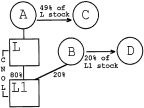
According to the opinion here was the proposed deal:

Continue reading “Tax Lawyers Kill $38 Billion Merger”

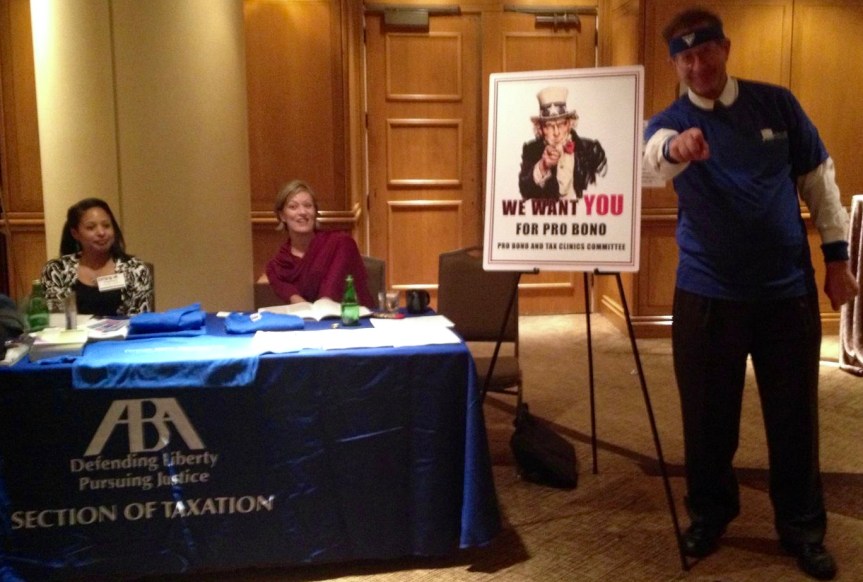
Tax Times @ ABA Section of Taxation

By Francine J. Lipmanth

Supervising Editor Professor of Law Linda Beale and her team of outstanding ABA – Tax Section editors, Anne Dunn and Isel Pizarro, and staff have put together an exceptional June 2016 issue of the digital Tax Times. Features include . . . Continue reading “Tax Times @ ABA Section of Taxation”

Minnesota Dogs Breathe (Woof) a Sigh of Relief: Pet Trusts Now Legal

By Diane Ring

IMG_6307Perhaps you heard a chorus of joyous barking across the state of Minnesota recently — now you know why. Until just over two weeks ago, every state in the U.S., plus Washington, D.C., recognized statutory pet trusts, except Minnesota. But on May 22, 2016, the Minnesota Governor signed legislation approving pet trusts. The legislation, which had been sponsored in the House by Rep. Dennis Smith and in the Senate by Sen. Scott Dibble, allows the creation of a legally enforceable trust that provides for the care of an animal that was alive during the grantor’s lifetime. The terms of the trust can be enforced by a person appointed in the trust, or if no one is appointed, the court may appoint someone. Moreover, anyone having an “interest in the welfare of the animal” may petition the court to appoint someone to enforce the trust or remove the person so designated in the trust document. The trust would terminate on the death of the last surviving animal (or 90 years if shorter). Any remaining proceeds would be distributed pursuant to the trust’s terms, or if the trust fails to specify, then to the “grantor’s heirs-at-law determined as if the grantor died intestate domiciled in [Minnesota] at the time of distribution.”

This all seems pretty straightforward, so why was Minnesota the last state? Continue reading “Minnesota Dogs Breathe (Woof) a Sigh of Relief: Pet Trusts Now Legal”

Should the IRS Penalize Trump Foundation Political Contribution?

By: Philip Hackney

trump-towers-1357833_1280


The news yesterday was focused in part on the fact that in 2013 the Florida AG Pam Bondi personally solicited a political contribution from Donald Trump. And, shortly thereafter the Donald J. Trump Foundation (“Foundation”) made a $25,000 contribution to a political organization called And Justice for All that supported the reelection effort of Pam Bondi for AG of Florida. Bondi’s office ultimately dropped any investigation into Trump University. Bondi denies the allegation that she ended an investigation in exchange for a political contribution. She says her office was never investigating Trump U in the first place. She does acknowledge, however, that her political organization should not have accepted the donation from a charitable foundation. She claims she tried to refund the contribution in March.

The claims against the AG are obviously a serious issue and should be looked at, but I of course see things through a bit of blinders. I see a nonprofit behaving badly. The level of negligence here and misuse of a private foundation frankly drives me crazy. As discussed below, the Foundation’s excuse is that it made a mistake and did not know what it had done. In this post I examine all of the tax code violations involved, and I look at the Foundation’s excuse and try to assess whether it is believable and whether it matters. Continue reading “Should the IRS Penalize Trump Foundation Political Contribution?”

The #PanamaPapers Come to the U.S.!

Today’s New York Times has a story about U.S. citizens and residents who have shown up in the Panama Papers. The ICIJ has shared its documents with the Times, which has found at least 2,400 U.S.-based clients over the last decade.[fn1]

The story (which you need to read) details some of the services Mossack Fonesca provided for four wealthy U.S. clients: entrepreneur William R. Ponsoldt, former CEO and chair of Citigroup Sanford I. Weill, Boston Capital Partners managing parter Harald Joachim von der Goltz, and financial author and life coach Marianna Olszewski.

Clearly, at least some of the services Mossack Fonesca provided were legal; some, however, were remarkably shady (for example, it looks like some clients used the offshore structuring to evade gift taxes, and some clients explicitly wanted to set up offshore structures to hide money from potential judgment creditors). Continue reading “The #PanamaPapers Come to the U.S.!”

Oklahoma Decreases Working Poor Family Benefits

By Francine J. Lipman
OklahomaLRGThis Sunday New York Times editorial caught my eye (and heart) this morning, because I have been researching and writing about state EITCs and lobbying legislators to consider enacting or increasing this demonstrably effective work incentive and antipoverty tool. When I first looked into the issue I was pleasantly surprised to discover that twenty-six states and the District of Columbia have EITCs that build on the antipoverty success of the federal EITC. Continue reading “Oklahoma Decreases Working Poor Family Benefits”

Avocados and Other (Delicious) Tax Shelters

Nice_AvocadosLast night, I flew back from the (wonderful!) AMT conference. After a three-hour storm delay, I landed at Chicago O’Hare and, walking to get my bag, I checked Twitter. A tweet from Voice of San Diego (VoSD) (which seems largely to be a geographically-focused ProPublica) highlighted a convergence between two of my favorite things: taxes and avocados.
I grew up in and around San Diego, and I grew up eating avocados (both in guacamole and BLAT form),[fn1] but I’ll confess that I’d never much thought about why there were so many avocados grown in San Diego; I probably always assumed that they were native to Mexico, and that San Diego had a similar climate to Mexico, so they were a natural fit. Continue reading “Avocados and Other (Delicious) Tax Shelters”

Presidential Tax Transparency Act

By: David J. Herzig

I was given a heads up yesterday about new legislation requiring disclosure of a presidential candidate’s tax returns (thanks Janet Novack). In the wake of our coverage of the tax issues related to the presidential race, it is worth mentioning the legislation proposed by Senate Finance Committee Ranking Member Ron Wyden, D-Ore.

According to the press release: “‘Since the days of Watergate, the American people have had an expectation that nominees to be the leader of the free world not hide their finances and personal tax returns,’ said Wyden.

“The Presidential Tax Transparency Act says that within 15 days of becoming the nominee at the party convention, the candidate must release their most recent 3 years of tax returns to the Federal Election Commission (FEC). Should the candidate refuse to comply, the Treasury Secretary will provide the tax returns directly to the FEC for public release.”

A summary of the bill is here and the full text is here.

As an initial matter, I am in favor of codifying a rule requiring the disclosure of tax returns if you a candidate for president on any State’s ballot. As I read the legislation, there seem to be major problems with the language of the statute.  This makes me think that the legislation is more of a publicity stunt then a force for meaningful change.

Here are some of the problems I see with the legislation: Continue reading “Presidential Tax Transparency Act”

Will New Data on the Volume of Sharing Economy Workers Prompt Tax Reform?

By: Diane Ring

Sharing economy and other platform workers are frequently classified as independent contractors and bear many of their own costs. Thus, these workers whom we don’t think of as “small businesses”—and don’t really think of themselves as small businesses—are thrust into the exciting world of quarterly reporting and calculation of proper deductions. Exciting if you are a tax lawyer, but less so if you are making limited income and are facing daunting tax compliance requirements. Despite these compliance challenges, there has not been much movement in responding to the tax challenges faced by sharing economy workers. These observations about the sharing economy sector have been around for a while; they were the focus of two forthcoming articles by my co-author, Shu-Yi Oei, and me (Can Sharing Be Taxed? and The Tax Lives of Uber Drivers: Evidence from Internet Discussion Forums).

Yesterday, a new report coming out of American University echoed our observations and findings. Caroline Bruckner of the Kogod Tax Policy Center presented testimony (and a supporting report) to Congress regarding the size and scope of worker participation in the sharing economy. Her goal was not to provide a definitive calculation nationwide of sharing and platform workers, but to offer a solid sense of the scale of participation in the sector (more than 2.5 million individuals) and note important growth trends. Based on the percentage of the American workforce active in the sharing/platform sector, she urged more government attention to reform that would address the tax compliance and administration challenges in this sector.

Will Congress and Treasury/IRS respond? Continue reading “Will New Data on the Volume of Sharing Economy Workers Prompt Tax Reform?”

French Tax Authorities Raid Google

By: David J. Herzig

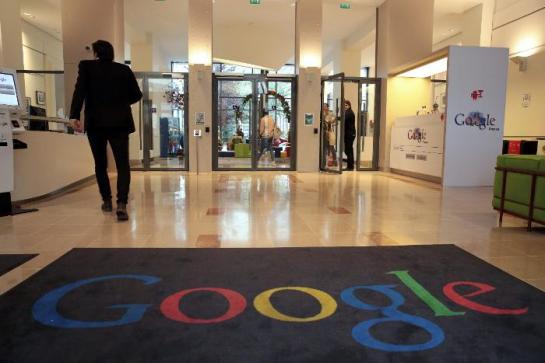
Don’t ever say that The Surly Subgroup is not on some breaking news.  It is being reported starting at 5 am French time some 100 French authorities conducted a “ultra secrète” raid on Google’s Paris headquarters.  This past February, Google was assessed a deficiency of some 1.6 Billion euros in back taxes.

5825007_google-paris_545x460_autocrop


Une perquisition a lieu ce mardi au siège de Google à Paris.  LP/F. DUGIT

There is nothing really new about the Google tax story.  Members of the European Union are in constant complaint about the use of tax strategies used by multinationals.  With awesome names such as the Double Irish with a Dutch Sandwich, multinationals that have portable revenue generation items, e.g., algorithms, can house those assets in low tax EU jurisdictions such as Ireland.  By then using EU laws to their advantage, e.g., EU tax law protects companies from paying tax in a non-permanent establishment country, they can avoid or mitigate tax.

In January this year, Google settled similar claims with the United Kingdom.   Continue reading “French Tax Authorities Raid Google”

About last night …

IMG_5486“Ask not what your country can do for you, but ask what you can do for your country.”  John F. Kennedy

We celebrated Volunteer Income Tax Assistance (VITA) in Las Vegas … and the numbers are impressive. Almost 200 volunteers spent 12,000 hours generating over $25 million in federal refunds that have and will continue to exponentially benefit our local communities and working families, including thousands of children. But for anyone who has served as a VITA volunteer, the personal rewards and deep fulfillment from helping others are priceless. If you are a tax professional looking for something more out of work-life-balance (or are curious about Woody Allen’s antihero advice and afterlife plan) … read more about encore tax opportunities here. Details about VITA programs and generous grant opportunities with fast-approaching deadlines (June 1) follow the fold …

Continue reading “About last night …”

Lionel Messi, Tax Fraud and the Panama Papers

I have been fascinated by the accusations of tax fraud levied against soccer superstar Lionel Messi and his father by the Spanish tax authorities.  Right when I thought the story could not get more interesting of course Messi is tied to the Panama Papers.  As much as I like Hermione (h/t Shu-Yi), I love Messi!

As a quick background for non-sports and football (I mean soccer) fans, Messi is the greatest soccer player in the world and maybe the greatest soccer player of all time.  As a point of reference, he would be the equivalent of Michael Jordan, Joe Montana, Babe Ruth rolled into one player.  Imagine what would happen if LeBron James were accused right now of tax fraud by the IRS?  This would dominate ESPN and probably network television.  Well, this is what is happening in the rest of the world with Messi.

Last year, a bombshell was dropped when the Spanish taxing authorities accused Messi of defrauding Spain of more than $5 million. Continue reading “Lionel Messi, Tax Fraud and the Panama Papers”

It’s Here! The #PanamaPapers Database

On April 3, 2016, the International Consortium of Investigative Journalists, in partnership with a number of news organizations, announced that it had received a leaked trove of 11.5 million documents from the Panamanian law firm Mossack Fonesca. Dubbed the “Panama Papers,” leak, the ICIJ documented how the wealthy and the powerful used Mossack Fonesca to move money around the world of tax havens and, at least sometimes, to hide it from their countries’ revenue agencies.

Originally, the ICIJ declined to make its data available, even to governments.[fn1] It explained that it is: Continue reading “It’s Here! The #PanamaPapers Database”