What Happened to Family Values?

By: Francine J. Lipman

The House GOP Bill is out and tax professionals across the globe are reading and re-reading the 429 pages of details. A few of the many things that jump off of the pages for me are that it doesn’t seem to support working families with kids (it REPEALS the up to $5,000 exclusion from gross income for dependent care assistance that many working parents use to subsidize the skyrocketing costs of child care while they work) or even those who (like my fantastic law students at UNLV) are pursuing and paying for higher education.

baby01

Continue reading “What Happened to Family Values?”

Missing In Tax Reform: What About the Gas Tax?

By: David J. Herzig

I, and others, certainly will have plenty of articles about what is wrong and right about the current tax cuts proposals.  But, as I read the plan, I became frustrated with a proposal that was missing – fixing the Highway Trust Fund.

Infrastructure spending is a priority of this administration.  In the spring President Trump announced his $1 Trillion ($1,000,000,000,000) infrastructure plan.   According to the administration, the plan will rebuild the nation’s roads, tunnels and bridges.  By September, the administration was contemplating how to pay for this spending from private sector credits to dumping the burden on the states.

The most recent discussion of how to pay for the $1 Trillion spend happened during discussions with the House Ways and Means members.  According to the Washington Post, “At the meeting Tuesday, Higgins said Trump indicated the administration instead would seek to pay for infrastructure upgrades through direct federal spending — either by paying for projects with new tax revenue or by taking on debt.”
images

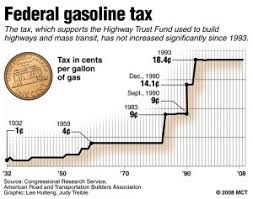
I was hoping, I know naivety, that another option would be discussed – pay for the infrastructure spending like always via the Highway Trust Fund which generates revenues via the gasoline and diesel tax.  Since there would be a budgetary shortfall, maybe we should actually increase or fix the tax.

History of Gas Tax Continue reading “Missing In Tax Reform: What About the Gas Tax?”

Some Tax Reform Links and Tweets over at #BLPB

Ann Lipton at Business Law Profs Blog has assembled a nice collection of links to news commentary and tweets about the House tax bill.

Many of the links Ann has assembled look at the industry and deal-specific impacts of the tax bill…For example, potential effects on LBOs, sports stadium financing, future of stock options, higher education, and homebuilders.  A nice complement to the more ubiquitous analyses of revenue effects, scoring, and distributional estimates we’re seeing on the tax prof/economists side. This information about who is likely to feel what effects gives us some insights into how the politics/political economy of this tax reform is likely to unfold going forward. Well worth a click.

The Johnson Amendment Under GOP Plan

By: David Herzig

Back in May, I continued to track President Trump’s promise to end the Johnson Amendment.  At that time he promised during a National Prayer Breakfast that he would “get rid of and totally destroy” the Johnson Amendment and promised to issue an executive order (which he signed May 4).

But, a significant problem with legislating via Executive Order is that executives change and with the change so goes the Executive Orders.  What works much better is legislation. Enter, the Tax Cuts and Job Act, where there is a proposal to end the Johnson Amendment.

What is the Johnson Amendment? In 1954, without explanation, Lyndon Johnson  Continue reading “The Johnson Amendment Under GOP Plan”

The GOP Tax Plan and Divorce

By Sam Brunson

CC BY-SA 3.0 Nick Youngson

Well, it has finally arrived. This morning, the House GOP gave us a 426-page bill (and an 82-page section-by-section summary).

There’s a lot going on here, and it’s hard to say how much attention we should pay. After all, now lobbyists, Democrats, and interest groups can read the bill and start arguing against (or for) it. Moreover, this is just the House; the Senate still has to release its bill,[fn1] which may differ substantially. And the fact that we have a bill doesn’t in any way indicate that (a) it will be enacted, or (b) the enacted law will look anything like the bill.

Still, we have a bill! Continue reading “The GOP Tax Plan and Divorce”

Parsonage Allowance Update 1: Briefing Remedies

By Sam Brunson

So #TaxWeek isn’t going quite the way we expected;[fn1] the House is now expecting to release its tax bill tomorrow. (Or maybe not.) Which means we’re not bringing any coverage of the tax bill today.

But that’s okay! It gives me room to slot it some follow-up to last month’s decision that section 107(2) violated the Establishment Clause. Remember, Judge Crabb found it unconstitutional, but ordered the parties to provide supplementary briefing about the appropriate remedies. Should she enjoin the IRS from providing benefits under section 107(2)? Or should she expand the set of taxpayers who could benefit from section 107(2)? Or something else entirely?

The initial briefs were due (and were filed) Monday. And, unsurprisingly, they all agreed on a lot: Continue reading “Parsonage Allowance Update 1: Briefing Remedies”

Did Taxes Bring Us Ghostbusters?

By Sam Brunson

Ethan Doyle White at English Wikipedia [CC BY-SA 4.0 (https://creativecommons.org/licenses/by-sa/4.0)%5D, via Wikimedia Commons
Sadly, no. But it helped bring several B horror movies that I’ve never seen (and you probably haven’t, either).

Back in the 1970s, film tax shelters were big enough that the Ways and Means Committee got a report on the subject.[fn1]

But the US wasn’t the only market that allowed for film tax shelters. In 1974, Canada raised its Capital Cost Allowance from 60% to 100%. Investors could deduct 100% of the money they put into Canadian-produced movies. How important was this increased deduction limitation? In 1974, only three movies were produced in Canada. In 1979, the number had increased to 77. Continue reading “Did Taxes Bring Us Ghostbusters?”

The Manafort Indictment

By Sam Brunson

After a late night watching baseball, I woke up this morning to news of Paul Manafort’s indictment.[fn1] And the 31-page indictment is filled with tax evasion. But, after laying out the fact of and ways in which Manafort evaded taxes, none of the counts seem to charge him with tax evasion. (I find that puzzling, though I’ve never been a litigator, much less involved in criminal tax cases, so I don’t really have any experience with which to judge the strangeness or not of not charging him with tax evasion.)

Even without charges, though, there’s a fascinating romp through tax haven-aided tax evasion here. Continue reading “The Manafort Indictment”

ABA Tax Section 5th Annual International Tax Enforcement and Controversy Conference (Washington, DC, Oct. 27, 2017)

 By: Diane Ring

Yesterday my frequent co-author, Shu-Yi Oei, and I attended the ABA’s conference on “International Tax Enforcement and Controversy” in DC. The panels and discussion covered a range of interesting intersecting issues. These included: (1) the relationship among international organizations and bodies (such as the OECD, UN, World Bank, IMF and G20) in directing the shape of international tax law content and enforcement; (2) the place of developing countries in the evolving international tax system; (3) competing goals of finance ministers and tax ministers in various countries and the impact of that conflict on taxpayers; (4) the consequences of and responses to limited IRS resources; and (5) continuing benefits to enforcement from the Swiss Bank Program.

But probably the most significant theme that ran through the day’s discussion was the role of data, especially “big data”. . . .

Continue reading “ABA Tax Section 5th Annual International Tax Enforcement and Controversy Conference (Washington, DC, Oct. 27, 2017)”

Tax Surveillance and Tax Design

By Adam Thimmesch

tax-890737_960_720

Late last week, I ran across an article from the UK (thanks tax Twitter!) regarding a significant uptick in the number of vehicles being “clamped” or impounded in the UK due to a failure of their owners to pay a required road tax. The story wouldn’t have really captured my attention, but for its inclusion of a quote from the Driver and Vehicle License Agency’s National Wheelclamping Manager. In response to the release of information about increased noncompliance with the tax, the DVLA posted a warning on its website: “Our enforcement teams are out and about on the roads around the UK all year. Their vans are equipped with number plate recognition cameras so any vehicle that isn’t taxed is at risk of being clamped or impounded.” As someone who has spent a lot of time thinking about tax privacy lately, this was intriguing, so I did some digging.

Continue reading “Tax Surveillance and Tax Design”

International Sharing Economy Conference: Day 2 Takeaways

By: Diane Ring

Yesterday I blogged about Day 1 of the international sharing economy conference, titled “Reshaping: Work in the Platform Economy.” Today the Conference resumed in Amsterdam and included a fascinating roundtable with representatives from some of the platform firms alongside some sharing economy workers. Each offered their experience/perspective on the sector, posed questions to each other, and took questions from the audience.

Not surprisingly, just as there are a range of business models and niches in the sector, there are also a variety of reasons why workers participate in and do platform work. What workers seek from the platforms (beyond good pay) may differ from worker to worker. For example, a sharing economy worker may desire contact with other workers, a sense of community, predictability, or worker dignity. Building on the Day 1 discussions, several themes emerged by the close of the Conference:

Continue reading “International Sharing Economy Conference: Day 2 Takeaways”

International Sharing Economy Conference: Day 1 Takeaways

By: Diane Ring

Today the “Reshaping: Work in the Platform Economy” Conference got underway in Amsterdam. In contrast to many academic conferences, the explicit goal here is to bring together a truly wide array of actors in the sharing economy (policy makers, academics, actual gig workers, platform businesses, research institutes, and media) in a mixed format setting that includes academic presentations, panel presentations by gig workers, small group active round tables, and research-poster sessions. The international dimension, with participants and presenters from a variety of jurisdictions, contributes to the breadth of discussion.

I thought I would offer a few of my takeaways from day one: Continue reading “International Sharing Economy Conference: Day 1 Takeaways”

Chris Long, Philanthropist

On NPR this morning, I heard that Chris Long, a defensive end for the Philadelphia Eagles, is donating his entire year’s salary to various charitable organizations that provide scholarships and support to underserved youth. (He already donated his salary from the first six games of the season to fund two seven-year scholarships at his alma mater in Charlottesville.)

That is unequivocally a good thing, and a generous thing. But it’s not without tax consequences.

When I think about charitable gifts, the first thing that comes to mind is their deductibility. But it turns out that the deduction for charitable contributions comes with a couple limitations. First, of course, is that only taxpayers who itemize get to deduct charitable contributions. Of course, given that this is a $1 million plus (more on that in a minute) donation, Long will definitely itemize. Continue reading “Chris Long, Philanthropist”

Remedies and the Parsonage Allowance

By Sam Brunson

On Friday, the Western District of Wisconsin ruled (again) on the constitutionality of the section 107(2) rental allowance for “ministers of the gospel.”[fn1] The litigation between the Freedom From Religion Foundation and the IRS has been going on for a long time—I first blogged about it in 2013—so I’m not going to spend a lot of space here discussing the specifics of the case. If you want to look at what’s been going on, you can check out this post and the posts I’ve linked to in it.[fn2] Long story short, this is the second time the court has ruled the rental allowance is unconstitutional. The first time, the Seventh Circuit reversed on the grounds that the plaintiffs had never tried to claim a tax-free rental allowance, so they had no standing. This time, they did claim a refund, which the IRS refused, the court found standing, and, in a well-written and extremely persuasive opinion, it again found section 107(2) unconstitutional.

Although the court declared that section 107(2) violated the Establishment Clause, it didn’t order a remedy. The opinion explains that in the first round, all of the parties assumed that the only relief available was to declare the provision unconstitutional and enjoin its enforcement. This time, though, the Freedom From Religion Foundation suggests that there may be two other remedies available. The first is to refund a portion of plaintiffs’ taxes and order the IRS to “extend benefits under the statute to those excluded.” The second is to declare section 107(1) (that is, the in-kind provision of tax-free housing to “ministers of the gospel”) also unconstitutional. Continue reading “Remedies and the Parsonage Allowance”

Tomorrow’s Ninth Circuit Oral Argument in Altera

By: Leandra Lederman

Susan Morse and Stephen Shay have blogged today on Procedurally Taxing about the Ninth’s Circuit oral argument tomorrow in Altera Corp. v. Commissioner, as has Dan Shaviro on his blog, Start Making SenseAltera is the transfer pricing and administrative law case involving the Treasury’s cost-sharing agreement regulation. The Tax Court invalidated the regulation under the Administrative Procedure Act, as arbitrary and capricious. That is because the Tax Court accepted the taxpayer’s argument that it need not share stock-based compensation costs under a qualified cost-sharing agreement because arm’s length parties would not do so. The Tax Court found that Treasury had inadequately addressed evidence in the notice-and-comment process that parties not under common control did not share stock-based compensation costs, although Treasury explained in the Preamble to the regulation that cost-sharing agreements between uncontrolled parties are not sufficiently comparable to those in controlled-party transactions.

Altera raises an important administrative law question about what is required of Treasury for its regulations to be valid. Susie and Steve spearheaded an amicus brief in the Ninth Circuit in favor of the Commissioner, in which I joined, along with Dick Harvey, Ruth Mason, and Bret Wells. An amicus brief prepared by another group of professors also supports the Commissioner. There are also amicus briefs by business groups on the other side. See Susie and Steve’s blog post for more detail. And for prior coverage on the Surly Subgroup, see this post on our amicus brief, explaining why the Ninth Circuit should reverse the Tax Court’s decision invalidating the regulation.