Call for Papers: New Voices in Tax Policy and Public Finance (2019 AALS Annual Meeting, New Orleans, LA)

The AALS Tax Section committee is pleased to announce the following Call for Papers:

CALL FOR PAPERS
AALS SECTION ON TAXATION WORKS-IN-PROGRESS SESSION
2019 ANNUAL MEETING, JANUARY 2-6, 2019, NEW ORLEANS, LA
NEW VOICES IN TAX POLICY AND PUBLIC FINANCE
(co-sponsored by the Section on Nonprofit and Philanthropy Law and Section on Employee Benefits and Executive Compensation)

The AALS Section on Taxation is pleased to announce the following Call for Papers. Selected papers will be presented at a works-in-progress session at the 2019 AALS Annual Meeting in New Orleans, LA from January 2-6, 2019. The works-in-progress session is tentatively scheduled for Saturday, January 5.

Eligibility: Scholars teaching at AALS member schools or non-member fee-paid schools with seven or fewer years of full-time teaching experience as of the submission deadline are eligible to submit papers. For co-authored papers, both authors must satisfy the eligibility criteria.

Due Date: 5 pm, Wednesday, August 8, 2018.

Form and Content of submission: We welcome drafts of academic articles in the areas of taxation, tax policy, public finance, and related fields. We will consider drafts that have not yet been submitted for publication consideration as well as drafts that have been submitted for publication consideration or that have secured publication offers. However, drafts may not have been published at the time of the 2019 AALS Annual Meeting (January 2019). We welcome legal scholarship across a wide variety of methodological approaches, including empirical, doctrinal, socio-legal, critical, comparative, economic, and other approaches.

Submission method: Papers should be submitted electronically as Microsoft Word documents to the following email address: tax.section.cfp@gmail.com by 5 pm on Wednesday, August 8, 2018. The subject line should read “AALS Tax Section CFP Submission.” By submitting a paper for consideration, you agree to attend the 2019 AALS Annual Meeting Works-in-Progress Session should your paper be selected for presentation.

Submission review: Papers will be selected after review by the AALS Tax Section Committee and representatives from co-sponsoring committees. Authors whose papers are selected for presentation will be notified by Thursday, September 28, 2018.

Additional information: Call-for-Papers presenters will be responsible for paying their own AALS registration fee, hotel, and travel expenses. Inquiries about the Call for Papers should be submitted to: AALS Tax Section Chair, Professor Shu-Yi Oei, Boston College Law School, oeis@bc.edu.
What’s Up with the Sharing Economy? (Report from the 13th International Human Rights Researchers Workshop)

By: Diane Ring

Sometimes we do get what we are seeking. In some of my recent work on the sharing economy I have advocated for more discussion and analysis across legal boundaries, so that the rules we develop have outcomes that more closely match our goals and don’t bring unexpected—and undesired—surprises. The two-day conference on “Sharing Economy: Markets & Human Rights” that I have been attending at the College of Law and Business in Ramat Gan, Israel has provided just such an opportunity. The papers presented cover a wide range of legal fields and issues from taxation to discrimination, and will ultimately be published together in the Law & Ethics of Human Rights Journal. Although we are all benefiting from the discussion of our drafts and will continue to revise our work, some interesting themes have emerged already . . .


Continue reading “What’s Up with the Sharing Economy? (Report from the 13th International Human Rights Researchers Workshop)”

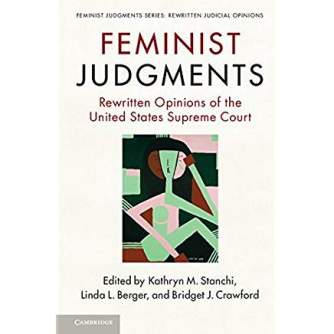
Feminist Judgments: Rewritten Tax Opinions

51bljA0Y8oL._AC_US436_QL65_

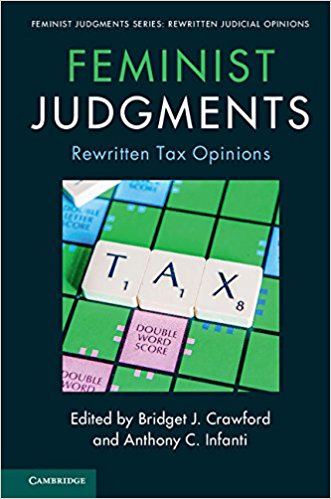
Tax-gift giving this holiday season just got so much easier!! Look what arrived just in time to celebrate the end of 2017! The FIRST in a series of subject-matter volumes of US Feminist Judgments is the Feminist Judgements: Rewritten Tax Opinions.

Featuring fantastic contributions by Surly Subgroup colleague Professor of Law Jennifer Bird-Pollan and dream team editors: James D. Hopkins Professor of Law Bridget J. Crawford and Buchanan, Ingersoll & Rooney Faculty Scholar, Gender, Sexuality & Women’s Studies Faculty (affiliate) and Professor of Law Anthony C. Infanti,

Commentary and rewritten tax opinions by Tax Professors and Scholars Extraordinaire Appleberry, Beale, Bird-PollanBrennen, Cain, Christensen, Cords, Cruz, Drumbl, Fellows, Gerzog, Heen, Knauer, Lahey, Lipman, Maynard, Murphy, Pratt, RobinsonRobson, Tait, Thompson, and Waterhouse Wilson.

Continue reading “Feminist Judgments: Rewritten Tax Opinions”

Giving Tuesday and State Use Taxes

By Adam Thimmesch

For a few years now, I’ve gently pushed the idea of Use Tax Tuesday to follow Cyber Monday. Why not follow one of the biggest tax-avoidance days of the year with a day dedicated to undoing that damage? As much as this makes sense to me, it appears that I have lost out to Giving Tuesday, and probably rightfully so.  Nevertheless, I want to suggest that Use Tax Tuesday can easily be folded within the more general ambit of Giving Tuesday. Maybe all is not lost.

Continue reading “Giving Tuesday and State Use Taxes”

The Senate Tax Bill’s “Clarification” of Independent Contractor Status: Tax and Employment Law Tradeoffs

By: Diane Ring

Shu-Yi Oei and I have been tracking the recent tax reform developments as well as a couple of proposed tax bills that deal with worker classification, information reporting, and tax withholding. Based on a description prepared by the Joint Committee on Taxation, it looks like the Senate Tax Bill is going to include a new safe harbor provision guaranteeing worker classification as an independent contractor and will make changes to independent contractor withholding and information reporting. We posted our analysis of this proposal and its potentially serious implications on TaxProf Blog: The Senate Bill and the Battles Over Worker Classification.

Our main points:

1. Not just tax: This worker classification safe harbor is not just about tax, it will likely have impacts on employment/labor law outcomes and protections as well.

2. Not just gig workers: Based on the Joint Committee description, the proposal is not limited to gig economy workers —anyone who meets the safe harbor requirements (which are pretty easy to satisfy in many cases) can be classified as an independent contractor. This may have the effect of encouraging employers to push workers into work relationships that come within the safe harbor. Or, in certain cases, it may facilitate the strategic movement of higher-income workers into independent contractor status — see point 4 below.

Continue reading “The Senate Tax Bill’s “Clarification” of Independent Contractor Status: Tax and Employment Law Tradeoffs”

Paradise Papers: Day 2

By: Diane Ring

The most recent big financial data leak, dubbed the Paradise Papers, is now in full swing in the media. On Monday, Shu-Yi Oei blogged the initial release and its immediate takeaways (including the revelation that U.S. Commerce Secretary Wilbur Ross continued to hold investments in a shipping business that had business connections to key Russian figures). But each passing hour brings new information and individuals into the public spotlight – and in the process sheds light on how such information is likely to be used and what the media and the public seem to find most noteworthy.

So what did Day 2 bring? . . .

Continue reading “Paradise Papers: Day 2”

Missing In Tax Reform: What About the Gas Tax?

By: David J. Herzig

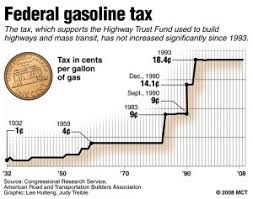
I, and others, certainly will have plenty of articles about what is wrong and right about the current tax cuts proposals.  But, as I read the plan, I became frustrated with a proposal that was missing – fixing the Highway Trust Fund.

Infrastructure spending is a priority of this administration.  In the spring President Trump announced his $1 Trillion ($1,000,000,000,000) infrastructure plan.   According to the administration, the plan will rebuild the nation’s roads, tunnels and bridges.  By September, the administration was contemplating how to pay for this spending from private sector credits to dumping the burden on the states.

The most recent discussion of how to pay for the $1 Trillion spend happened during discussions with the House Ways and Means members.  According to the Washington Post, “At the meeting Tuesday, Higgins said Trump indicated the administration instead would seek to pay for infrastructure upgrades through direct federal spending — either by paying for projects with new tax revenue or by taking on debt.”

images

I was hoping, I know naivety, that another option would be discussed – pay for the infrastructure spending like always via the Highway Trust Fund which generates revenues via the gasoline and diesel tax.  Since there would be a budgetary shortfall, maybe we should actually increase or fix the tax.

History of Gas Tax Continue reading “Missing In Tax Reform: What About the Gas Tax?”

International Sharing Economy Conference: Day 1 Takeaways

By: Diane Ring

Today the “Reshaping: Work in the Platform Economy” Conference got underway in Amsterdam. In contrast to many academic conferences, the explicit goal here is to bring together a truly wide array of actors in the sharing economy (policy makers, academics, actual gig workers, platform businesses, research institutes, and media) in a mixed format setting that includes academic presentations, panel presentations by gig workers, small group active round tables, and research-poster sessions. The international dimension, with participants and presenters from a variety of jurisdictions, contributes to the breadth of discussion.

I thought I would offer a few of my takeaways from day one: Continue reading “International Sharing Economy Conference: Day 1 Takeaways”

Tax Leaks: The New Normal?

By: Diane Ring

Today, the Guardian is reporting that big-four accounting firm Deloitte suffered a hack back in March, 2017. The underlying attack may have originated in the fall of 2016 and may have allowed access to Deloitte systems for several months.

Deloitte itself is not unfamiliar with cybersecurity. As stated on its website, among the services that Deloitte offers clients is Cyber Risk. However, being a victim of a hack provides a new perspective. At this point, details are scarce on exactly which clients have been affected and what specific information may have been accessed, but it has been reported that “confidential emails and plans of some of its blue-chip clients” may have been compromised. This doesn’t sound good. But it is also no surprise.

Leaks and hacks can target a wide variety of data including business plans, mergers and acquisitions, scientific developments, business forecasts, individual identities, and government records. In recent years, tax-related information has proven especially attractive to leakers and hackers. As my co-author, Shu-Yi Oei and I explored in our recent article, Leak-Drive Law studying tax leaks that have occurred over the past 10 years, tax information can be valuable and their release by leakers can have powerful impacts. Moreover, as the tax community has embraced increased reporting and transparency to the government, the number of caches of well-organized data held by corporations, tax advisers and governments increases. Such caches may be magnets for those seeking to hack into it or leak it.

As we continue to move forward in this new world, what do we know? Continue reading “Tax Leaks: The New Normal?”

European Commission Prods OECD, EU, and Members States on Digital Taxation: An Analysis

By: Diane Ring

Complaints regarding the international tax system’s ability to handle the digital economy (think Google, Amazon, and a myriad of online service providers) are now ubiquitous. The heart of the problem is two-fold: (1) technology allows these corporations to effectively conduct business in a country without a physical presence there, and (2) much of these businesses’ value derives from intangibles whose value can be difficult to document.

The first reality limits a host country’s ability, under current law, to assert jurisdiction to tax the businesses. The second means that for core transactions by these businesses, such as licensing intangibles to related parties, it can be very difficult for the tax authorities to guarantee that the transactions are at arm’s length prices (and not shifting profit into low tax jurisdictions). The topic is pervasive enough to have merited its own Action Item in the ongoing OECD BEPS Project (Base Erosion and Profit Shifting).

However, a real, coordinated global response has been much harder to secure.  This week, the European Commission (EC) made its most recent foray into the debate with a Communication from the Commission to the European Parliament and the Council. But the EC was not just talking to European Union (EU) bodies; it was directly speaking to the OECD and EU member states. What exactly is the EC’s goal with this Communication?

Bottom line the EC seems to have several intersecting objectives: (1) clarify the problem, (2) identify and prod global actors, (3) delineate proper approaches, and (4) warn about the implications of nonaction. Continue reading “European Commission Prods OECD, EU, and Members States on Digital Taxation: An Analysis”

Something Old, Something New: Two Workshop Series @ Boston College Law School this Fall

Shu Yi Oei

I’m happy to announce that we have a couple of workshop series happening at BC Law School this academic year. I’m really quite excited about these. Because what’s life without a workshop?

Tax Policy Workshops & Roundtable…

Boston College Law School has run a Tax Policy Workshop Series since 2007. This fall, we continue in that tradition, with speakers Daniel Hemel (Chicago), Ruth Mason (UVA), Zachary Liscow (Yale), and Lily Batchelder (NYU) presenting papers.

BC Law and Tulane Law are also hosting a joint BC-Tulane Tax Roundtable on March 23, 2018. More info about that coming soon.

…and a New Regulation and Markets Workshop Series!

In addition, here’s something a bit fun: Some BC Law colleagues and I have started a new workshop series, focusing on Regulation, Markets, and Business. This multidisciplinary workshop series focuses on the study of regulatory approaches to markets and business. It investigates how such economic regulation should be designed in order to balance the interests of various constituencies. It also explores how traditional approaches to regulation compare, contrast, and intersect with emerging methodologies.

We’ll feature presentations by invited legal scholars of their works-in-progress. The hope is to create opportunities for scholars working on issues of economic regulation to discuss and present their research in a forum of academics working in related intellectual spaces. The workshop is offered to Boston College JD and LLM students as a 1-credit seminar.

Here’s the 2017-18 slate:

FALL 2017

September 12, 2017 – Saule Omarova (Cornell): “Private Wealth and Public Goods: A Case for a National Investment Authority”

September 26, 2017 – Rory Van Loo (Boston University): “Consumer Law as Tax Alternative”

Tuesday, October 17, 2017 – William Birdthistle (Chicago-Kent):  “Free Funds: Retirement Saving as Public Infrastructure”

Tuesday, November 14, 2017 – Cary Martin Shelby (DePaul): “The Role of Competition in the Regulation of Investment Funds”

Tuesday, November 28, 2017, 12:15 pm – Lily Batchelder (NYU), co-sponsored with Tax Policy Workshop: “The Shaky Case for a Business Cash-Flow Tax”

Continue reading “Something Old, Something New: Two Workshop Series @ Boston College Law School this Fall”

Macron and the Potential Future of Tax Leaks

By: Diane Ring

The French election for president—an event worthy of note in its own right (particularly on the heels of the Brexit vote)—generated a political, international relations, security and media firestorm due to a late-breaking data leak and hack. On Friday, the campaign of French centrist candidate Emmanuel Macron announced that it had been the subject of a major computer hack. At least 9GB of emails and personal and business documents from Macron’s campaign were posted to a document sharing site called Pastebin. Initial reports contended that the hack and leak were an effort to aid Macron’s far-right opponent Marine Le Pen, and may have been undertaken with Russian assistance. While Macron won the election, the potential fallout out from these leaks may have only just begun.

There’s an important tax dimension to the story, which may have been slightly overshadowed by Friday’s massive data dump. Two days before, on Wednesday, Le Pen hinted during a debate at possibility that Macron might have an offshore account in the Bahamas. Apparently, two hours before the debate, documents were anonymously posted on an internet forum that purported to include Macron’s signature and to show that he had a Bahamas bank account. During the debate, Macron responded that the claim was false and constituted “defamation.” On Thursday, Macron and his campaign outlined the spread of this offshore-account assertion on various sites and contended some were connected to “Russian interests.” On Friday, Macron lodged a complaint with the French prosecutor’s office regarding offshore account allegations made online.

Though the Friday hack and data dump have dominated the spotlight, the alleged tax leak is in fact part of the bigger and quite troubling picture of leaks in the modern cyber environment . . .

Continue reading “Macron and the Potential Future of Tax Leaks”

The Surly Subgroup Turns One!

Time flies when you’re having fun, I guess. Today is the one-year blogiversary of the Surly Subgroup. What started off as a group-blogging experiment hatched at last year’s Critical Tax Conference at Tulane Law School has provided quite a bit of entertainment for Surly bloggers and our guest bloggers, and hopefully for our readers as well.

It’s obviously been a big year on tax and other fronts. Since our inception, we’ve published 206 blog posts on a variety of topics. And we’ve drawn readers from 140 different countries.

Surly regulars and guest bloggers have covered various tax-related issues surrounding politics and the 2016 election—including disclosure of presidential tax returns, the Emoluments Clause, the Trump Foundation, and the Clinton Foundation. We’ve written about churches, 501(c)(3)s and the IRS treatment of non-profits. We’ve discussed the tax reform proposals of the 2016 presidential candidates and the #DBCFT. We’ve written several administrative law posts about Treasury Regulations and rulemaking.

Politics aside we’ve also covered other important issues in tax policy—including taxation and poverty, healthcare, tax policy and disabilities, tax compliance, and tax aspects of the Puerto Rico fiscal crisis. We’ve discussed several issues in international and cross-border taxes, touching on the EU state aid debate, the CCCTB, taxation and migration, the Panama Papers, tax leaks more generally, and tax evasion in China.

We hosted our first ever online Mini-Symposium on Tax Enforcement and Administration, which featured posts by ten different authors on a variety of tax administration topics. The Mini-Symposium was spearheaded by Leandra Lederman. Leandra had organized and moderated a discussion group on “The Future of Tax Administration and Enforcement” at the 2017 AALS Annual Meeting, and many of the discussion group participants contributed to the online symposium. We hope to organize future online symposia on other topics.

We’ve blogged about various conferences, workshops, and papers, both tax related and not-so-much tax related. We’ve also had lots of fun writing about taxes in popular culture – Surly bloggers and guest bloggers have written about the tax aspects of Pokémon Go, tax fiction, music-related tax issues (Jazz Fest! Prince! “Taxman”!), soccer players, dogs, Harry Potter fan fiction, Star Trek, and John Oliver. Surly bloggers even recorded a few tax podcasts!

In short, it’s been a busy year, and we’ve had a lot of fun with the Surly platform. We hope you have as well. Going forward, we’re going to keep the blog posts coming. We also hope to draw more regular and guest bloggers and to organize other online symposia.

Thanks for reading!

Panama Papers: The One-Year Anniversary

By: Diane Ring

This month marks the one-year anniversary of the Panama Papers leak. In April 2016, the ICIJ announced the leak and a few weeks later (May 9, 2016) released a database that included a subset of the leaked data. The leak itself comprised over 11 million records spanning 40 years from the Panamanian law firm Mossack Fonseca. At its core, the leak revealed the true ownership of over 200,000 offshore entities, thereby raising a host of tax and political questions regarding many of the entities’ owners.

So what has happened over the past year as a result of the leak? Continue reading “Panama Papers: The One-Year Anniversary”

The Strategic Case Against the Democratic Filibuster of Neil Gorsuch

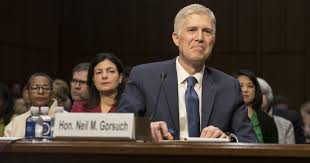
Photo: Jarrad Henderson, USA TODAY

By: Daniel Hemel and David Herzig

[Note: This post is co-authored with Daniel Hemel, Assistant Professor of Law at The University of Chicago School of Law.]

The strategic case against a Democratic filibuster of Neil Gorsuch is straightforward. The argument is not that the filibuster will prevent President Trump from putting someone like Andrew Napolitano on the Court. The argument is that the filibuster may prevent President Trump from filling a future vacancy with a well-credentialed conservative who is ideologically similar to or right of Judge Gorsuch. To elaborate:

— (a) The filibuster accomplishes no work when there are fewer than 50 Senators who will support a nominee on an up-or-down vote. (Napolitano presumably falls into this category.)

— (b) The filibuster also does no work when there are 50 or more Senators who will support a nominee even if that means going nuclear. (Judge Gorsuch appears to fall into this category.)

— (c) The filibuster matters when (1) there is a nominee who would win 50 or more Senators on an up-or-down vote, but (2) fewer than 50 Senators would support the nuclear option in order to put the nominee on the Court.

Is (c) an empty set?

Continue reading “The Strategic Case Against the Democratic Filibuster of Neil Gorsuch”